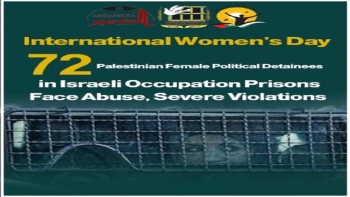

• International Women’s Day: 72 Palestinian Female Political Detainees in Israeli Occupation Prisons Face Abuse, Severe Violations

    International Women’s Day: 72 Palestinian Female Political Detainees in Israeli Occupation Prisons Face Abuse, Severe Violations

  • Commission of Detainees uncovers details of abuses against detainee Mohammad Wajeeh Mahamid from Jenin

    Commission of Detainees uncovers details of abuses against detainee Mohammad Wajeeh Mahamid from Jenin

  • Medical neglect endangers the lives of detainees held in the clinic of Ramla prison

    Medical neglect endangers the lives of detainees held in the clinic of Ramla prison

  •  New Measures Against Administrative Detainees Entrench Ongoing Violations and Undermine International Law

    New Measures Against Administrative Detainees Entrench Ongoing Violations and Undermine International Law

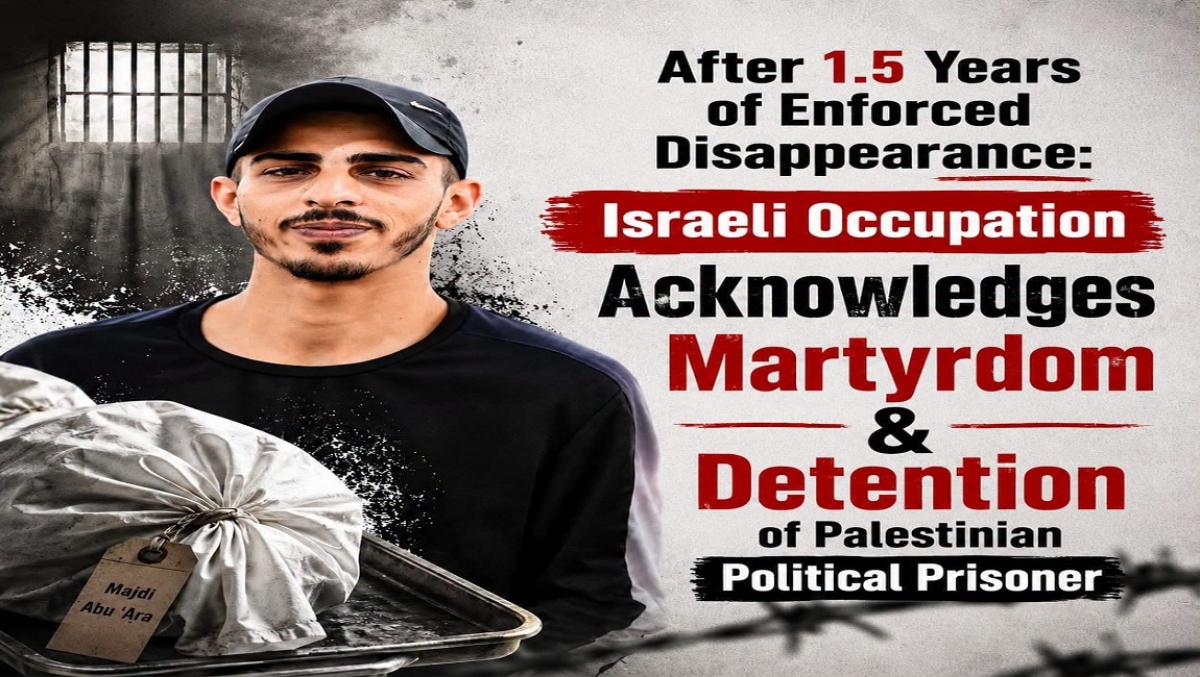
  •  Palestinian Medic Abducted From Gaza During Kamal Adwan Hospital Siege, Killed in Israeli Occupation Prison

    Palestinian Medic Abducted From Gaza During Kamal Adwan Hospital Siege, Killed in Israeli Occupation Prison

  • 1
  • 2
  • 3
  • 4
  • 5

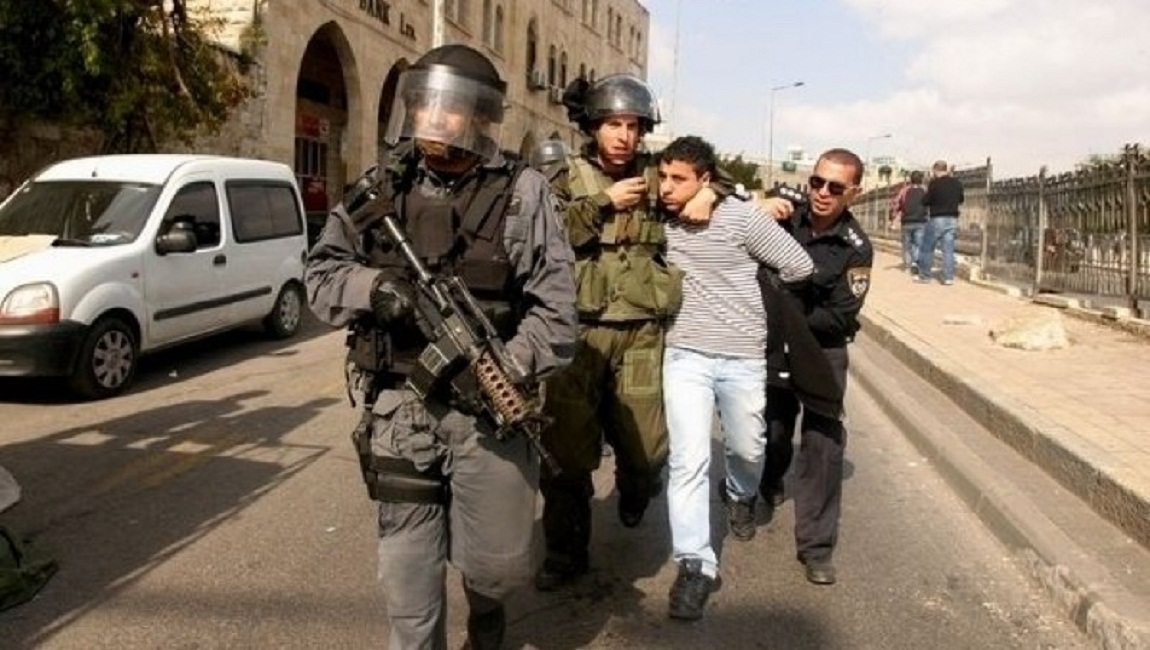
Ramallah: the occupation forces arrested 470 Palestinian citizens last August, including 50 minors and 11 women

on . Posted in slider

Detainees' institutions and Human Rights Organizations (the Commission of Detainees and Ex-detainees' Affairs, the Palestinian Society Prisoner's Club, Al Dameer Association for Human Rights) pointed out that the occupation authorities arrested 162 citizens from Jerusalem, 82 from Ramallah, 50 from Hebron, 44 from Jenin, 30 from Bethlehem, 38 from Nablus, 13 from Tulkarem, 24 from Qalqilia, 6 from Tubas, 8 from Jericho and 7 from Gaza Strip.
The total number of detainees in Israeli jails reached up to 5700, including 38 women, 220 minors, 500 administrative detainees, while 76 new administrative detention sentences have been issued and renewed.
Women detainees… violations and increased suffering
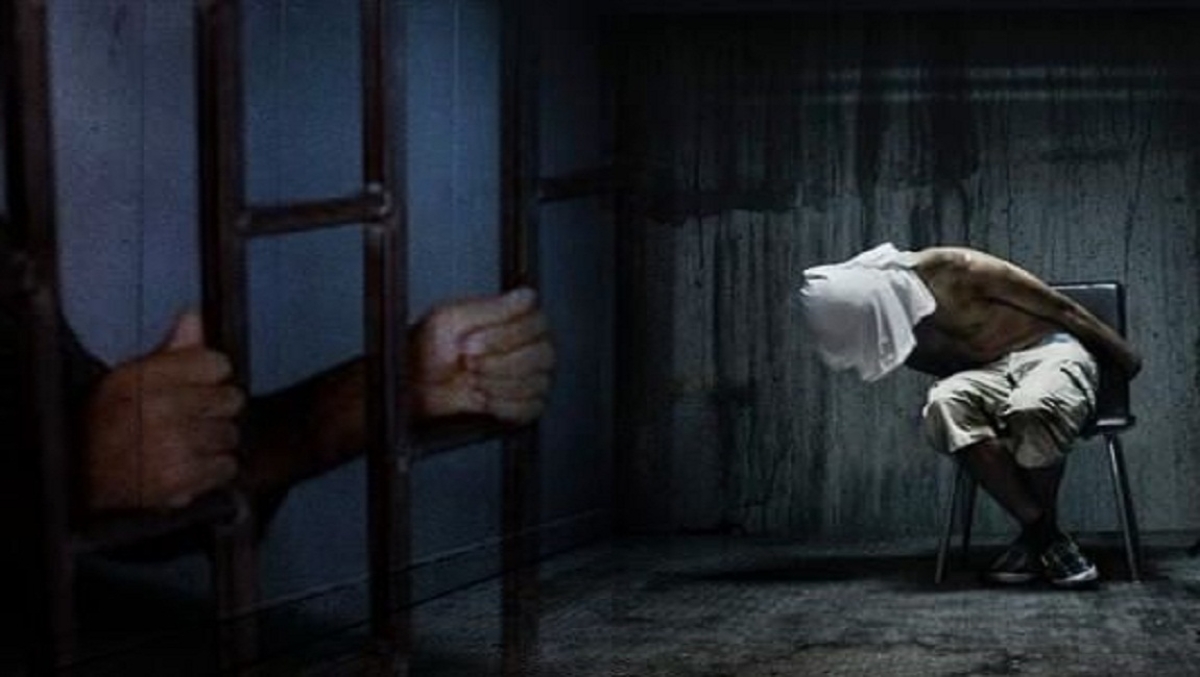
Detainees' institutions pointed out that women detainees held in Israeli jails are exposed to many violations and breaches in treatment, going through detention, being held in interrogation centers, transportation, neglecting their health conditions, imposing high fines against them and holding them in bad detention conditions in a way that violate all international agreements and covenants.
The number of women detainees in Israeli jails reached to 38, they are held in Damoun prison in a section that contains 13 rooms, and each room accommodates from 4 to 8 detainees.
Detainees' institutions acknowledge that Damoun prison, which was a stable before, lacks the minimum elements of human life. Its ground is concrete, which is very cold in winter and very hot in summer. Most of rooms are poorly ventilated, full of insects and there are no chairs in the rooms and no blankets to sit down.
Women detainees suffer from procrastinating medical checkups which lead to a deterioration in their health conditions. A case in point is the wounded detainee Israa' Ja'abees from Jerusalem. Moreover, women detainees are prevented from attaining books and deprived of family visits.
Children confronting summon and suppression
Occupation authorities escalated in summoning minors through their parents to interrogate them since June 2019, in an attempt to target children to have information and spoil the relationship between them and their families.
At the beginning of August, occupation authorities summoned the family of the child Malak Sider, 8 years old from Hebron. In addition, they summoned many families of children from Jerusalem, including a child less than 5 years old.
In the context of violating the rights of the child, Palestinian children detainees in Megiddo and Ofer prisons are exposed to violent suppression. In August 14, 2019   Israeli forces broke in two sections of Ofer prison, in which minor detainees are held in. They handcuffed minors and isolated some of them after attacking them with beating and using pepper gas. They also broke in the section of minors in Megiddo prison which includes 63 minors after a clash between a child and a jailor. The administration of prison implemented many punitive measures, especially against the section of minors.
However, detainees' institutions affirm that the administration of prisons increased the violations through ferocious means against minors in 2019, without taking into consideration their privacy or special needs. These acts are considered a flagrant violation of international laws and conventions concerned with child protection.

The battle of administrative detention is constant… 8 detainees entered a hunger strike in August
 8 detainees entered a hunger strike since August protesting against their administrative detention, where 500 detainees are held in Israeli prisons without any legal justification.
Detainees who entered the strike are Ahmad Ghannam, who conducted a strike for 58 days, Huthaifa Halabia since 67 days, Sultan Khlouf since 54 days, Ismail Ali from since days, Tareq Qa'dan since 41 days, Nasser Jada' since 34 days, Thaer Hamdan since 29 days, in addition to Fadi Hroub who ended his strike in September 5, 2019 after 23 days.

Huthaifa Halabia ended his strike due to his health condition and Ghannam is in a real danger
The detainee Huthaifa Halabia, from Abu Dees village, ended his hunger strike after 67 days. He entered a stage of real danger on his health, and he got moved to Kaplan Hospital due to his critical situation, which forced him to suspend his hunger strike to maintain his life.
Ahmad Ghannam became the oldest detainee in the strike with 58 days. It is worthy to mention that his health condition is in a continuous deterioration, especially that he had a cancer in the blood and had a surgery in 2000, but he still suffers from problems in the liver and blood platelets.
Many detainees ended their hunger strike after concluding an agreement that determining a specific period of their detention. A case in point is the detainee Mohammad Abu Aker who entered a strike for 36 days to determine his detention of four months, in addition to the detainee Mustafa Hasanat who entered a strike for 36 days to specify his period of detention to 6 months. Another case in point is the detainee Wajdi Awawdeh who entered a strike for 27 days in order to set him free in February 2020, the detainee Hmmam Abu Rahmah who entered a strike for 11 days, and the detainee Bassam Abu Aker who entered a strike for 5 days.
The administration of prisons still following systematic procedures against detainees on hunger strike to force them suspend their strike, represented in isolating them in cells, depriving them of family visits and frequent transportation from one prison to another.
In addition, jailors deliberately provoke detainees on hunger strike by eating in front of them and conduct daily inspections to practice pressure against them.

Violations practiced by occupation authorities against women detainees during detention

on . Posted in slider

The Commission of Detainees and Ex-Detainees' Affairs stated that the occupation authorities are practicing many violations and breaches in dealing with Palestinian women detainees during detention, interrogation and transport between courts and prisons, in a way that violates all international agreements and covenants and Human Rights principles.
The Commission pointed out that they are subjected to humiliation and insult during arrest. Some of them got arrested after being beaten and attacked, and also they got threatened of being killed, arresting family members and house demolishing.
The commission also confirmed that women detainees get inspected after detention in narrow rooms which lack lighting and ventilation. They got interrogated for long hours and deprived of sleeping.
Women detainees are also subjected to threats, cursing and screaming during interrogation which makes a sense of fear and terror for them. Moreover, they are exposed to the polygraph.
Women detainees suffer from bad and serious conditions during detention, where they are held in narrow underground cells.
The commission called on human rights organizations concerned with women affairs to move immediately and practice pressure against Israel to stop the flagrant violations against Palestinian women detainees.  
  

36 Palestinian female detainees are held in the Israeli jails in endless suffering

on . Posted in slider

The Commission of Detainees Affairs reviewed in a report the cruel circumstances in which Palestinian women detainees live over the years of long conflict with the Israeli occupier, where more than 17.000 Palestinian females have experienced detention in Israeli jails since 1967.
The Commission pointed out that period of the first Intifada which began in 1987, witnessed the largest campaigns of detention against Palestinian women. On one hand, the number of detention cases among women reached up to 3000. On the other hand, 1000 Palestinian women have been arrested during the second Intifada which began in 2000.
Since 2009- 2012, detention against women decreased but it increased again with the outbreak of the popular Palestinian uprising in 2015. It continued to 2018, which witnessed a high increase in detention cases against Palestinian women, especially the strugglers in Al-Aqsa Mosque. However, 35 Palestinian women are currently held in the Israeli jails. 
The Commission stated that all women detainees are held at Damoun prison in inhumane and cruel conditions, including 20 mothers and 6 wounded women. The highest sentence reached to 16 years of imprisonment, and half of them are under arrest.
All women detainees suffer from the policy of medical negligence, especially those who are wounded. They complain about the absence of gynecologist and the lack of appropriate medicines.
The detainee Israa Jaabees is the most difficult cases. She needs an urgent surgery after having severe burns during arrest, where 8 of her fingers were amputated but the occupation authorities still procrastinate in conducting the operation.
The commission also stated that women detainees suffer from the transportation during the transfer to Hasharon prison, deprivation of family visits, lack of a kitchen in the prison and the surveillance cameras installed permanently in the prison's yard.

The detainee Naser Jada' continues his hunger strike for 33 days amid deterioration in his health condition

on . Posted in slider

The Commission of Detainees' Affairs stated in a report issued today that the detainee Naser Zaidan Jada', 31, from Burkeen\ Jenin still under the hunger strike since 33 days protesting against his administrative detention.
The Commission said that he is held in Nitzan-Alramlah prison, and that he is facing serious health condition, where he suffers from continuous dizziness, fainting and vomiting.
He was arrested 3 times previously, and this is the first administrative detention for 6 months. He started his hunger strike since the first day of detention in July 4, 2019, and he was recently transferred to Nitzan- Alramlah prison.
It is worth mentioning that there are 5 detainees besides Jada' who are conducting a hunger strike against their administrative detention, such as Ahmad Ghannam, 42, from Hebron who started his strike since 57 days, Sultan Khlouf, 38, from Jenin who started since 53 days, in addition to Ismail Ali, 30, from Jerusalem who started his strike since 47 days, Tareq Qa'dan, 46, from Jenin started since 40 days and Thaer Hamdan, 30, from Bait Sira\ Ramallah who started his hunger strike since 28 days.

Abu Baker: Al-Sayeh and Abu Dyak suffer from serious health conditions

on . Posted in slider

The Head of the Commission of Detainees Affairs, Abu Baker, warned of the deterioration of health conditions of the detainees Bassam Sayeh from Nablus and Sami Abu Dyak from Jenin. He stated that they might die as martyrs at any moment due to the systematic policy of medical negligence practiced against them.
Abu Baker pointed out that Al-Sayeh is one of the most serious health conditions in prison, where he suffers from liver inflation, and weakness in the heart and problems in the lungs. In addition, he's in a very serious condition and suffers from blood cancer. He is arrested since October 8, 2015 and sentenced to life imprisonment and additional 30 years.
Moreover, Abu Baker warned of the deterioration of health conditions of the detainee Sami Abu Dyak, who has cancer since three years. He was subjected to deliberate medical error after a surgery in the intestines in September 2015 at Soroka Hospital, which led to poisoning and kidney failure and he had three surgeries and remained under anesthetic for a month.  


There are more than 700 sick detainees in Israeli jails

on . Posted in slider

The Commission of Detainees: this is how the administration of Israeli prisons execute detainees in deliberate systematic way
The Commission of Detainees and Ex-Detainees' Affairs confirmed that the administration of Israeli prisons is deliberately committing violations against sick and wounded detainees by neglecting their health conditions, pushing them to death.
The Commission pointed out that the level of health care provided for detainees is very poor, and many testimonies of detainees indicate that sick detainees are subjected to the worst health care ever in Israeli jails and detention centers.
The Commission also stressed that the treatment of sick detainees is an issue used by prisons' administration to bargain and practice pressure against them, which is considered a flagrant violation to articles (29, 30 and 31) of the Third Geneva Convention and articles (91 and 92) of the Forth Geneva Convention, which stipulates that sick detainees are entitled to the right to health and medical care and that they should be provided with the appropriate medicine and having periodic medical examinations.
The most prominent policies practiced by prisons' administration in a deliberate and systematic way to kill detainees:
•    Sick detainees suffer from bad detention conditions represented in: Lack of ventilation, extreme humidity, overcrowding; spread of insects, as well as shortages of cleaning supplies and insecticide.
•    Procrastinate in providing medical treatment and refraining from surgical treatment for sick detainees.
•    All sick detainees are treated in the same way by taking painkillers.
•    Lack of specialized doctors in prisons such as: ophthalmologists and dentists.
•    Lack of doctor shifts at night to treat emergency cases.
•    Lack of supervisors and psychotherapists; there are many psychological cases, which require special medical supervision, where there are more than 25 cases of mental disease.
•    Lack of medical assistive devices for people with special needs.
•    Not providing healthy meals for detainees that suit their illnesses such as diabetes, high blood pressure, heart diseases and others.
•    Lack of isolation rooms for sick detainees with infectious diseases which leads to spread the disease.
•    Transferring sick detainees to hospitals while being handcuffed, instead of transferring them in ambulance.
•    Depriving detainees with chronic diseases of their medication as a means of punishment.
•    Resort to torture and attack in dealing with sick detainees and use tear gas to suppress them.
•    Punitive measures aggravate their health conditions, represented in procrastination in providing medical treatment and transferring to hospitals, depriving them of family visits and solitary confinement.
•    The hospital of Al-Ramla prison lacks medical supplies, where detainees are treated with the same measures and cruel treatment as prison.
•     Provide expired medications to sick detainees.
•    Misusing the health condition of sick detainees in interrogating them by practicing pressure against them to force them confess guilt.
The Commission pointed out that the number of Captive Movement martyrs who died because of medical neglect since 1967 is (64), the last of which were the martyrs Fares Baroud from Gaza Strip and Nassar Taqatqa from Bethlehem, where the Israeli authorities still retaining their bodies.
The number of sick detainees in Israeli jails reached up to (700) male and female detainees, including (170) cases who have serious illnesses. (25) of them suffer from cancer, such as Bassam Sayeh and Sami Abu-Dyak. Moreover, there are (17) cases who are living permanently in the so-called Al-Ramla hospital, while tens of detainees suffer from disabilities, paralysis, kidney failure and heart diseases.
 

The Major General Abu Baker meets the representative of the Canadian Arab Federation Ahmad Jadallah

on . Posted in slider

The head of the Commission of Detainees' Affairs, Qadri Abu Baker, met the representative of the Canadian Arab Federation and the member of the board of directors of the Palestinian Arab Society in Canada, Ahmad Jadallah.
They discussed how to create a space for interacting with the cause of Palestinian detainees and exposing the Israeli crimes against them.
They also discussed on finding real mechanisms to mobilize the Arab and Canadian community to support the Palestinian detainees' cause, and the need to find a media speech able to address Canadians on the first level.   Moreover, the speech should deliver the voice to detainees and their humane stories that carry suffer and pain caused by the occupation and its detention policies.
Abu Baker and Jadallah agreed on the need to organize national events supporting detainees in Canada, represented in displaying short movies, posters and testimonies of detainees who suffered all kinds of torture.
The commission offered some of its publications to use in the national events that will be organized in the coming days, especially in the day of solidarity with Palestinian people next November.


Occupation authorities detain the Egyptian-French detainee Salah Hasaneen in cruel conditions

on . Posted in slider

The Commission of Detainees and Ex-detainees' Affairs stated that the occupation authorities still detain the Egyptian-French Salah Muhammad Hasaneen, 61, in cruel conditions.
The Commission pointed out that the detainee Hasaneen is currently held in the so-called Al-Ramlah clinic in very difficult health conditions. He suffers from hemiplegia on the right side of his body and spinal problems. He moves using a wheelchair, but it was confiscated when he got detained and now he uses a normal chair. Moreover, he suffers from heart disease, diabetes and high blood pressure and he needs a special care.
The Commission also stated that occupation forces arrested Hasaneen from the courtyards of Al-Aqsa Mosque for feeble pretexts, where he got detained in Al-Maskoubya detention center and then moved to Raymon, Ofer and lately to Al-Ramlah clinic.
The Commission of Detainees condemned the assault of the occupation and its punitive measures which increase day by day. Arrests did not include only Palestinians, but also persons from other nationalities. This criminal policy comes in the context of targeting Al-Aqsa Mosque, in an attempt to prevent prayers from being there and deprive its visitors from practicing their religious duties.

Detainees institutions: occupation forces arrested (615) Palestinians in July 2019

on . Posted in slider

Ramallah: occupation forces arrested 615 citizens from the occupied Palestinian territories in July 2019, including 93 minors and 9 females.
Detainees' institutions and Human Rights Organizations (the Commission of Detainees and Ex-detainees' Affairs, the Palestinian Society Prisoner's Club, Al Dameer Association for Human Rights) pointed out that the occupation authorities arrested 266 citizens from Jerusalem, 76 from Ramallah, 75 from Hebron, 54 from Jenin, 33 from Bethlehem, 39 from Nablus, 17 from Tulkarem, 21 from Qalqylia, 7 from Tubas, 6 from Salfit, 8 from Jericho and 13 from Gaza Strip.
Thus, the number of detainees in Israeli jails becomes 5700, including 37 females, 230 minors and 500 administrative detainees, while 100 new administrative detention orders have been issued last month.
The most prominent policies and measures practiced by the occupation authorities in July:
The Martyr Nassar Taqatqa who was subjected to medical negligence, before being the martyr number 220
On July 16, 2019, the administration of occupation prisons announced the martyrdom of the detainee Nassar Majed Omar Taqatqa, 31, from Bethlehem in Nitzan Al-Ramlah prison.
Since the date of his arrest he was subjected to harsh interrogation and bad detention conditions by interrogators and jailors, in addition to frequent transfers at interrogation centers. He had serious deterioration on his health, according to testimonies of his fellow detainees.
According to information given to the detainees' institutions after his martyrdom, Taqatqa was exposed to torture and medical negligence during interrogation. At the beginning of his detention, he was held at Al-Maskoubya interrogation center, and then he got transferred Jalamah prison and then to Megiddo prison, where he got beaten by jailors.
According to the results of the autopsy conducted for the body of the martyr Taqatqa, the direct cause of death has been shown to be caused by acute pneumonia. This confirms that he was subjected to medical negligence, deprivation of proper treatment and difficult conditions during interrogation. He martyred facing his disease alone in his cell.
The Israeli occupation authorities still retain the body of the martyr Taqatqa, continuing in its arbitrary policy which is practiced against detainees during their detention and even after their death. The occupation authorities still retaining 44 martyrs' bodies.
The Commission of Detainees and Ex-Detainees' Affairs considers this act against Tqatqa is crime against detainees and a kind of torture which is prohibited by all International laws and conventions.
Minors are not secluded of detention
Palestinian children in Israeli prisons suffer from harsh and inhumane conditions of detention, which lack minimum international standards for children's and prisoners' rights. They also suffer from medical neglect, lack of health care, lack of clothing and poor food. They are deprived of family visits, and they are held in prisons with mature and criminal Israelis. In addition, they are also subjected to verbal abuse, beatings, isolation, collective punishment, and high fines.
The occupation authorities continue targeting Palestinian children by arrest and summon, where more than 90 cases have been documented during July, raising the number of minor detainees to 230. They are distributed among Ofer, Megiddo and Damoun prisons, and many of them are held in detention centers. High fines are imposed on them which reached to tens of thousands of shekels.
In a dangerous precedent that exceeded all humanitarian and legal standards, the Israeli authorities summoned the father of the child Mohammed Rabi 'Olayan (4 years) from Issawiya to interrogate him, and the father of the child Qais Firas Obeid (6 years) from the same town, to investigate the charges of throwing stones at Israeli Police vehicles.
The battle of administrative detention is continuous… 22 detainees entered an open hunger strike in July
22 detainees entered an open hunger strike in July in a protest against the policy of administrative detention for 500 detainees.
The majority of those who entered a hunger strike are ex-detainees who served many years under the administrative detention. 6 of them still on the strike which began in July, including the detainee Huthayfa Halabya who entered the strike since 37 days, Ahmad Ghannam since 24 days, Sultan Khlouf since 14 days, Wajdi Awawdeh since 9 days and Tareq Qaadan since 7 days.
The detainee Huthayfa Halabya,, confronting the strike since 37 days
Huthayfa is from Abu Dees town. He's in the 37th day of strike at Nitzan- Al Ramla prison. His health has been deteriorated since he refuses to have medical examinations and supplements and depends only on water. It is worth mentioning that he is arrested since 10/6/2018. He has cancer and he suffered from severe burns in his body when he was a child.
Many detainees have ended their strike in July after having an agreement with the prosecution to determine the period of their detention. A case in point is the detainee Jafar Ezz-Aldeen who entered a strike for 39 days against administrative detention, and the detainee Ahmad Zahran who ended his strike after 34 days.
However, the administration of prisons performed a series of systematic measures against detainees on hunger strike represented in isolating detainees in cells unfit for human life, deprivation of family visits, obstructing lawyers' visits and the frequent transfer from one prison to another.
Other than that, jailors try to provoke them by providing food for detainees on hunger strike, and they deliberately eat it in front of them.
In support of the detainees on hunger strike, detainees from the Popular Front for the Liberation of Palestine went on strike, where 20 detainees from Negev prison entered a hunger strike for a week

ACTIVITIES AND EVENTS

  • The Commission of Detainees Affairs organized a symposium on "The Israeli terrorism and racial laws against detainees". >

    Read More
  • Abu Baker calls on the European Union to act immediately and hold Israel accountable for its crimes against the Palestinian detainees >

    Read More
  • The director of Media Department presents a paper on minor detainees in Brussels Conference >

    Read More
  • The Commission of Detainees' Affairs arranges a specialized workshop on house arrest against children from Jerusalem >

    Read More
  • 1

REPORTS AND ACHIEVEMENTS

  • International Women’s Day: 72 Palestinian Female Political Detainees in Israeli Occupation Prisons Face Abuse, Severe Violations >

    Read More
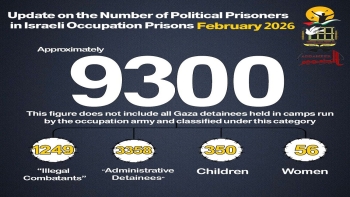
  • Update on the Number of Political Prisoners in Israeli Occupation Prisons – February 2026 >

    Read More
  • The Hidden Genocide: Thousands of Palestinian Political Prisoners Suffer Severe Crimes and Extermination Behind Bars - 
December 2025 Briefing >

    Read More
  • UPDATE: Palestinian Political Prisoners in Israeli Occupation’s Custody – December 2025 >

    Read More
  • 1