

- Details
- Category: News
- Hits: 2497
The occupying state is practicing repression against Palestinian detainees in the Israeli jails in the past few months, where Ofer prison witnessed unprecedented attacks of its sections in which jailers used gas and sound bombs in addition to rubber coated bullets. This act led to the injury of 150 detainees who have been taken to hospitals or to the clinic of the prison.
The repressive policy carried out by the prison services seems to conform to the recommendations of Jel'aad Ardan "the Minister of the internal security" which requested to suppress the Palestinian detainees.
During the past weeks, the administration of prisons installed jammers in the sections of Negev prison under the pretext that the Palestinian detainees have mobile devices. However, Palestinian detainees started to complain about the effects caused by the waves and radiations of this device. Yesterday, the Israeli forces broke into section 4 at Negev prison and started to transfer detainees to section 3. Tension prevailed at section 7, where news reported that the process of transfer was accompanied by violence against detainees. Detainees tried to defend themselves, and they were repressed by the prison services that used gas and sound bombs and rubber coated bullets. Furthermore, many detainees got wounded such as Isalm Yousri and Oday Salem.
The Israeli forces kept some of the detainees handcuffed all over the night in section 3, 4, and 7. However, the situation in Negev prison got worse, where the attacks began in section 21, 22 and 23.
We in the Commission of Detainees and Ex-Detainees' Affairs realize the seriousness of the incidents in Negev prison, where 1300 Palestinian detainees are held in cruel conditions. In addition, we believe that the attacks practiced against our detainees emphasize the dangerous and repressive policy carried out by the prisons' services. We call on you and you organizations to work and intervene immediately to lift the injustice and save our detainees.
Best regards
Qadri Abu Baker
The head of the Commission of Detainees and Ex-Detainees' Affairs

- Details
- Category: News
- Hits: 1879
The Commission of Detainees and Ex-Detainees' Affairs warned of the aggravated health conditions of sick detainees at Al-Ramlah clinic, who are facing death at a daily basis.
The Commission stated that 15 sick detainees are held Al-Ramlah clinic, suffering from poor health and medical conditions. Most of them have paralysis and move using wheelchair, depending on their colleges to help them.
In addition, the Commission affirmed that they are suffering from deliberate medical negligence, where medical services and health care are not provided. They are only given painkillers instead of being treated in a proper way.
The Commission reviewed the aggravated health condition of the detainee Sami Abu Dyak, whose health is deteriorating due to the cancer in the intestines since three years.
The advocate of the commission Fawaz Shalloudi visited Abu Dyak and cited his message, in which he states "for the sake of God, work seriously to release me because I am about to die, and I want to spend the rest of my life in my father's lap".
Cases of sick detainees at the clinic of Al-Ramlah prison are the most difficult, where there are injured and disabled detainees and other detainees who have chronic diseases due to the policy of medical negligence.
Sick detainees at Al-Ramlah clinic:
Normal 0 false false false EN-US X-NONE AR-SA /* Style Definitions */ table.MsoNormalTable {mso-style-name:"Table Normal"; mso-tstyle-rowband-size:0; mso-tstyle-colband-size:0; mso-style-noshow:yes; mso-style-priority:99; mso-style-parent:""; mso-padding-alt:0cm 5.4pt 0cm 5.4pt; mso-para-margin-top:0cm; mso-para-margin-right:0cm; mso-para-margin-bottom:10.0pt; mso-para-margin-left:0cm; line-height:115%; mso-pagination:widow-orphan; font-size:11.0pt; font-family:"Calibri","sans-serif"; mso-ascii-font-family:Calibri; mso-ascii-theme-font:minor-latin; mso-hansi-font-family:Calibri; mso-hansi-theme-font:minor-latin;} table.MsoTableGrid {mso-style-name:"Table Grid"; mso-tstyle-rowband-size:0; mso-tstyle-colband-size:0; mso-style-priority:59; mso-style-unhide:no; border:solid windowtext 1.0pt; mso-border-alt:solid windowtext .5pt; mso-padding-alt:0cm 5.4pt 0cm 5.4pt; mso-border-insideh:.5pt solid windowtext; mso-border-insidev:.5pt solid windowtext; mso-para-margin:0cm; mso-para-margin-bottom:.0001pt; mso-pagination:widow-orphan; font-size:11.0pt; font-family:"Calibri","sans-serif"; mso-ascii-font-family:Calibri; mso-ascii-theme-font:minor-latin; mso-hansi-font-family:Calibri; mso-hansi-theme-font:minor-latin;}
|
|
Name |
City |
Dwell time |
Illness |
Sentence |
|
1 |
Khalid Shawish |
Jenin |
Permanent, using wheelchair |
crippled |
Life term |
|
2 |
Naser Shawish |
Jenin |
|
|
Life term |
|
3 |
Mansour Mouqade |
Salfit |
Permanent, using wheelchair |
crippled |
Life term |
|
4 |
Ashraf Abu Alhuda |
Nablus |
Permanent |
tumor in the testicles, and fragments in the pelvic area and spine |
4 years |
|
5 |
Mo'tasem Raddad |
Tulkarem |
Permanent |
Intestinal cancer |
20 years |
|
6 |
Nahed Aqra' |
|
Permanent, using wheelchair |
crippled |
3 life terms |
|
7 |
Saleh Saleh |
Nablus |
Permanent, using wheelchair |
paralysis |
5 years |
|
8 |
Mohammad Abu Khader |
Jenin |
|
Kidney problems |
17 years |
|
9 |
Sami Abu Dyak |
Jenin |
Permanent |
Intestinal cancer |
3 life terms |
|
10 |
Ezz-Aldeen Karajat |
Halhoul |
Non-permanent |
Using cane |
Under arrest |
|
11 |
Ahmad Abu Khdair |
Jenin |
Non-permanent |
Not nick, but he helps sick detainees |
11 life term |
|
12 |
Iyad Hraibat |
Hebron |
Non-permanent |
Using wheelchair |
Life term |
|
13 |
Mahmoud Abu Hwailah |
Nablus |
Non-permanent |
Using cane |
Under arrest |
|
14 |
Mustafa Daraghmeh |
Bethlehem |
Non-permanent |
|
Under arrest |
|
15 |
Anas Mousa |
Bethlehem |
Non-permanent |
Using wheelchair |
Under arrest |
- Details
- Category: News
- Hits: 1802
Ramallah: the occupation forces arrested (569) Palestinians from the occupied territories in February 2019, including (78) minors and (13) females.
Detainees' institutions and Human Rights Organizations (the Commission of Detainees and Ex-detainees' Affairs, the Palestinian Society Prisoner's Club, Al Dameer Association for Human Rights) pointed out in a fact sheet that the occupation authorities have arrested (229) citizens from Jerusalem, (73) from Ramllah and Al-Bireh, (60) from Hebron, (54) from Jenin, (44) from Bethlehem, (38) from Nablus, (15) from Tulkarem, (15) from Qalqilia, (9) from Tubas, (5) from Salfit, (10) from Jericho and (17) from Gaza Strip.
The most prominent policies practiced by occupation authorities against detainees in February:
Aggravated policies against detainees in Negev prison
Institutions observed a series of escalations by the occupation authorities and the Israeli prison Services that aimed to clampdown on the lives of Palestinian detainees in Israeli jails. Those escalations caused a state of tension that may increase and lead to unstable conditions in jails.
The wave of escalation started mid-February in Negev prison. At the beginning of the month, Negev prison administration informed the detainees about its intention to install jamming devices in section (4).
In February 15, the prison's administration emptied section (4) and installed the jammers. In February 18, the administration informed the detainees that it will operate the jammers at 10:00 am next morning. However, this notification came in spite of the negotiations with detainees that the jammers would not be operated. In response, the detainees informed the administration of the prison that they are willing to dissolve the factions and there will not be a representative of detainees to discuss matters with the administration, or take the responsibility of any action by the detainees. This action obliges the administration to deal with detainees individually, thereby keeping the prison administration in a permanent state of emergency.
This was the first step of protest which was followed by returning the meals by many sections, running at night in the prison's yard, and refusing to get inside their cells. However, the prison's administration responded by announcing the state of permanent emergency, doubling the numbers of forces and carrying out violent inspections in section (3&4).
The repression forces attacked detainees by beating them. In the same context, the detainees Ibrahim Natsheh and Fawzi Awwad burned their clothes, and then they were taken to solitary confinement, in addition to the detainee Saleh Ja'bari who also taken to solitary confinement after two days.
The escalations came after commencing the work of the committee formed by the Minister of Interior Security, Jel'ad Ardan, which aims to clampdown on the life conditions of detainees. The acts of the committee came in the context of the approaching Israeli elections, and in particular, the campaign by Israeli Prime Minister Binyamin Netanyahu who is using the Palestinian detainees as electoral propaganda.
Spoiled food served for detainees
Monitoring reports pointed out that the administration of prison is deliberately provide bad food in terms of quantity and quality for detainees in prisons and detention centers, where the food served does not conform to international laws and health standards, which force detainees to buy their stuff from the cantina on their own expenses.
Detainees' institutions revealed during last February that the suffering increases in detention centers, especially (Itzion, Huwara and Al- Jalama), where those detention centers do not contain a cantina, thus, detainees are forced to eat the bad meals of prison.
- Details
- Category: News
- Hits: 2458
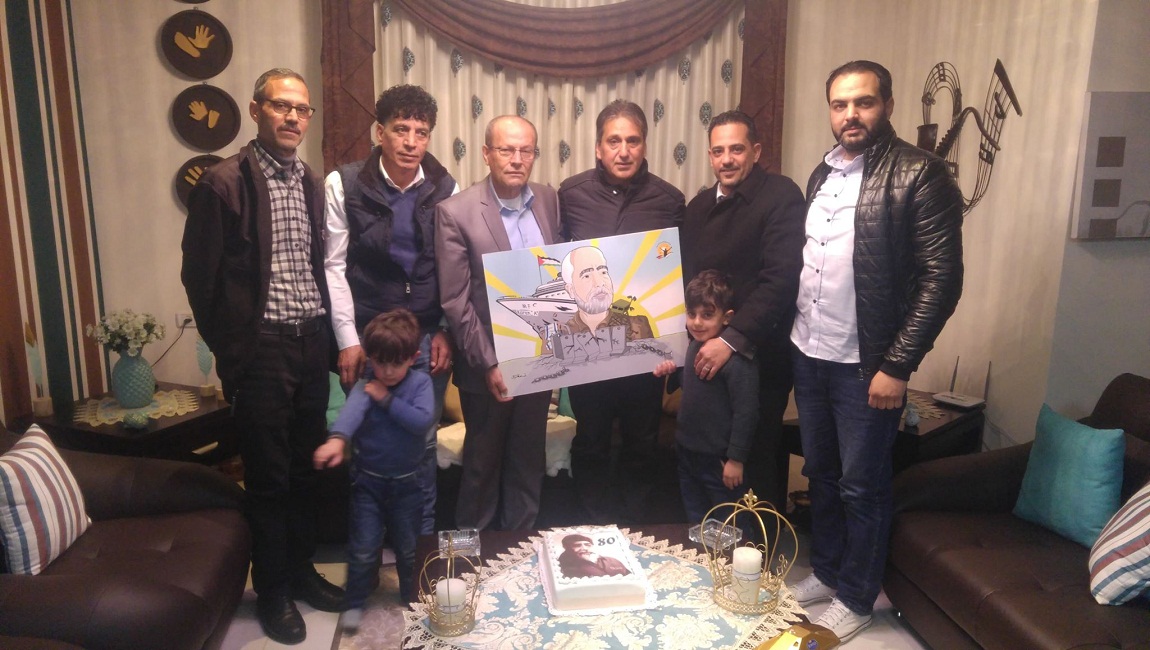
The Commission of Detainees and Ex-Detainees' Affairs stated on Tuesday that Major General Fuad Al-Shobaki the oldest Palestinian detainee in the Israeli jails has turned 80 years.
The Head of the Commission of Detainees' Affairs Qadri Abu Baker, the member of the Central Committee of Fatah Movement Muhammad Al-Madani, Dr. Muhammad Odeh, Reyad Qasrawi and Al-Shobaki's family has lighted a candle of freedom celebrating his 80th birthday. The cartoonist Ossama Nazzal made a portrait for him in this occasion.
Abu Baker stated: "Abu Hazem the oldest detainee in Israeli jails is sentenced to 20 years of imprisonment and he is detained since 2006. He suffers from many diseases and he was exposed to a deliberate medical negligence. The occupation bears full responsibility for his life, especially after refusing to release him, despite recognizing the deterioration of his health condition".
Abu Baker added "it is a shame on all the free people all over the world that Al-Shobaki enters his 80th year in the Israeli jails, while they just watch without taking a serious action towards the violations that he and all detainees are exposed to".
The Commission pointed out that the Military Court of Ofer Prison decided on September 2015 to mitigate his sentence by deducting three years of the sentence to be 17 years of imprisonment. Another session has been held on May 2018 to hear the final sentence, but it was postponed.

- Details
- Category: News
- Hits: 2166
The Commission of Detainees and Ex-Detainees' Affairs expressed its deep concern about the increasing medical violations pursued by the administrations of Israeli prisons against sick and wounded detainees who are currently imprisoned in various Israeli jails, in which they are targeted with neglecting their health conditions.
The Commission monitored one of these cases at Ashkelon prison, the case of the 38-year-old detainee Rami Ibrahim Khalil Hijazi, from Tal Al-Hawa southwest of Gaza Strip. Hijazi suffers from a deflection in the spine many years ago, which causes severe pain and hindering his ability to move. The administration of prison gives him painkiller as an alternative of treatment.
The Commission stated that he gets transferred to the clinic of Beersheba prison from time to time to have Physiotherapy sessions, but sometimes Hijazi refuses to go to the clinic, just like his colleges in prison. This refusal is to avert the conditions of transfer by the Bosta car, where they are exposed to degrading treatment and spend long hours setting on iron chairs which worsens his health conditions.
It is worth mentioning that the detainee Hijazi is detained since 2002 and sentenced to 20 years of imprisonment.
- Details
- Category: News
- Hits: 2009
Major General Qadri Abu Baker, the head of the Commission of Detainees and Ex-Detainees' Affairs, sent a letter of thanks on Sunday, 24 February 2019 to the Belgian Intal Globalize Solidarity praising its role in advocating the issue of Palestinian detainees in Israeli jails.
Abu Baker called on the international solidarity movements to make more efforts to break the international silence, and stated that solidarity events in various places help raising the awareness about the issue of Palestinian detainees in Israeli jails, empower their will and determination, and encourage them to achieve their goals under the pressure practiced against them by the Israeli prisons administration.
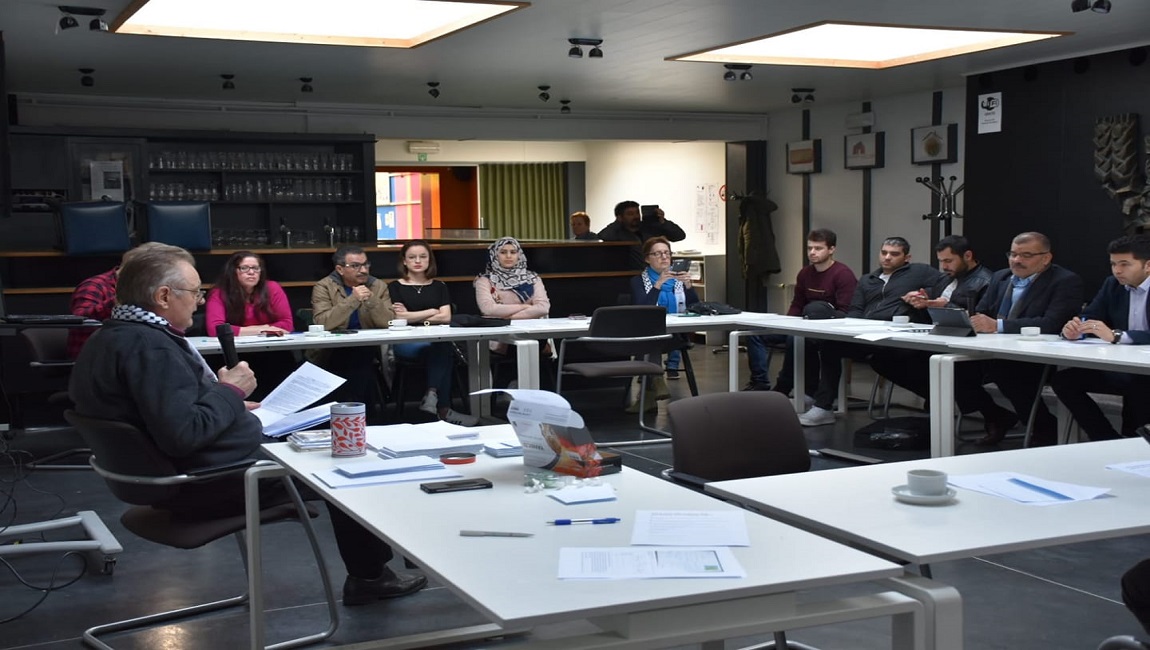
It is worth mentioning that the Belgian Intal Globalize Solidarity is an association subordinate to the Belgian Labor's Party (a left-wing party and one of the strongest advocates of the Palestinian issue), which organized an event in headquarter in Aalst on February 16, 2019 that included an explanation of the annual report issued by the Commission of Detainees Affairs. Many members of the Belgian Labor's party, representatives of the Belgian parliament, peace activists and lecturers have participated in the event.
The event ended with signing 15 letters which were sent to the Belgian Ministry of Foreign Affairs, calling for releasing all sick and old detainees in addition to female detainees, minor detainees and the long-term detainees who were imprisoned before the Oslo Accord, especially the detainee Kareem Younes being the oldest long-term detainee in the world.

- Details
- Category: News
- Hits: 2235
The advocate of the Commission of Detainees and Ex-Detainees' Affairs, Mo'taz Shqiarat, cited on Tuesday the story of the minor detainee Mohammad Abdullah Hammad,16, from Qalandia camp, in which he was exposed to humiliation and extensive beating during his arrest in 16/1/2019 from his house.
Hammad who still detained at Ofer prison stated that "a number of Israeli soldiers besieged my house in the camp, where many soldiers broke into the house accompanied by horrific dogs. The two dogs attacked me, while the soldiers were holding my family and threatening them with weapons".
He added: "then they handcuffed me, blindfolded my eyes and took me to a settlement called "Kochav Ya'akov". At that time, the soldiers kept beating, cursing and deliberately forcing me to fall down".
"After arriving to the settlement, they transferred me by a military vehicle to Atarot Interrogation Cetner and they forced me to confess guilt with the charge of throwing stones on soldiers at Qalandia military checkpoint, then they transferred me to Ofer prison".
The Commission pointed out that the Israeli occupation with all its authorities are deliberately causing harm, humiliation and abuse against Palestinian detainees, especially children during detention, interrogation and trials.
This is a clear and systematic plan to destroy the Palestinian childhood and its future, where 99% of those who got arrested are exposed to one or more kind of torture, abuse, and humiliation.
- Details
- Category: News
- Hits: 2318
The head of the Commission of Detainees and Ex-Detainees' Affairs, Major General Qadri Abu Baker, said that the Israeli crime represented in piracy a robbery of the money of the state of Palestine, which comes under the pretext of deducting the allocations of martyrs and detainees families, will be a real timed bomb.
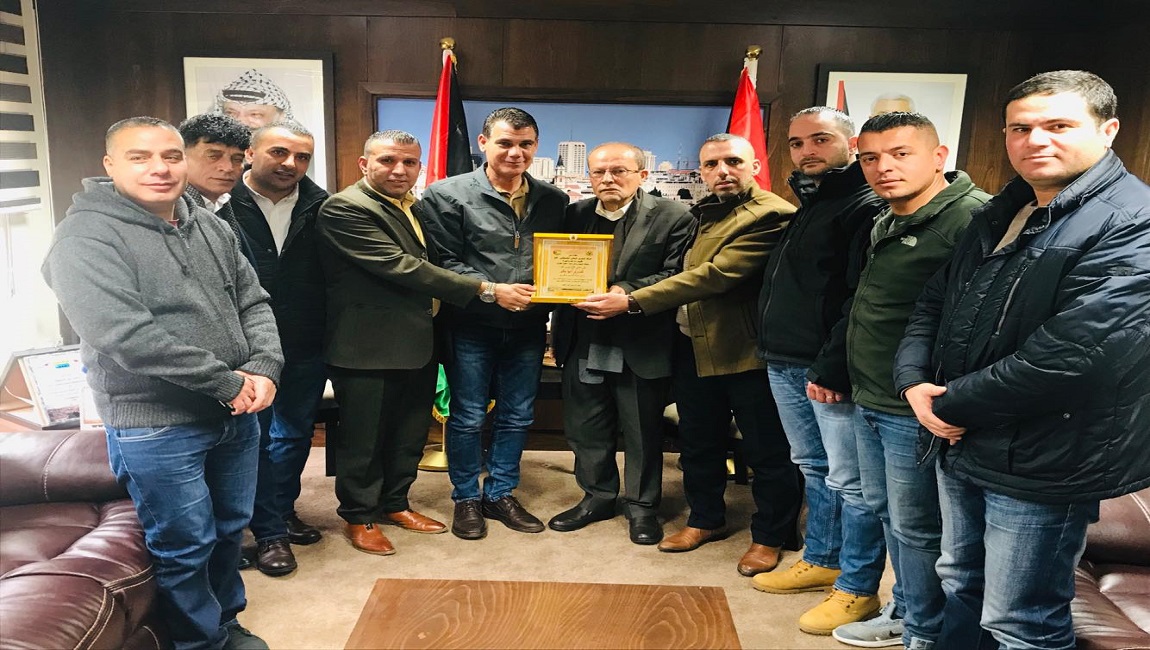
His statements came in a meeting with delegation from Fatah movement\ Jalazon camp, where Abu Baker explained that the Palestinian leadership headed by President Mahmoud Abbas confirms that the salaries of martyrs and detainees families can't be affected, and that last penny in the budget of the authority will be given to those struggling people.
Major General Abu Baker called the International community to act immediately to put an end to this organized terrorism, resulting from the competition between Israeli politicians, to achieve success in the Knesset elections.
Major General Abu Baker pointed out that this piracy contradicts all international norms and conventions, and the international silence will lead to a confrontation with the occupation. He added that the Palestinian people and leadership will confront this racist extremism and that the occupation and its leadership will pay a high price for these actions.
It is worth mentioning that Jalazon camp northeast of Ramallah is one of the areas that are exposed to daily attacks by the occupation, and that 120 persons from this camp are behind the bars of Israeli jails, in addition to hundreds of released detainees and martyrs.
- Details
- Category: News
- Hits: 2252
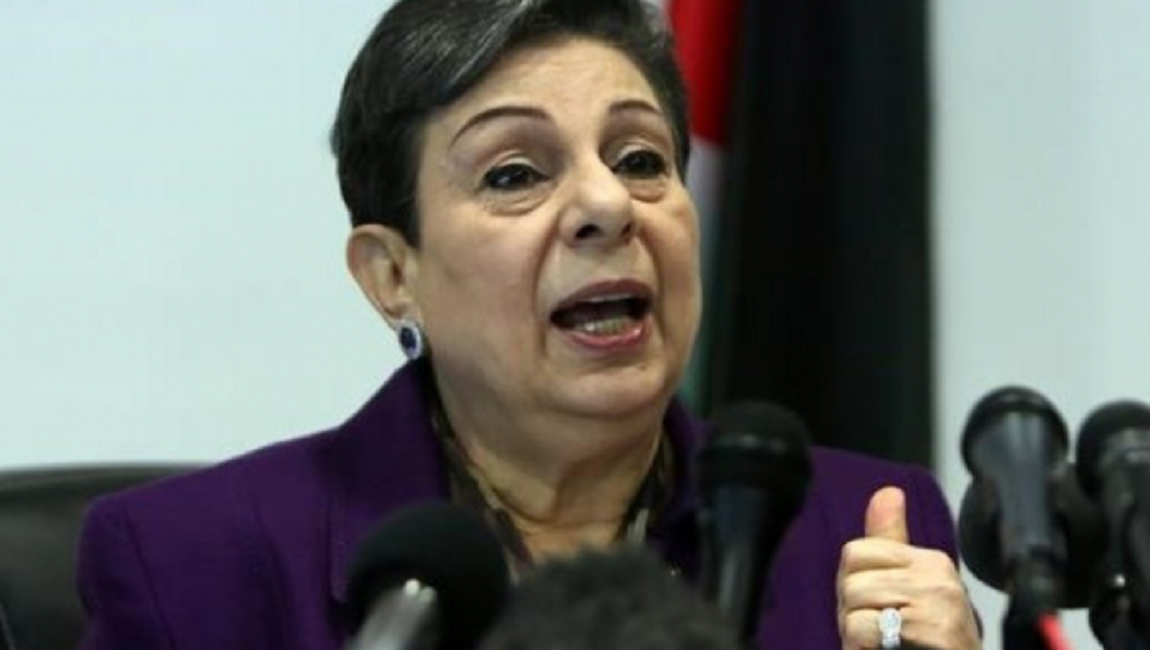
On Sunday, February 17, the Israeli government took the unlawful decision of stealing once again Palestinian tax revenues. In response to this brazen robbery, Dr. Hanan Ashrawi issued the following statement on behalf of the PLO Executive Committee:

- Details
- Category: News
- Hits: 2269
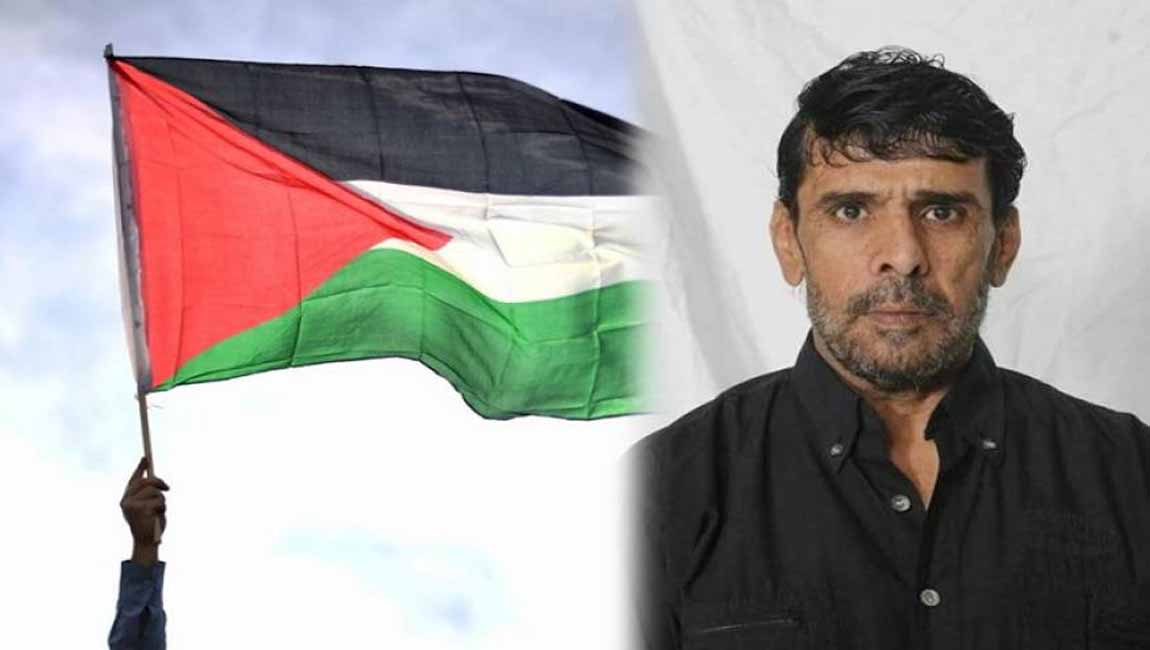
A state of tension and outrage prevailed in all sections of Megiddo prison after the abduction of Rabee' Abu Al-lail, the representative of detainees, from his cell without any justifications and transferring him to another section in preparation for transferring him to Nafaha Prison according to the Prison Administration, the Commission of Detainees and Ex-Detainees' Affairs stated on Sunday.
The Commission revealed that the detainees got astonished due to the break in of section 6 at 5:00 am by the Alyamaz, Mitsada and Droor forces, who forcibly took Abu Al-lail out of his cell without allowing him to change his clothes or take anything of his belongings. This act was followed by a break in and a closure to all sections of the prison.
The Commission clarified that detainees responded to this violent attack by knocking on the doors and exclaiming "God is great". In addition, they returned their meals and informed the administration of the prison that if the detainee Abu Elil was not returned to prison, there would be an escalation, noting that the administration has informed detainees at all sections that the aim of this attack is to transfer Abu Al-lail.
The Commission warned of the escalation of attacks against detainees in all prisons, and called the International Community to put an end to the Israeli hatred against detainees, which is increasing with the oncoming Israeli elections. However, detainees are considered a good material for the propaganda of candidates.
- Details
- Category: News
- Hits: 2339
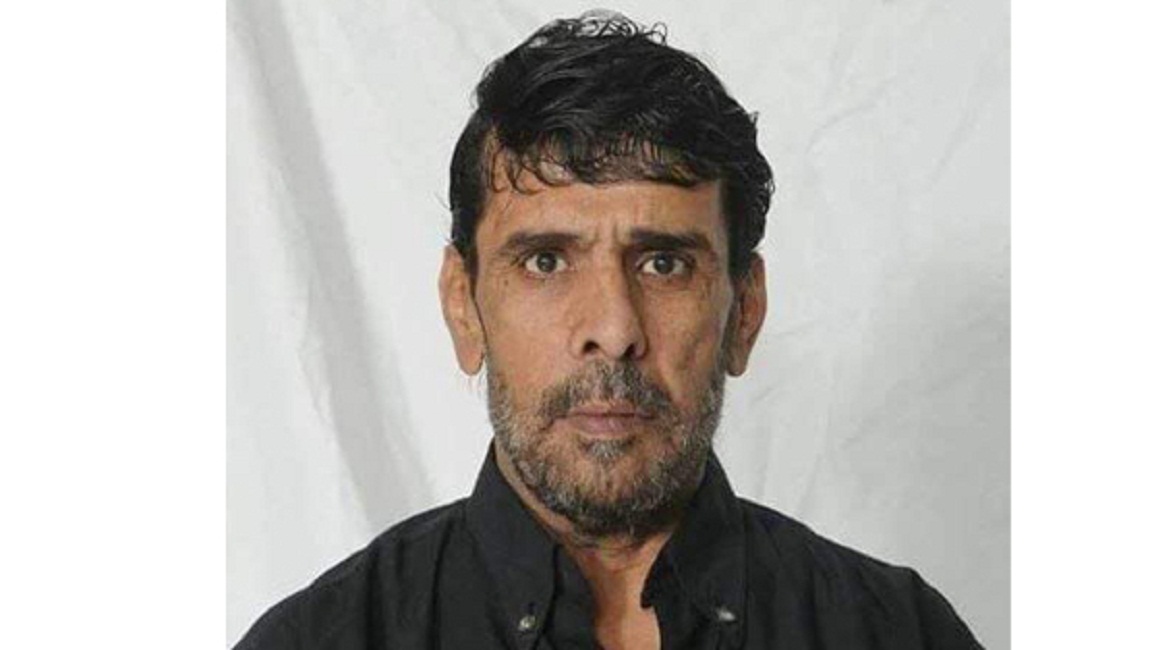
The Commission of Detainees and Ex-Detainees' Affairs stated, Quoting the Director General of Palestinian Forensic Medicine Institute Dr. Ryan Al-Ali who participated in the autopsy, that the results showed that Baroud was exposed to a deliberate medical negligence through the past years, and that the main cause of death is MAI due to complete closure in the left coronary artery (heart attack) and other chronic diseases.
Dr. Ali indicated that the martyr Baroud had epidemic hepatitis C, high blood pressure and gastric ulcer last year. He also stated that his health condition was very bad during the past months due to cirrhosis of the last stage, and that his last relapse was diagnosed with bacteremia due to gastric ulcer explosion, in addition to dropsy in the abdomen due to cirrhosis and a chronic kidney failure.
Al-Ali stressed on the need to know all the reasons of the martyrdom of Baroud, to highlight the extent of medical negligence he suffered during the past years, and the wrong medical diagnoses of his health conditions when he entered the hospital before his death.
The advocate of the Commission of Detainees' Affairs Kareem Ajweh stated that the Israeli police informed him about their refusal to hand over the body of the martyr after the autopsy, despite the decision of the court which allowed handing the body.
The Commission of Detainees' Affairs stated that the Israeli occupation authorities and the administration of its prisons bear the full responsibility for Baroud's life.
The commission pointed out that with the martyrdom of Baroud, the number of the martyrs of the Captive Movement increased to 218.
It is worth mentioning that the detainee martyr baroud from Gaza Strip was detained since March 1991, and sentenced to life imprisonment with the charge of killing a settler. He was deprived of family visits since 2000, and his mother passed away without meeting him. He martyred last Wednesday after transferring him from Ramon prison to Soroka Hospital.
- Details
- Category: News
- Hits: 2529
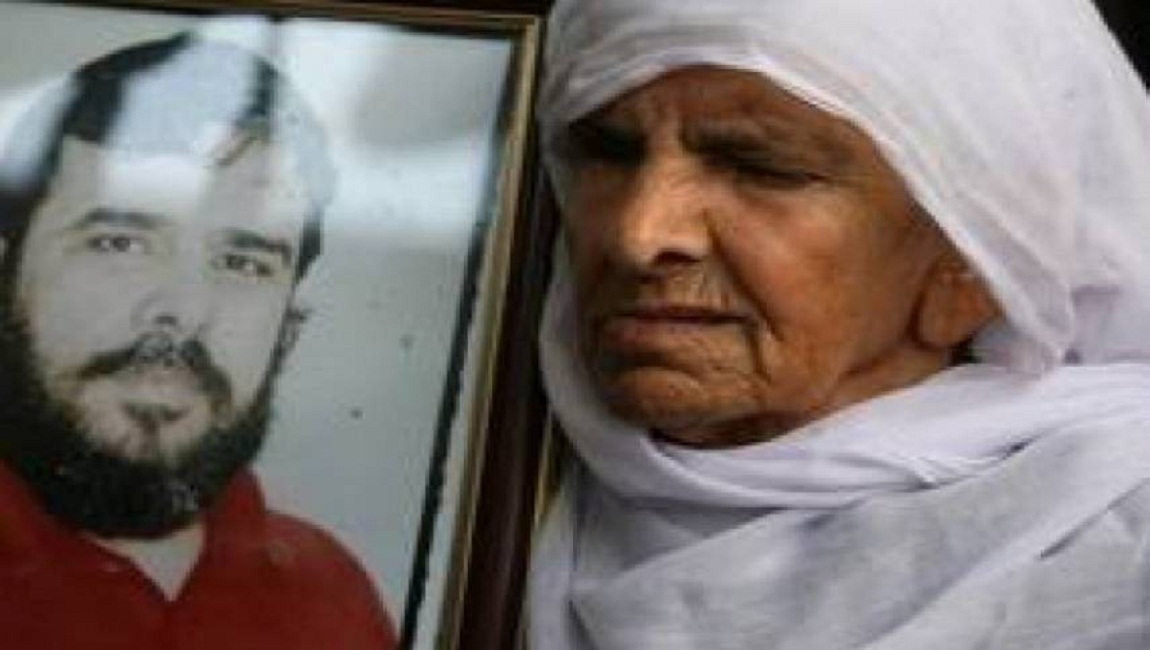
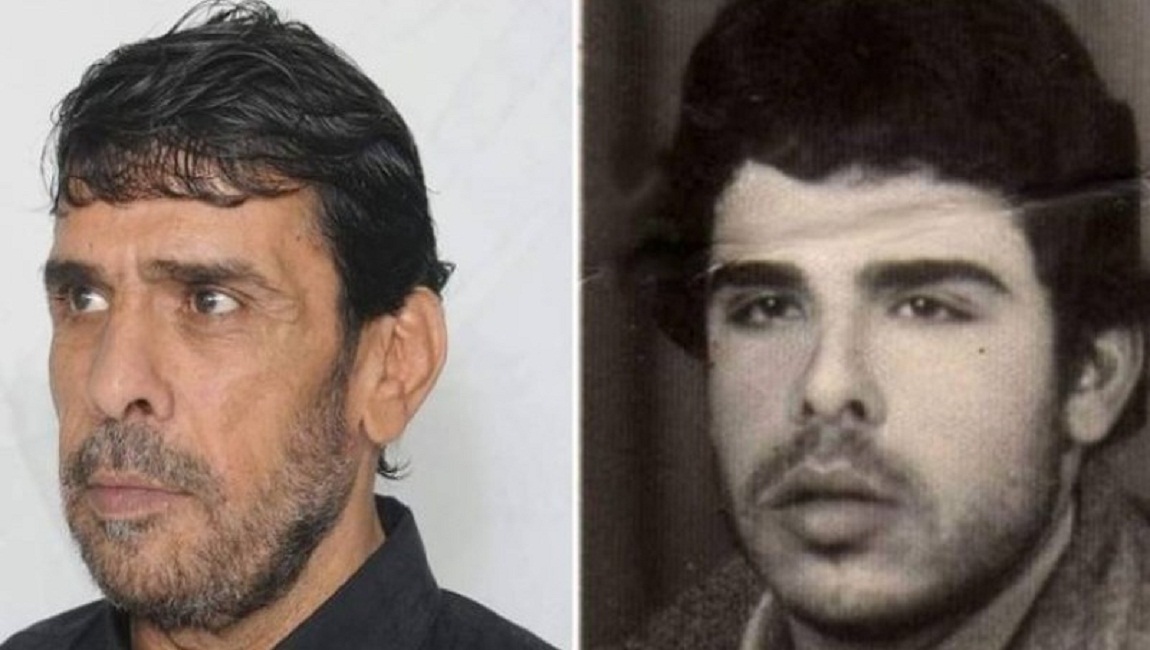
The martyr detainee Fares Ahmad Mohammad Baroud is 51 years old from Al-Shate' camp/ Gaza, he is detained since 23/3/1991
He was arrested with charge of killing a settler and sentenced to life imprisonment.
He had psychological problems and did not receive appropriate care.
He is one of the long-term detainees who were arrested before the Oslo Accord.
He was supposed to be released within the fourth group, but the occupation authorities refused to release him after the negotiations of 2013.
With his martyrdom, the number of martyrs of the captive movement reaches to 218.
He had an internal hemorrhage in 18/11/2018 and he got transferred to Soroka hospital. He was diagnosed with a problem in the artery that feed the liver. He had a surgery to remove this artery and part of the liver.
He was prevented from family visits since 2000.
- Details
- Category: News
- Hits: 2437
The Commission of Detainees and Ex-Detainees' Affairs declared that a state of maximum alert prevailed in the Israeli jails in the meantime after the martyrdom of the detainee Fares Baroud (51 years old) from Al-Shate' camp/ Gaza, who got transferred from Ramon prison to Soroka Hospital where he was martyred.
The Commission clarified that the prisons of Nafaha and Ramon was completely closed after announcing the martyrdom of Baroud, where detainees live a state of tension and alert.
The Commission stated that the detainee Baroud was one of the sick detainees, who suffered from a difficult psychological situation. Moreover, he has a surgery at the end of 2018 and removed a part of the liver, due a deliberate medical negligence.
It is worth mentioning that the detainee Fares Baroud was imprisoned since 23/3/1991, and sentenced to life imprisonment with the charge of killing a settler. He was supposed to be released with the last group of long-term detainees, whom the Israeli occupation promised to release during the deal of reviving the negotiations in 2013. However the occupation authorities suspended the release of the fourth group which includes 30 detainees, and refused to free them due to political reasons.
- Details
- Category: News
- Hits: 2267
The Commission of Detainees and Ex-Detainees' Affairs announced the martyrdom of the detainee Fares Baroud (51 years old) from Al-Shate' camp /Gaza inside the Israeli jails, after a short time of transferring him from Ramon Prison to one of the Israeli Hospitals.
The commission stated that the reason behind his martyrdom is not clear yet, but he was suffering from deliberate medical negligence over the past years, and that he has not receive any medical care that was supposed to be provided inside the prison.
The commission of Detainees and Ex-Detainees Affairs states that the administration of Ramon prison and the Israeli government shall hold the responsibility of this crime, which is added to the series of crimes committed against our detainees.
By his martyrdom, the number of the martyrs of the captive movement becomes 218.
It is worth mentioning that the detainee Fares Baroud was imprisoned since 23/3/1991, and sentenced to life imprisonment with the charge of killing a settler. He was supposed to be released with the last group of long-term detainees, whom the Israeli occupation promised to release during the deal of reviving the negotiations in 2013. However the occupation authorities suspended the release of the fourth group which includes 30 detainees, and refused to free them due to political reasons.

- Details
- Category: News
- Hits: 2135
The Commission of Detainees and Ex-Detainees Affairs cites the testimony of the detainee Ammar Mohammad Shakarneh (21 years old) from Nahhaleen village near Bethlehem, who was tortued and beaten by Israeli soldiers during his arrest in 24/1/2019.
Shakarneh told the advocate of the commission that 15 armed soldiers broke into his house at midnight and destroyed all its belongings, and attacked him in a barbaric way all over his body.
He added: "they handcuffed me and blindfolded me, and then they drove me to Betar settlement". He remained in the settlement for 3 hours in the cold weather before being transferred to Itzion detention center.
In addition, the detective hit the detainee, cursed him and threatened him to force him confess guilt.
- Details
- Category: News
- Hits: 2038
The commission of Detainees and Ex-Detainees Affairs cited on Wednesday, through the advocate Jaclyn Fararjeh, the testimonies of five detainees from the Shakarneh's family from Bethlehem who got abused by the occupation forces during their detention and interrogation at Etzion Detention Center.
The advocate stated that the detainees Omar Muhammad Shakarneh, Ibrahim Sha'ban Shakarneh, Abdullah Ahmad Shakarneh, Ammar Mohammad Shakarneh and Hussam Kamal Shakarneh were brutally beaten and assaulted during their arrest from Nahhaleen village.
The advocate pointed out that they were handcuffed after being arrested, and the soldiers threw them on the ground and started to jump over them as a means of beating. Then they put the five detainees in the military vehicle and continue to beat them until they reach the settlement of "Betar". They remained there for three hours while being handcuffed and blindfolded.
It is noteworthy to say that Etzion Detention Center is one of the worst detention centers of the Israeli occupation army, where detainees are held inside bad rooms filled with insects and rats and got subjected to all types of physical and psychological torture and abuse.
- Details
- Category: News
- Hits: 2056
Warnings from the deterioration of the health conditions of the detainee Abu Dyak
15 detainees at Al-Ramlah Hospital suffer from serious health conditions
The lawyer of the Commission of Detainees' Affairs Kareem Ajweh stated that the health condition of the detainee Abu Dyak is deteriorating by time and that he takes 8 kinds of painkillers.
Ajweh clarified during a visit to Al-Ramlah Hospital that the detainee Abu Dyak suffers from an extreme fatigue, difficulty in breathing, inability to walk and deprivation of sleep for long hours due to the tumor in the stomach and intestines.
The commission stated that the health conditions of sick and wounded detainees in the so called "Ramlah prison clinic" are getting worse due to the lack of medical care for patients who are classified as the most critical among detainees at Israeli jails.
The Commission pointed out that there are 15 sick detainees held in Al-Ramlah Hospital and have serious conditions, namely:
The detainee Sami Abu Dyak has cancer in the intestines
The detainee Mo'tasem Raddad has intestines cancer, heart failure, broblems in the bones, shoulder aches and problems in the vision.
The detainee Nahed Al-Aqra' has many health problems and amputation of the feet.
The detainee Saleh Saleh suffers from hemiplegia.
The detainee Ashraf Abu Al-Huda suffers from paralysis and moves by the wheelchair.
The detainee Khaled Shaweesh suffers from hemiplegia and many chronic diseases.
The detainee Mustafa Daraghmeh suffers from kidney problems and diabetes.
The detainee Ezz-aldeen Karajeh suffers from an injury in the shoulder, foot and pelvis and needs a surgery.
The detainee Ahmad D'iasat suferrs from several shot wounds in his right thigh.
The detainee Waleed Sharaf has liver problems and intestinal infections.
The detainee Mohammad Abu Hwailah has an injury in his left foot.
The detainee Iyad Hraibat uses the wheelchair.
The detainee Mohammad Abu Khader needs a kidney transplant.
- Details
- Category: News
- Hits: 2152
A report issued by the Commission of Detainees and Ex-Detainees' Affairs stated that the Israeli repression forces "Drour" accompanied with forces from the Israeli police broke into section 17 at Ofer prison, and conducted inspections and missed with the belongings of detainees.
The Commission pointed out that the repression forces have closed ten section in the prison after the breaking in and inspection process, and that a state of tension and disorder prevailed in the prison since the first hours of dawn.
The Commission also stated that the detainees in all sections have returned their meals in a protest against the break in.
- Details
- Category: News
- Hits: 2251
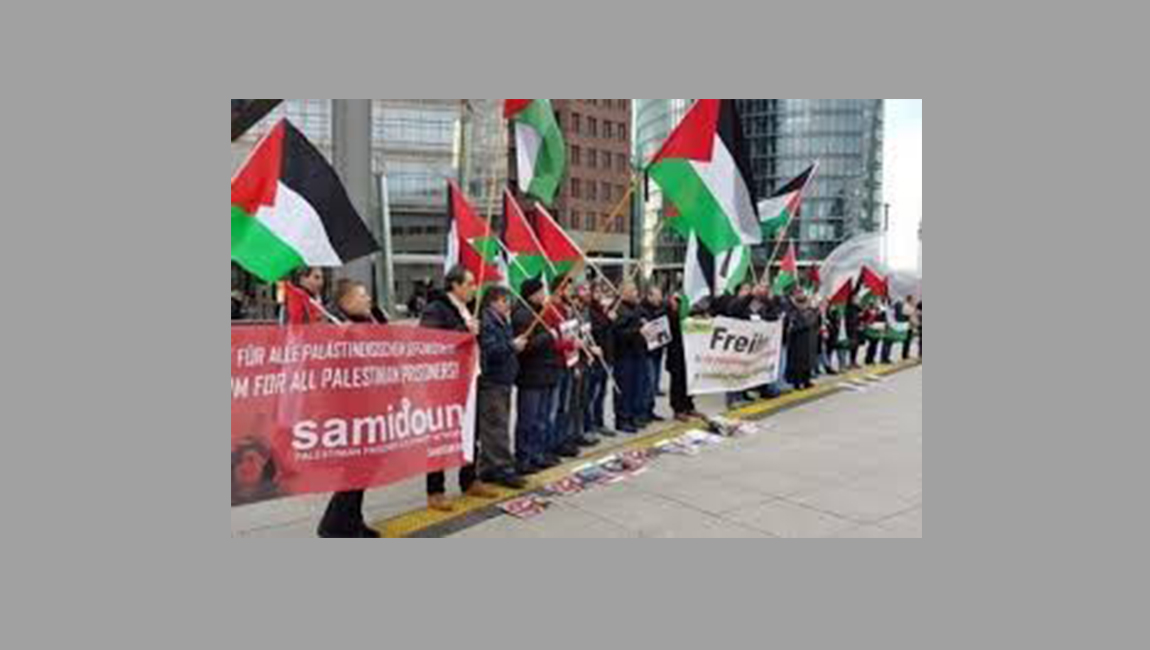
The Arab and Palestinian communities in Berlin have organized a solidarity stand with the Palestinian detainees in Israeli jails at the Potsdamer Platz square in Berlin, with the participation of many institutions.
These ongoing events in Germany come at the time of systematic repression against the Palestinian prisoner movement, and against the practices of prisons' administrations.
The international coordinator of "Samedoun network" Charlotte Keats stressed on the need to promote the international boycott of (BDS) against the state of occupation. This came in support of the struggle of the Palestinian detainees and the rights of Palestinian people, and against the companies and states that support the racist entity of Israel.
Keats called for the solidarity with the Palestinian detainees in facing the attack launched by the Israeli Minister of Defense, Gilad Erdan.
Many European countries and other countries all over the world witness a series of solidarity events in the National Day of solidarity with the detainee Ahmad Sa'adat, which started on January 15 and lasts to January 22.
- Details
- Category: News
- Hits: 2274
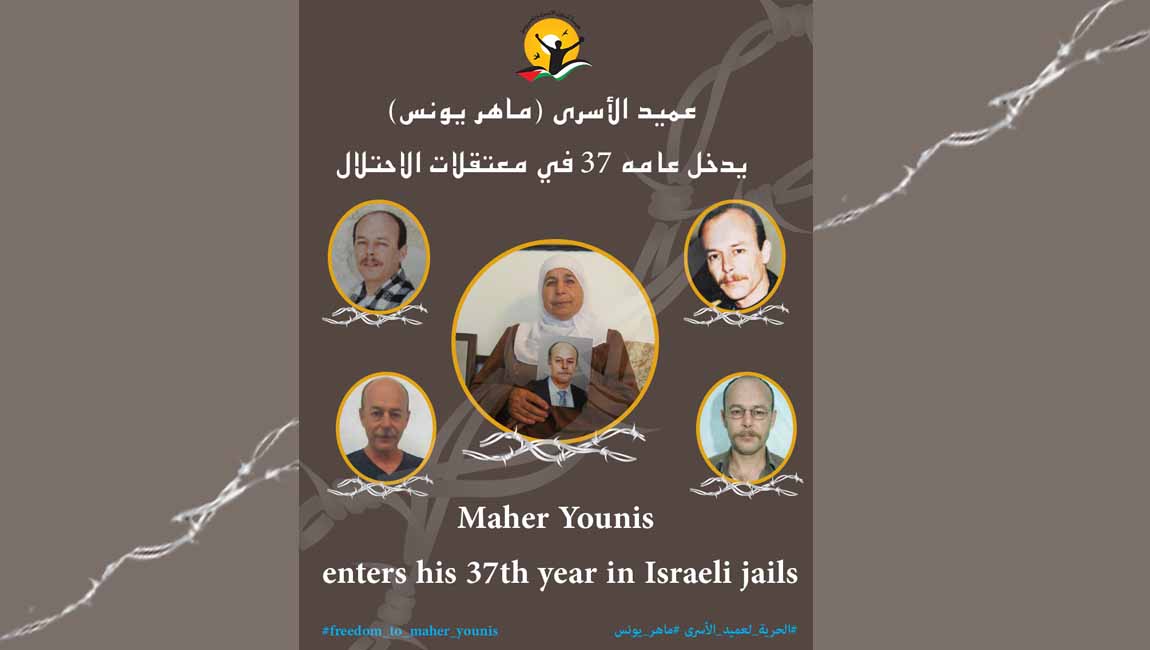
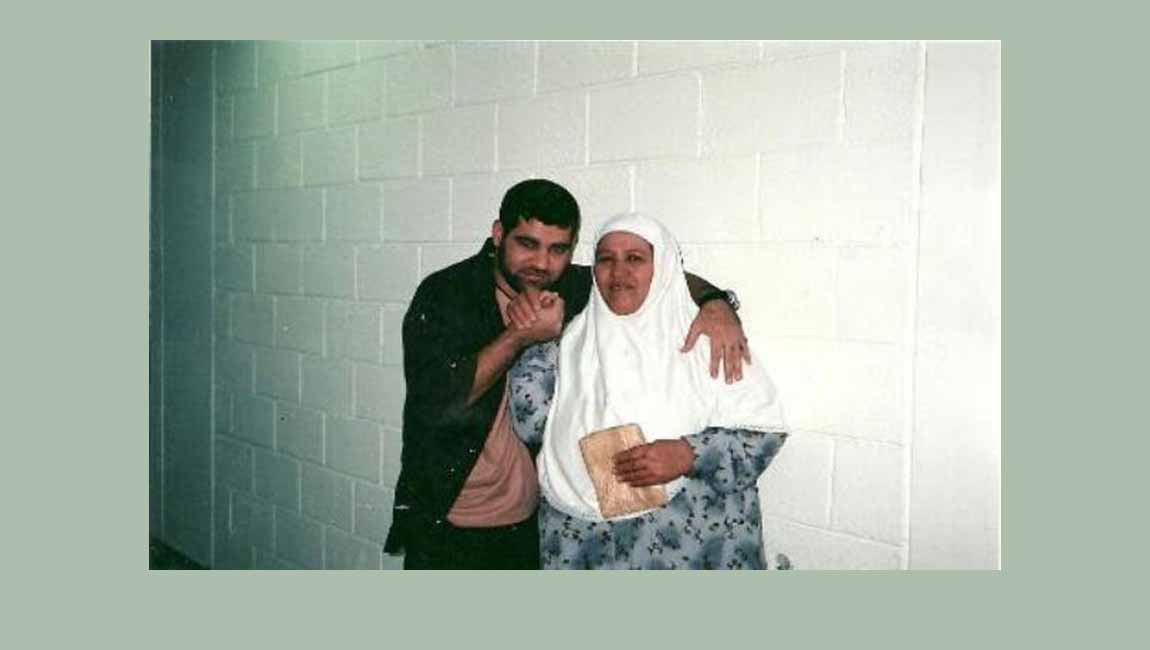
The second oldest long-term detainee in Israeli jails, Maher Younis (61 years old) from Arah village, enters his 37th year in jail on Friday. He is currently held at Negev prison, and he's the cousin of Kareem Younes.
Maher Younes was born on January 9, 1958 in Arah village in the occupied territories of Palestine, and he has five siblings. He ended his elementary study in a school in the village and then joined the Agriculture School in Al-Khdaira city. He was arrested by the Israeli army in 18/1/1983 after two weeks of the detention of his cousin Kareem younis. After his interrogation, the military prosecution of the occupying state accused him of belonging to the Fatah movement, illegally possessing weapons, and killing an Israeli soldier. He was sentenced to death penalty with the detainees Kareem Younis and Sami Younis on charges of "betraying the citizenship", since they were holding the Israeli ID and considered Israeli citizens. A month later, the court issued a sentence to life imprisonment instead of the death penalty. In September 2012, the occupation authorities set the life sentence of 40 years for a number of detainees, including Maher Younis.
Yunis was arrested before getting married, and thus he spent his youth in detention without establishing a family. He is also deprived of seeing his siblings' sons and daughters by a decision from the central court of Nazareth. His petition of seeing his father on deathbed in 2008 was rejected, and he did not see his father before passing away.
Younis has conducted an open hunger strike for 10 days on February 25, 2013 in order to highlight the suffering of detainees in Israeli prisons, especially the detainees from the Palestinian occupied territories who are excluded from exchange deals. He ended his strike after the intervention of the President Mahmoud Abbas who promised to put their issue on top priorities.
Younis is one of the detainees who were arrested before Oslo Accord, and one of the detainees who were supposed to be released within the exchange deal in 2013. Israel has released three groups of this deal; including 23 detainees for each group, and then breached the agreement and did not release the forth group, and who was supposed to be released on March 2013.
The forth group (27 detainees) of the exchange deal are still held in Israeli jails, half of them are from the Palestinian territories occupied in 1948, including Kareem Younes, Maher Younis, Ibraheem Abu Mokh, Rushdi Abu Mokh, Waleed Daqqah, Ibraheem Bayadseh, Ahmad Abu Jaber, Basheer Khateeb, Ibraheem Ighbaryeh, Mohammad Ighbaryeh, Yahia Ighbaryeh and Mohammad Jabari.
- Details
- Category: News
- Hits: 1970
Ramallah: the occupation authorities arrested (551) Palestinians from the occupied Palestinian territories during October 2018,
including (74) minors and (15) females.
Detainees and Human Rights Organizations (the Commission of
Detainees' Affairs, the Palestinian Society Prisoner's Club and
Aldameer Association for Human Rights) pointed out through a
fact sheet issued today that the occupation authorities arrested
(91) citizens from Jerusalem, (61) from Ramallah and Al-Bereh,
(75) from Hebron, (44) from Jenin, (26) from Bethlehem, (45)
from Nablus, (100) from Tulkarem, (28) from Qalqilia, (10)
from Tubas, (9) from Salfit, (10) from Jericho and (12) from
Gaza Strip.
The number of detainees in Israeli jails until October 31, 2018 is
about (6000) detainees, including (52) females, (270) minors
and (430) administrative detainees.
Collective punishment against the Na'alweh's family
Occupation forces still impose a series of collective punishments
against the family of Ashraf Na'alweh from Shwaikeh/
Tulkarem, who is accused of performing "Burkan" attack on
October 7, 2018. Occupation forces are imposing a siege at the
Shwaikeh neighborhood since a month, and break in the area
every day. They arrested (100) citizens form Tulkarem during
October including (11) females.
Other than that, the occupation forces tightened its measures on
checkpoints and towns surrounding Shwaikeh neighborhood, in
addition to the daily storming carried out to inspect people's
houses in the area and other arbitrary procedures that come as a
part of collective punishments practiced by the occupation
forces.
From the perspective of human rights organizations, the
occupation forces take the attack of "Burkan" as an excuse to
impose collective punishment, which is banned in accordance
with article (33) of the Fourth Geneva Convention. There is a
possibility of activating procedures that allow using the most
severe torture against detainees from the family and friends of
Ashraf under the pretext of having information that may help to arrest him.
The contracting parties at the Fourth Geneva Convention call
upon obliging Israel to respect the International Humanitarian
Law and to hold it accountable for the violations and collective
punishments committed against citizens in the occupied Palestinian territories.
Administrative Detention
The military leader issued a new administrative detention order
against the deputy in the Legislative Council Khalida Jarrar for
four months ending in February 28, 2019, where this is the
fourth administrative detention order against Jarrar.
The occupation forces arrested Jarrar from her house in
Ramallah on June 2, 2017, knowing that she was elected as a
member in the Legislative Council since 2006, and was
appointed as a chairman of Detainees Committee at the council.
She is a leading figure in the Palestinian society and a mother of two daughters.
Solitary confinement… the occupation's weapon to abuse detainees psychologically and physically
Solitary confinement for long periods aims at humiliating
detainees, as what happened with the detainee Ibrahim al-Ra'I
on 11/4/1988, who was killed after solitary confinement for nine months.
The occupation's intelligence still isolates the detainee Ibrahim al- Arooj (33 years old) from Bethlehem in difficult conditions.
During his visit by the lawyer he said that he's deprived of family visits and that he's prevented from going out to the
prison's yard without being handcuffed. Whenever he goes to
the clinic or being moved to isolation he must be handcuffed. In
addition, he suffers from the inspections to his cell and
damaging his belongings. The commission also documented the
cruel treatment he was subjected to recently during his transfer
to the Tselmon crossing border to attend the court.
It is worthy to mention that the detainee al- Arooj is the oldest
administrative detainee from Bethlehem, and he is jailed without
a charge since January 25, 2016.
Female detainees at "Hasharon" continue their strike during October
Female detainees at "Hasharon" continue their strike which is
represented in abstaining from going out to the prison's yard, in
a protest against operating cameras in the yard.
The prison administration did not cease to violate the privacy of
female detainees, but they impose humiliating penalties against
them such as depriving some family members of the visit,
preventing them from using hot water and treating them in a bad
manner by the doctors of the clinic.
In support of the females strike, four detainees at Hadareem
prison announced their open hunger strike: Khalil Abu Eram,
Kefah Hattab, Abdulrahman Abu Lebdeh and Ahmad al-Ser.
After more than 50 days of strike, the prison administration
transferred them to Al Damon prison.
- Details
- Category: News
- Hits: 2205
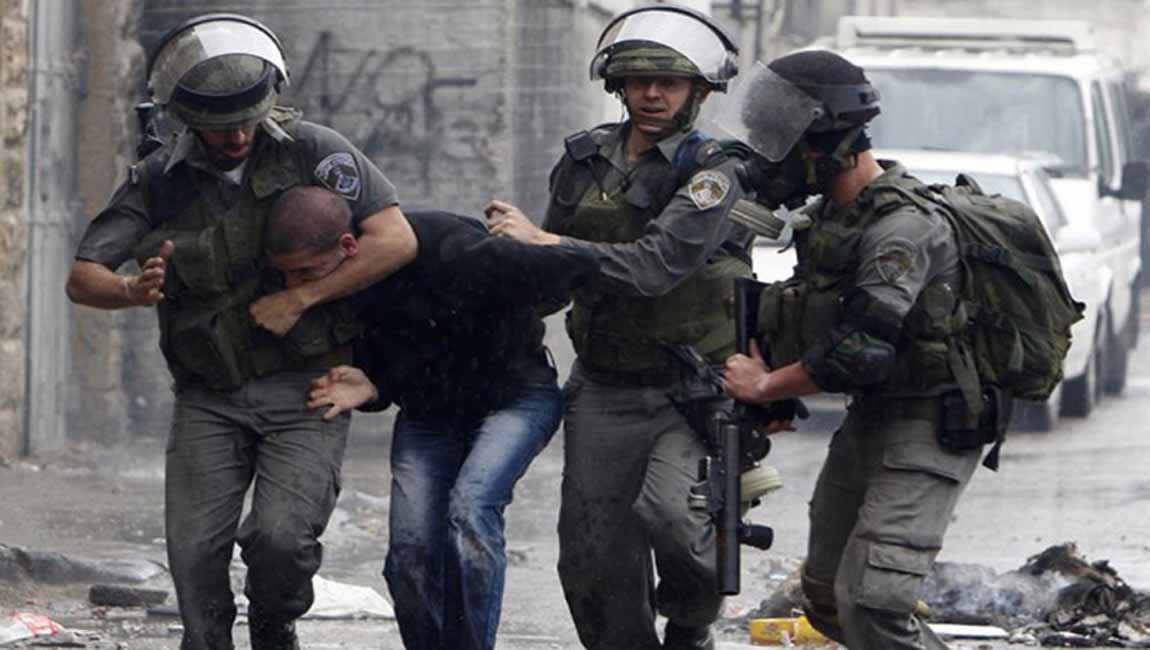
The report of the Commission of Detainees and Ex-Detainees' Affairs showed that the administration of prisons have arrested 497 minors and jailed them at Ofer prison throughout 2018, and that 99% of them were beaten and exposed to ill-treatment during their detention in Israeli interrogation centers.
Among those minors, 232 of them were arrested from their houses, 188 were arrested from the roads, 28 were arrested at military checkpoints, 29 were arrested after summon, 20 due not having a permit and 25 of them were arrested after being shot.
The Commission indicated throughout the report that the total sum of fines imposed on those minors is about 1.018.000 NIS. Moreover, there are 428 minors who were prosecuted with unfair sentences and 3 minors who were sentenced to administrative detention.
The Commission of Detainees states that the issue of children detention is a systematic destruction of the Palestinian childhood, where the occupation authorities practice many violations against them since the first moment of detention. Minors are jailed in very difficult and inhuman conditions that lack the minimum international standards for the rights of children and the rights of prisoners.
It's worth mentioning that 250 child are currently held in the prisons of the occupation, distributed in Ofer and Megiddo prisons.
- Details
- Category: News
- Hits: 2188
The Commission of Detainees and Ex-Detainees' Affairs sent on Monday an urgent letter to many international bodies and humanitarian and legal institutions warning about the critical health condition of the sick detainee Sami Abu Dyak, requesting an immediate intervention to save his life before it's too late.
The Commission explained in the letter, which was sent to more than 20 international bodies including the International Quartet, the Office of the European Union, the Office of the High Commissioner for Human Rights and the World Health Organization, that there is a real anxiety that threatens Abu Dyak's life and that he may die at any moment.
The Commission also stated that the 35-years-old detainee Abu Dyak, who is currently at Al-Ramla Hospital, is suffering from cancer and is living under the policy of medical negligence and procrastination by the Israeli authorities.
The Commission also explained in the letter that Abu Dyak is held in the Israeli jails since 17/7/2002 and sentenced to life imprisonment and 30 years, and that he had a surgery on September 2015 to cut 80 cm of his intestines, in which he got infected. This led to a kidney and lung failure.
The commission stated in its letter that "the Israeli authorities have the full responsibility on Abu Dyak's life, who were exposed to a real medical negligence which led to the deterioration of his health conditions.
- Details
- Category: News
- Hits: 2492
The Commission of Detainees and Ex-Detainees' Affairs stated in its report some of the daily situations lived by female detainees at Damoun prison, which show the extent of violations they are exposed to on a daily basis, violate all international treaties, conventions and human rights principles.
The nature of Damoun prison:
Damoun prison is located north of Palestine on the Mount of Carmel in Haifa city. It was established since the British Mandate as a store of cigarettes. The land was owned by the Qurman's family from Haifa, and after 1948 it was seized by Israel and turned into a prison. The infrastructure of it was very bad and there was an order to close it because it lacks the minimum standards of living. However, with the outbreak of Al-Aqsa Intiafda and the increase of Palestinian detainees, it was reopened. It currently holds 500 detainees, most of who are detained on the grounds of illegal entry to the occupied territories, and it contains a section where 53 female detainees are held.
Conditions of female detainees after being transferred to Damoun prison
On November 2018, all political female detainees were gathered at Damoun prison.
- Before transferring female detainees from Al-Sharon prison to Damoun prison, females of Damoun prison got transferred from their sections. They were held at section 6 and then transferred to section 3. They got transferred with 6 phases dating from 31/10/2018 to 7/11/2018.
- The administration of Damoun prison tried to distribute the female detainees on section, but the females refused and asked to choose their sections. As means of protest, they gathered and sit in the yard of the prison and refused to get inside their cells. After negotiations with the prison's administration they were allowed to supervise their own distribution and arrangement of sections.
- There are 53 female detainees at Damoun prison including: one minor female, a deputy in the legislative council, 8 injured females, 22 mothers and wives, 19 female arrested under interrogation, 2 females under the administrative detention and 3 females from Gaza Strip who are prevented from family visits.
- It is worth mentioning that the sentences issued against the female prisoners reached a maximum of 16 years.
- Females are held in sections that contain 13 rooms, and there are 4-8 females in each room. There is a solitary confinement with surveillance cameras, and also there is a room used to educate minors which is opened only once a week.
- Counting is done 4 times a day, and inspection is done twice a day.
- There is no safety for female detainees inside rooms, where beds are so high which resulted in many cases of falling down.
- Regarding water in the section: females buy mineral water from the canteen on their expense.
- Each family is allowed to enter two books in a month after getting a permit.
The yard of the prison
- There are two surveillance cameras in the yard, where female detainees are monitored by jailers. This prevents females from doing exercises and seeing the seeing the sun rays, especially that most of them put on hijabs.
- Female detainees are not allowed to gather in the yard.
- They spend 4 hours in the yard, in which time is distributed to bath tine, director visit and lawyers visits.
- The yard has no ceiling, so the females do not go outside during the rain.
Restrooms
- It is worth to mention that restrooms are located outside the prison's cells, which prevents females to use it in any time. Females are also not allowed to bathe unless at the time of the going to the yard. Females are forced to walk from their rooms through the yard which make them feel embarrassed.
Education
- Female detainees are prevented from obtaining educational material, and lately the prison's administration found some materials and confiscated them.
- There is no library for female detainees, and they did not receive the books brought by female detainees who were jailed at Al-Sharon prison.
- The classroom that was opened for minors' education is very small and does not have a window, and it is only opened once a week.
Medical treatment
- There is a bureaucracy to ask for the entry of specialized doctors from abroad, since it takes a long time to get permission to enter the prison. There is procrastination in transferring sick detainees to hospitals and making operations. A case in point is the case of the detainee Israa Ja'abees, who needs a special suit for the burns in her body and a plastic surgery due to the deformation in her face.
Products and stuff distributed by the prison's administration
- There is no specific list of products that are distributed at sections every month. The list lacks the special needs of females. According to instructions, female detainees must be provided with their own special stuff.
Materials for handcrafts
- Families of detainees are prevented from giving their daughters material for making handcrafts, and only materials from the Committee of the Red Cross are allowed.
Females under arrest
- Any girl under arrest, who is not held in interrogation centers, is transferred between borders of Mascoubya, Ramlah and Al-Sharon in harsh conditions. She is transferred to Damoun prison after one month of arrest. In many cases, girls are held in solitary confinement. A case in point is the detainee Iftikar Zakarneh, who was transferred to Ramlah prison after one month of interrogation.
Conditions of transferring female detainees to courts
- When female detainees are transferred to courts they got tightly handcuffed and treated in bad way.
- Detainees who are prosecuted in military Salem court and Lod court face many troubles due to holding them at Jalamah, Sharon and Ramlah borders in harsh conditions, and the way to court takes 3 hours which is considered a journey of suffering.
- A new achievement is accomplished regarding the transfer process of female detainees. This is due to complaints on transferring detainees who are prosecuted at Jerusalem court and Beersheba court, where previously they were transferred before one day of court date and the detainee remain 3 days in harsh isolation conditions. The new achievement is that the transferring process for female detainees takes only one day.
Family visits
- There are visit request every week, where the representative of the detainees get very busy in applying requests for 53 detainees to enter clothes, books and photographs.
- Regarding the female detainees from Gaza Strip, they are prohibited from family visits due to the siege. After making many requests by the Commission of Detainees Affairs, they got allowed to phone call their families for 45 minutes.
Lawyers' visits
- There is only one room for the lawyers' visits and it is very small, and the lawyer is allowed to visit only 3 detainees.
Administrative detention
The Israeli occupation inherited the administrative detention form the British mandate, where it was the emergency law of the British mandate in 1945 and then was adopted by Israel.
Israel announced the state of emergency in 1948, where the administrative detention is used to arrest Palestinian politicians.
The concept:
It is an arbitrary detention used by the Israeli authorities to arrest persons without any charge. According to the Israeli intelligence, it is a preventive measure to prevent any person from making any breach in the future, and there is no specific period for detention.
The administrative detention is conducted without a prosecution and it is based on an order issued by the military commander of area depending on confidential files.
- Palestinians are detained under administrative detention for long periods under the pretext of "confidential information", which are not known by the detainees or lawyers.
- Although the maximum period of administrative detention is 6 months, it could be prolonged and renewed until further notice. This unjust detention deprives the prisoners of the right to know the information they have been detained for and keeps them in darkness for long periods, since they do not know when they will be released, and sometimes it takes years.
- Female detainees under administrative detention:
1. The detainee Khalida Jarrar: member in the legislative council, she's 55 years old from the city of Ramallah. She was arrested in July 2, 2017. The military commander issued the order of administrative detention against her and it was renewed and extended.
The first extension of the order was in 27/12/2018 to 6 months.
The second extension in 26/6/2018 to 4 months
The third extension in 25/10/2018 to 4 months
The order of administrative detention ends by 28/2/2019.
2. The detainee Fidaa Du'mos (24 years old), is form Bait Ummar near Hebron. She was arrested On May 29, 2018 and was sentenced to 95 days of actual imprisonment. At the day of release, an order of administrative detention to 6 months was issued, it ends by 15/2/2019.