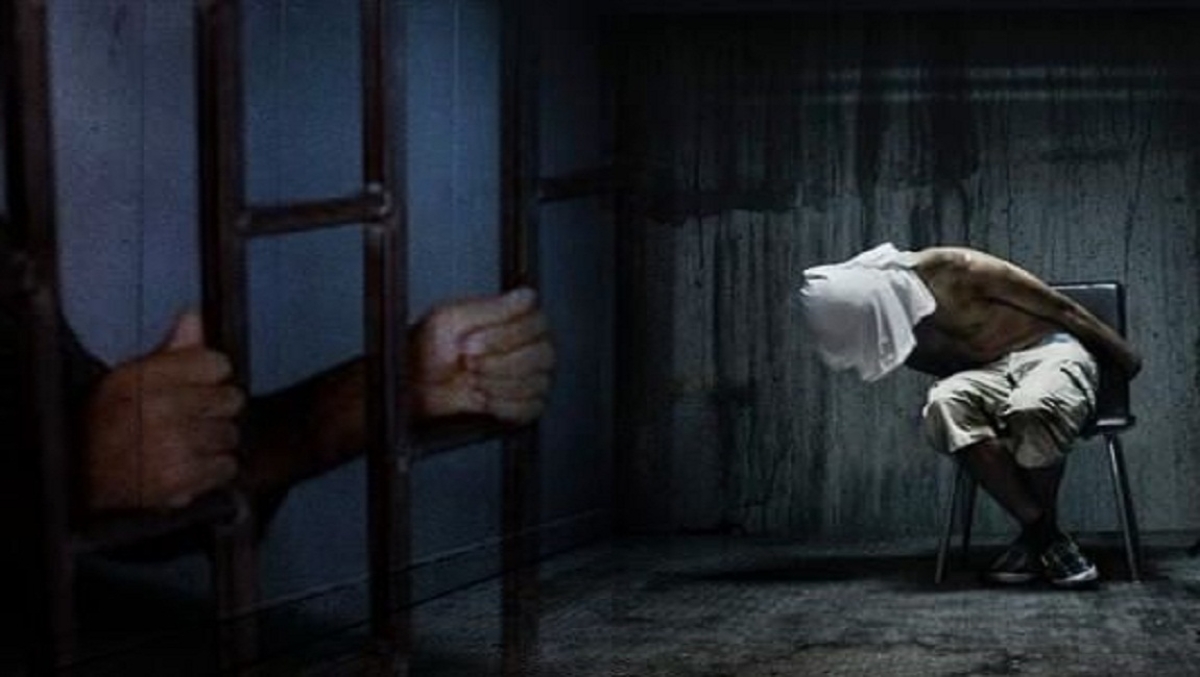


Commission of Detainees’ Affairs releases new updates on the medical condition of detainees Faisal Saba’neh and Ali Abu Atiya
on . Posted in slider
Commission of Detainees’ Affairs releases new updates on the medical condition of detainees Faisal Saba’neh and Ali Abu Atiya
December 7, 2025
The Commission of Detainees’ Affairs issued its report on Sunday, revealing critical information regarding the health conditions of detainee Faisal Saba’neh (65), from Qabatiya–Jenin, and detainee Ali Abu Atiya (29), from the Ramallah and Al-Bireh Governorate, amid ongoing deterioration in detention conditions and systematic medical neglect inside Israeli prisons.
The Commission’s attorney stated that Saba’neh, who has been held under administrative detention since 25/10/2023 and is currently confined in the Ramla prison clinic, was transferred from Nafha Prison after suffering a heart attack on 01/11/2025. He explained that he had experienced symptoms days before the incident and notified the guards of the need for medical attention, but his request was ignored.
On the day of the heart attack, Saba’neh recounted that a paramedic assaulted him prior to conducting any medical examinations. He was subsequently transferred to Soroka Hospital in Be’er Sheva, where he received treatment. Following his return to prison, his condition worsened once more, and on 09/11/2025 he was diagnosed with gallstones, which required moving him to the Ramla clinic for continuous intravenous antibiotics.
On 17/11/2025, he was transferred to Assaf Harofeh Hospital after new infections developed. He was treated there and returned to the Ramla clinic later the same day. According to the Commission, his condition is relatively stable at present; however, he remains under observation and may need surgery should the current treatment fail to eliminate the stones.
Saba’neh also noted that food portions in Nafha had been insufficient since his arrest, and the situation in the Ramla clinic is no different. Detainees confirmed that food rations have been steadily decreasing for nearly two months.
Regarding detainee Ali Abu Atiya, the Commission reported that he was subjected to a violent arrest on 04/11/2025 near his workplace close to the Jamal Abdel Nasser Mosque in Ramallah. Israeli special forces raided the area using a civilian bus. One of the undercover agents approached him, identified himself as part of a special unit, and ordered him not to move. After he complied, the soldier fired at him from point-blank range, striking his left thigh and causing a fracture.
Abu Atiya was taken to Shaare Zedek Medical Center in Jerusalem, where he underwent two consecutive surgeries: the first involved inserting an internal plate and bridge, and the second placing an external fixation device. The Commission confirmed that his condition has stabilized, though he still requires assistance to walk, after previously being unable to move without the help of fellow detainees in addition to a mobility aid.
The Commission added that Abu Atiya has already appeared in three court sessions, with another hearing scheduled for today, 07/12/2025.
The Commission holds the Israeli Prison Service fully responsible for the worsening health conditions of detainees and urges the immediate provision of adequate medical care, an end to assaults, and the cessation of deliberate medical neglect aimed at slowly destroying detainees’ lives and depriving them of their basic right to health and survival.

Electroshocks & Starvation: Escalating Torture of Palestinian Political Prisoners by the Israeli Occupation’s Prison System
on . Posted in slider
Electroshocks & Starvation: Escalating Torture of Palestinian Political Prisoners by the Israeli Occupation’s Prison System
November 27, 2025
Briefing by the Palestinian Prisoner’s Society & the Commission of Detainees’ Affairs based on lawyers’ visits conducted during November 2025
Ramallah, occupied Palestine - The Israeli occupation’s apparatus of brutality continues to commit serious crimes against Palestinian political prisoners – forming another facet of the ongoing genocide in occupied Gaza. Acts of torture, abuse, starvation, and severe assault persist at unprecedented levels since the start of the genocide.
Lawyers of the Commission of Detainees’ Affairs and the Palestinian Prisoner’s Society carried out dozens of visits to political prisoners during the month of November 2025, and prepared this report, which includes testimonies, on the horrific maltreatment and overall conditions for detainees.
The prisons that were visited include: the Naqab, Ofer, Damon, Shatta, Megiddo, Gilboa, Ofer Camp (Gilad), Janout (formerly Ramon and Nafha) as well as the Rakevet underground section of Ramla Prison. The two organizations documented an escalation in the scale of attacks—particularly through the use of electric shocks, rubber-coated bullets, and the exploitation of injuries suffered by the wounded – further torturing them by denying them medical treatment.
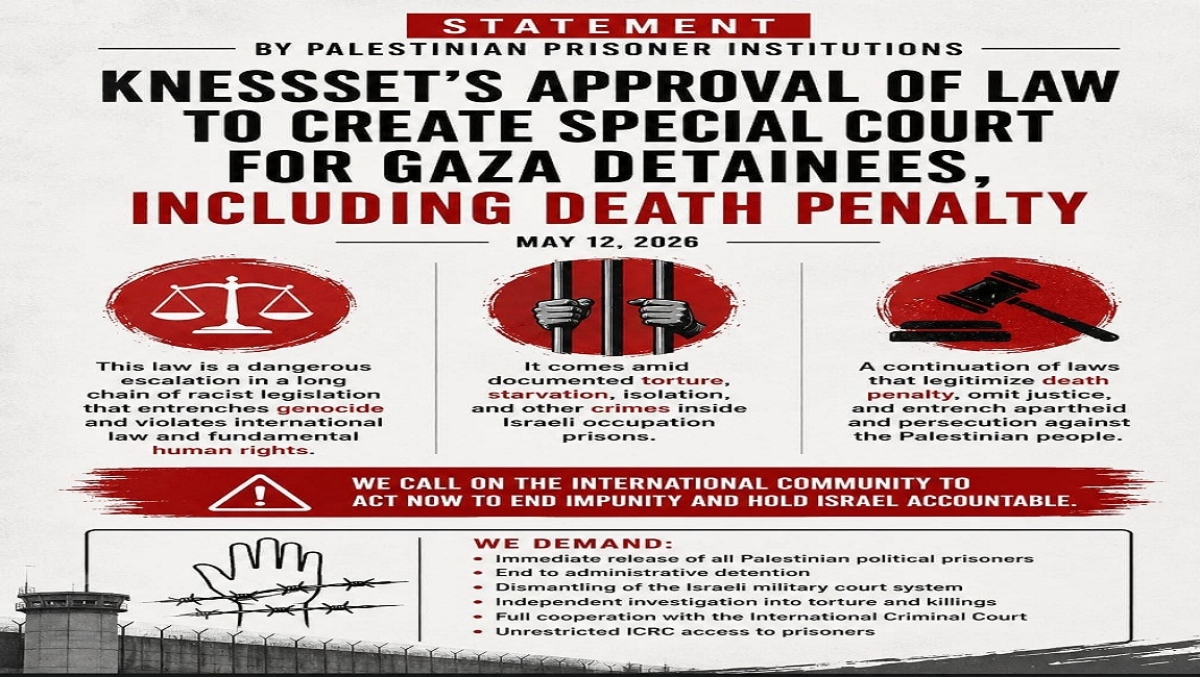
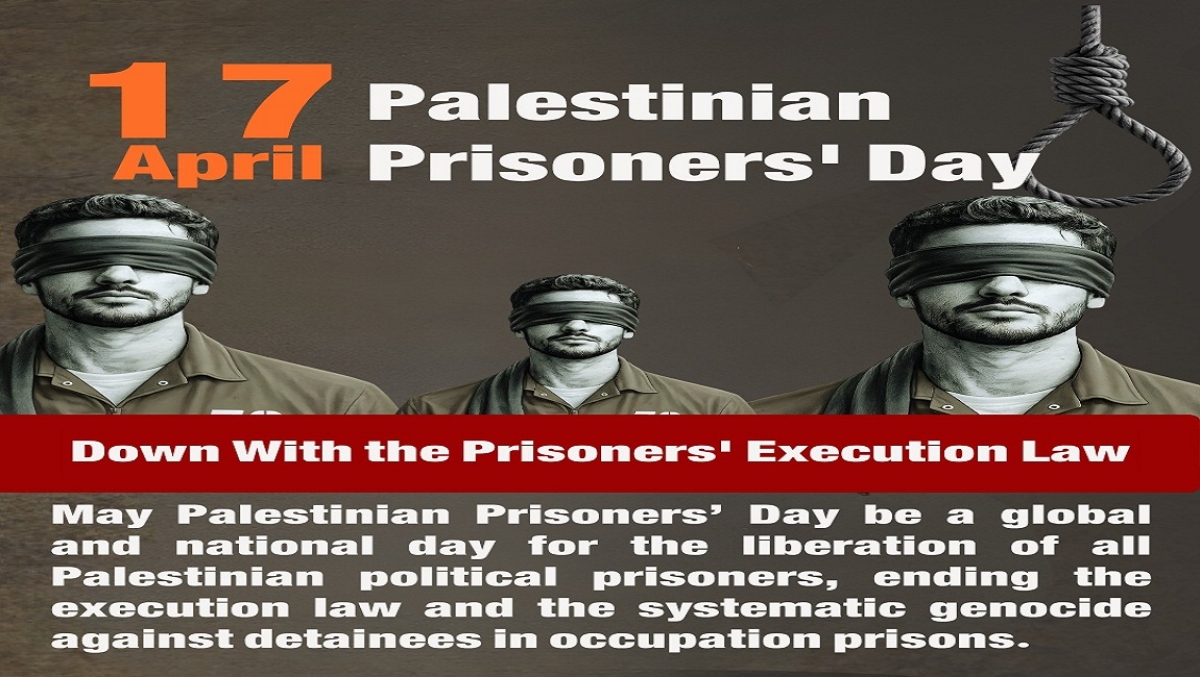
This briefing comes at a time when the occupation is seeking, at an accelerated pace, to legalize the execution of Palestinian prisoners—one of the most dangerous legislative proposals it has attempted to impose throughout its history.
Full report in English below👇🏽
Electroshocks & Starvation: Escalating Torture of Palestinian Political
Prisoners by the Israeli Occupation’s Prison System
Briefing by the Palestinian Prisoner’s Society and the Commission of Detainees’ Affairs based on lawyers’ visits conducted during November 2025
Published November 27, 2025
Ramallah, occupied Palestine - The Israeli occupation’s apparatus of brutality continues to commit serious crimes against Palestinian political prisoners – forming another facet of the ongoing genocide in occupied Gaza. Acts of torture, abuse, starvation, and severe assault persist at unprecedented levels since the start of the genocide.
Lawyers of the Commission of Detainees’ Affairs and the Palestinian Prisoner’s Society carried out dozens of visits to political prisoners during the month of November 2025, and prepared this report on the horrific maltreatment and overall conditions for detainees.
The prisons that were visited include: the Naqab, Ofer, Damon, Shatta, Megiddo, Gilboa, Ofer Camp (Gilad), Janout (formerly Ramon and Nafha) as well as the Rakevet underground section of Ramla Prison. The two organizations documented an escalation in the scale of attacks— particularly through the use of electric shocks, rubber-coated bullets, and the exploitation of injuries suffered by the wounded – further torturing them by denying them medical treatment.
Diseases continue to rise, and the general health conditions and immunity of the prisoners continue to deteriorate, with the renewed spread of Scabies skin disease in several prisons and the registration of hundreds of new cases.
This briefing comes at a time when the occupation is seeking, at an accelerated pace, to legalize the execution of Palestinian prisoners—one of the most dangerous legislative proposals it has attempted to impose throughout its history. Today, in the context of the ongoing genocide inside the prisons, and as part of a series of legislations targeting Palestinian existence, the occupation—which for many decades has carried out extrajudicial executions through various policies, including slow killing that has affected hundreds of prisoners and detainees—is working to formalize and officially legalize executions.
Gilad Military Camp in Ofer Prison: Widespread Use of Electro-Shocking
The recently established Gilad Military Camp within Ofer prison, holds more than 120 newly detained Palestinian political prisoners. Detainees held there face harsh detention conditions and systematic abuse. Detainee testimonies showed that electro-shocking has become a primary tool used to torture them.
In one testimony, a detainee reported that another prisoner was electroshocked after prison forces saw him leading other detainees in prayer inside the room. Other detainees also reported being subjected to physical attacks, electric shocks, and abuse because some prisoners stood near the barred windows inside the cells in an attempt to breathe some air. They described electric shocking as one of the harshest and most severe methods used against them.
Among other forms of abuse practiced against detainees is forcing them to sleep on “alabraash”—beds made of iron bars over which very thin mattresses are placed, causing harm to their bodies. For this reason, most prisoners prefer to sleep on the floor; however, with the arrival of winter and the intensifying cold at night, their suffering has increased. It is worth noting that the camp administration removes blankets and mattresses during the morning inspection at 6am, preventing the prisoners from sitting or lying down until 10pm at night.
The detainees also indicated that the “head-count”, or what is called the security check, is exploited as a tool of abuse, during which they are forced to kneel on the ground and raise their hands above their heads until the procedure is over.
All detainees reported suffering from hunger, as they are given food that is inedible and often spoiled.
During their transfer to lawyers’ visits, detainees are brought handcuffed and shackled, forced to place their cuffed hands above their heads, blindfolded, and required to keep their heads lowered.
The “Rakevet” Underground Section of Ramla Prison
The testimonies of Palestinians abducted from occupied Gaza remain the harshest and most severe since the beginning of the genocide, based on dozens of visits carried out in several prisons and camps.
Three meals are provided consisting of only small, minimal portions. Mattresses are distributed only from 11pm to 4am, and during the daytime detainees are forced to sit on the iron bars of the beds. Collective prayer is prohibited and only individual prayer is allowed. Possession of the Qur’an is not permitted.
Beatings and repression by special prison forces continue, and during the recreation period detainees are shackled and forbidden from lifting their heads. Verbal insults and degradation are constant, along with ongoing threats—especially before they are taken to lawyers’ visits, during which they are forbidden from speaking about what occurs inside the section or about the abuses they face. They are also prevented from receiving any information about what is happening outside the prison.
Testimonies of Palestinians Abducted from occupied Gaza Held in “Rakevet”:
Detainee (A.M.):
“I was arrested at the checkpoint while passing from Khan Younis toward Al-Mawasi. I was interrogated in the field and beaten. Although I have cancer, they continued to detain me and transferred me to the barracks with dozens of other prisoners. Later, I was moved to Asqalan Prison, where I underwent interrogation about five times. After the interrogation ended, I was transferred to the Rakevet section, where I remain held to this day without receiving any treatment or medical care.”
Detainee (N.R.):
“I was arrested in December 2023 in Jabalia. I was not subjected to field interrogation; I was taken directly to the barracks. There, I underwent military interrogation for eight consecutive days, during which I was subjected to shabeh (stress positions) and beatings—specifically the ‘banana’ position—as well as the ‘disco’ interrogation method. Then I was transferred to
Asqalan Prison in April 2024 and interrogated again for 25 days. Later, I was moved to the Rakevet section. Today I suffer from chest pain due to the beatings I endured during my transfer to the section.”
Detainee (M.N.):
“I was arrested in November 2023 at the Netzarim checkpoint. I was interrogated in the field for hours and beaten. Then I was taken to the barracks, where I was tortured. I was taken and tied in a stress position to the fence for nearly an hour (shabeh). Later, I was transferred to the Ofer cells and subjected to continuous military interrogation, during which they used shabeh, beatings, and the ‘banana’ position, which caused a fracture in my back. Afterward, my statement was taken and I was moved to the ‘asafeer’ section (informants). Two days later, I was placed in solitary confinement, where I was tortured and threatened. Due to the continuous handcuffing, my hands changed color, and today I suffer from impaired vision and constant back pain resulting from the fracture.”
Naqab Prison: One of the Worst Central Prisons; Atrocities Intensifying
Naqab Prison remains one of the central facilities where horrifying testimonies and torture practices have been documented, and where several detainees have died. More than two years into the Gaza genocide, the catastrophic reality inside the prison is only getting worse— including systematic repression by prison special forces termed “Keter” - as well as the firing of rubber-coated bullets at detainees inside their cells and during their time in the prison yard.
In addition, the spread of scabies has continued, turning into yet another tool of torture and mistreatment within the prison system. Cases have risen sharply, to the point where they can no longer be counted. Even when legal teams succeed in securing a decision to transfer sick prisoners to the clinic, the occupation’s prison administration only provides a superficial service and forces the detainees to sign papers stating they received treatment, while in reality they receive no medical care and instead face humiliation and abuse during the transfer process.
Once again, prisoners confirmed the continuation of systematic abuse during the “security check – headcount,” in which they are forced to kneel, place their hands above their heads, and lower their heads downward. Each prisoner is also required to sit in a small designated space inside the cell and is beaten and abused if he exceeds it.
Prisoners recounted one recent repression operation that was carried out after a plastic wrapper was found inside one of the cells—detainees were assaulted, beaten, and denied access to the prison yard. Their suffering has worsened with the arrival of winter and the intensifying cold, especially at night, as the administration continues to deprive them of blankets and adequate clothing.
As for the crime of starvation, it continues to escalate, with further reductions in the already minimal food portions. Despite the occupation’s High Court ruling that the food provided to prisoners must be reassessed, the prison system has disregarded the decision altogether and has in fact reduced food quantities even further.
Ofer Prison: Widespread Outbreak of Scabies and Escalating Raids
During November, dozens of prisoners were visited in Ofer Prison, one of the main facilities holding thousands of political prisoners and detainees. According to numerous testimonies, the spread of Scabies is a central issue, especially after it widely infected even the section allocated for child prisoners.
Despite the occupation’s prison administration’s claim that it provides treatment consisting of an ointment and a pill, the reality is entirely different. A single tube of ointment distributed to dozens of prisoners does not constitute real treatment, as each prisoner needs more than one tube to receive adequate care. With the infection spreading across their bodies and causing boils, prisoners can no longer stand, move, or sleep.
The outbreak at this scale is linked to a series of other oppressive policies, including:
• Depriving prisoners of adequate amounts of clothing
• Depriving them of hygenic products both individually and for the cell
• Weakened immunity resulting from the crime of starvation
• Lack of exposure to fresh air or sunlight
• Continued confinement in overcrowded cells
Beyond diseases, physical attacks do not stop. Systematic raids and searches continue, during which rubber-coated bullets are fired and police dogs are used. In November, one of the cells was subjected to a raid after the administration discovered that prisoners possessed plastic bags they had used to cover the barred, open windows due to the severe cold.
Details relayed by three prisoners in lawyers’ visits:
• One child detainee suffers from severe chest pain as a result of repeated repression operations targeting children, accompanied by beatings, stun grenades, and police dogs.
• Another detainee reported that October 2025 witnessed a significant escalation in repression operations, during which prisoners were beaten with batons and shot with rubber-coated bullets. Repression forces deliberately carry out their assaults during the morning count.
• The third detainee said that due to the pressure and harsh conditions of detention, he has begun experiencing repeated seizures during which he loses consciousness—even losing consciousness while being transported to a court hearing. Recently, these seizures have been occurring at least three times a week, leaving him with severe pain in his limbs.
Megiddo, Gilboa, Shatta, and Janout Prisons
All testimonies of detainees in these prisons indicated new cases of scabies, along with the prison administration’s deliberate reduction of food portions and the continuation of repression and assaults. The most striking development in these prisons, however, is the rise in medical cases; most of those visited suffer from health problems and require urgent treatment, especially the wounded.
Prisoner (D.N.) sustained a head injury two months before his arrest and suffered significant damage to his face. He was supposed to undergo eye surgery before being detained, but this never happened. Today, he suffers from severe pain, and a piece of shrapnel remains lodged in his head that must be removed. Like thousands of others, he is denied treatment despite repeated appeals.
Prisoner (M.R.) suffers from an injury to his foot by occupation forces during a previous arrest. When he was re-arrested in 2023, he was assaulted, causing the metal plates placed in his feet to break. He now suffers from intense pain, yet the prison administration refuses to provide treatment or even conduct an examination to assess the damage caused by the assault.
Prisoner (A.D.) had previously been injured by gunfire in his foot and was supposed to undergo bone graft surgery, but the prison system denied him this medical care. He now suffers from severe, continuous pain and relies on a crutch to move. His suffering intensified after the prison administration confiscated the crutch from him.
These testimonies clearly show how the prison system uses prisoners’ injuries and medical needs as tools of abuse and torture by denying them treatment.
It is also noted that large-scale transfers have affected hundreds of prisoners, especially from Megiddo Prison to Naqab Prison.
In Janout Prison, one of the prisoners who was visited was violently assaulted while being taken to a visit; he was severely beaten, insulted, and shackled in a manner that tormented him.
Damon Prison (Females only)
More than 50 female prisoners are currently held in Damon Prison, including one from Gaza and two girls. The women prisoners, like all other prisoners, continue to face a series of systematic abuses, including repeated repression, strip-searches, beatings, as well as systematic deprivation of basic necessities.
The women’s testimonies focused heavily on the urgent need for healthcare, especially with the presence of serious medical cases, most notably prisoner Fidaa Assaf, who suffers from cancer, and another newly-detained prisoner who also has cancer, Suheir Al-Za’aqiq, who was recently arrested from Beit Ummar/Hebron during the large-scale arrest campaign carried out in the town.
Many of the women also spoke of the harsh and oppressive conditions they faced during the interrogation period before being transferred to Damon Prison, with some undergoing interrogation for over a month. Their special needs constituted one of the main issues they raised, including the severe shortage of sanitary pads, as well as their need for a gynecologist to follow up on numerous health problems that have worsened due to the harsh detention conditions and weakened immunity resulting from starvation.
In their testimonies, female prisoners also expressed the severe psychological challenges they face under the oppressive isolation conditions—one of the most dangerous and harmful policies affecting their mental health. This burden is only compounded by the ongoing denial of family visits, especially for imprisoned mothers who were torn from their homes and deprived of their children.
It is noted that the vast majority of the women are detained on charges the occupation labels as “incitement,” in addition to several who are held under administrative detention.
Data on Palestinian Political Prisoners in November 2025
As of November 2025, the number of Palestinian political prisoners and detainees held in the Israeli occupation’s prisons exceeds 9,250 people, the majority of whom are detainees awaiting trial and ‘administrative detainees’ (those denied trial or formal charges). This figure does not include detainees held in military camps under the authority of the occupying army and not the central prison system.
• According to figures announced by the Israeli Prison Service up to November 2025, the number of sentenced prisoners reached 1,242 people.
• At least 50 Palestinian women, including one from Gaza, are held behind bars.
• At least 350 Palestinian children are held in Ofer and Megiddo prisons.
• At least 3,368 Palestinians from the occupied West Bank are held without trial or charge also known as “administrative detainees.”
• The number of detainees abducted from occupied Gaza and are held under the “unlawful combatants” law has reached 1,205 people, noting that this figure does not include all Gaza detainees held in army-run camps who fall under this classification. This category also includes Arab detainees from Lebanon and Syria.
• The occupation acknowledged that 94 Palestinian prisoners have been martyred in its prison system and military camps up to August 2025. Detainees institutions have documented and identified 81 of those people. With four additional detainees announced killed after August, this means the number of prisoners who were killed in custody exceeds 100 people.
Key Demands:
• States must comply with the advisory opinion of the International Court of Justice and activate its findings regarding the illegality of the occupation, and to demand the immediate dismantling of the military court system.
• The Independent International Commission of Inquiry established by the Human Rights Council must investigate all abuses against prisoners and detainees, including torture, extrajudicial killings, field executions, and sexual violence, and to hold those responsible accountable under international humanitarian law and international human rights law.
• States must condemn and act against the proposed law to execute prisoners, as it effectively legalizes extrajudicial execution; International action must halt these draft laws and hold those responsible accountable.
• The crimes committed by the occupation must be referred to the International Criminal Court (ICC) as war crimes and crimes against humanity, and ensuring that perpetrators do not escape accountability.
• Activating universal jurisdiction against those responsible for violations, including political, security, and administrative leaders, as well as members of the Knesset who vote for discriminatory laws.
• Imposing sanctions on and boycotting the occupyping state.
• Enabling specialized international bodies—including the International Committee of the Red Cross and UN Special Rapporteurs—to access prisons without restrictions and to receive testimonies in a safe and transparent manner.
(ENDS)

UPDATE: Palestinian Political Prisoners in Israeli Occupation’s Custody – December 2025
on . Posted in slider
⭕️ UPDATE: Palestinian Political Prisoners in Israeli Occupation’s Custody – December 2025
December 16, 2025
These figures are based on information from Palestinian prisoners’ institutions and the Israeli occupation’s prison service up to December 2025.
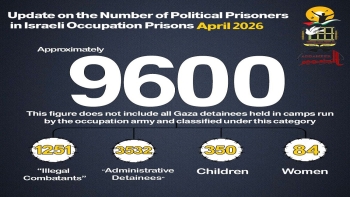
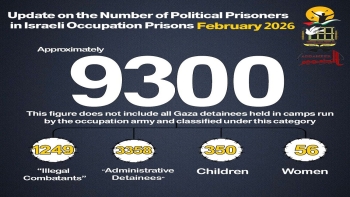
👉🏼There are some 9,300 Palestinian political prisoners and detainees in the Israeli occupation’s prisons, the majority of whom are held without trial or charge, or are awaiting trial and have not yet been charged. This figure does not include detainees held in military camps run by the Israeli occupation army.
👉🏼Only 1, 254 of them have so far been sentenced by the occupation's military system according to the prison services.
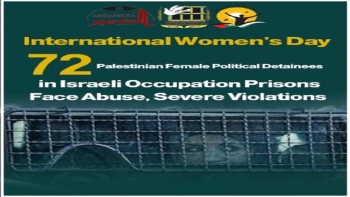
👉🏼Among them are 51 Palestinian female prisoners, including two minors, held in Damon prison.
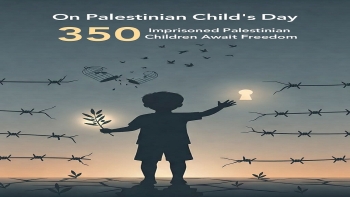
👉🏼 350 of them are Palestinian children held in the occupation’s Ofer and Megiddo prisons.
👉🏼 Palestinians held without trial or charge: Some 4,570 people - or almost HALF of all detainees - including:
- At least 3,350 Palestinians arrested from the occupied West Bank classified as “administrative detainees”.
- At least 1,220 Palestinians arrested from occupied Gaza classified as “unlawful combatants”. This figure does not include all detainees abducted from Gaza, held under this category, in military camps run by the Israeli occupation army. This category also includes Arab political detainees from Lebanon and Syria.
The Palestinian Commission of Detainees’ Affairs, the Palestinian Prisoner’s Society, and Addameer Prisoner Support and Human Rights Association
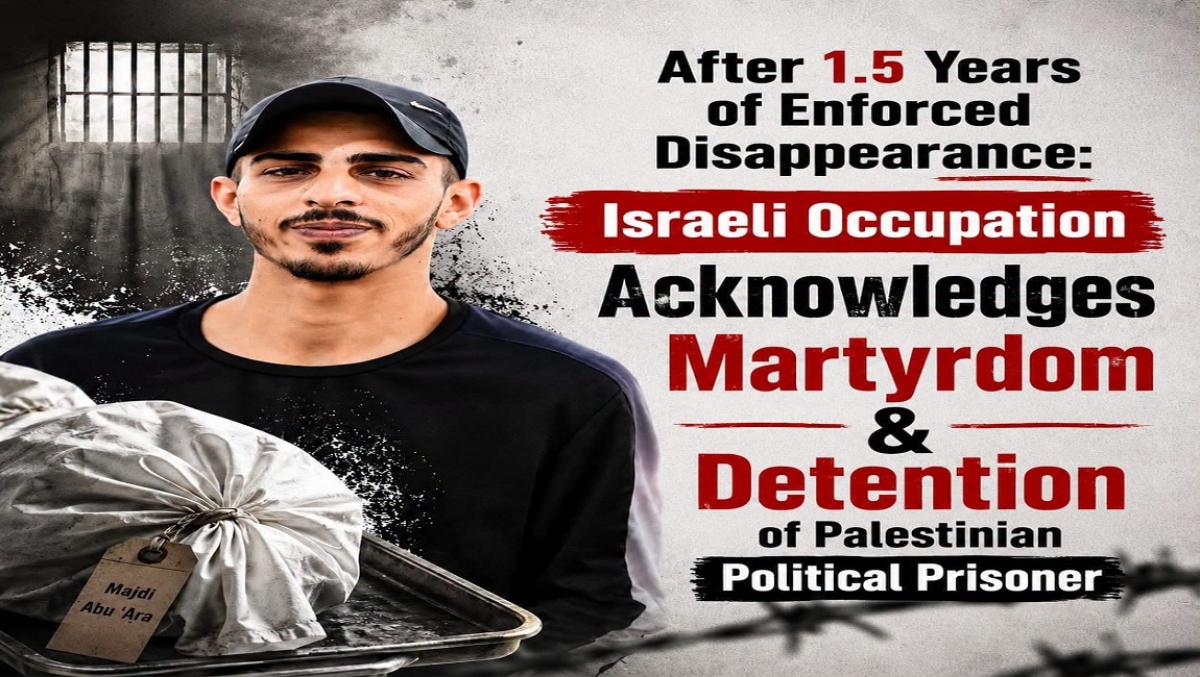
Commission of Detainees' Affairs and the Palestinian Prisoner’s Society Announce Names of Three Palestinians Abducted from Gaza and Martyred in the Occupation's Custody
on . Posted in slider
Commission of Detainees' Affairs and the Palestinian Prisoner’s Society Announce Names of Three Palestinians Abducted from Gaza and Martyred in the Occupation's Custody
December 4, 2025
Ramallah, occupied Palestine - The Commission of Detainees’ Affairs and the Palestinian Prisoner’s Society (PPS) announced the names of three martyrs from among the Palestinians abducted from occupied Gaza and were killed in the occupation’s prisons and military camps in recent months. They are: Taysir Saeed al-Abd Sabbaba (60), Khamees Shukri Mer'i Ashour (44), and Khalil Ahmad Khalil Haniyeh (35).
The family of prisoner Sabbaba was officially informed by the HaMoked rights group through a response from the occupying military, while the Commission and the PPS received two responses from the army confirming the martyrdom of detainees Khamees Ashour and Khalil Haniyeh.
According to these responses, prisoner Sabbaba was killed on December 31, 2024, two months after his arrest; prisoner Khamees Ashour was killed on February 8, 2024 - one day after his arrest - and prisoner Khalil Haniyeh on December 25, 2024, nearly a year after his arrest.
The Commission and the PPS noted that Sabbaba was married and a father-of-nine; Ashour was a father-of-six; and Haniyeh a father-of-four.
The two institutions added that these three martyrs are among dozens of Palestinian political prisoners who were killed since the beginning of the genocide in Gaza and in the occupation’s prisons as a result of widespread torture, starvation, medical abuse, sexual assaults, and a host of other forms of deprivation, dispossession, abuse, humiliation, and detention in degrading conditions. Many of the detainees martyred after their abduction from Gaza remain forcibly disappeared, in addition to dozens who were executed in the field. The bodies of detainees returned after the ceasefire provided clear evidence of the systematic executions carried out by the occupying army.
The number of martyred Palestinian prisons since the start of the genocide, according to documentation by human-rights organizations and Palestinian specialized institutions, has exceeded 100 people, and this number is not final. Of these, 84 people have been identified by the relevant Palestinian institutions, including 50 detainees from Gaza. This raises the total number of Palestinian prisoner martyrs since 1967 to 321 people.
The Commission and the PPS hold the occupation authorities fully responsible for the systematic killing of Palestinian detainees, and renewed their call on the international human-rights system to take effective measures to hold occupation leaders accountable for war crimes committed against prisoners and the Palestinian people. They urged an end to the exceptional impunity granted to the Israeli occupation by the United States and other international powers for decades—impunity that reached its peak with the start of the genocide—despite clear evidence of the crime of genocide committed against Palestinians in Gaza, as well as war crimes and crimes against humanity committed against political prisoners.
The two institutions stressed that the crimes committed by the prison system against detainees are part and parcel of the ongoing genocide, through which the occupation seeks to carry out slow-motion executions. This stage has become the most violent in the history of the Palestinian prisoner movement, at a time when the occupation is attempting to legislate a law allowing the execution of Palestinian prisoners, turning extrajudicial executions into a legalized policy.
The PPS and the Commission noted that the vast majority of prisoners currently held in the Israeli occupation’s prisons are detained without trial—either under arbitrary “administrative detention” or classified by the occupation as “unlawful combatants.” According to available data, as of November 2025, the number of administrative detainees reached 3,368, while those classified as “unlawful combatants” numbered 1,205—a figure that does not include all Gaza detainees.

Commission of Detainees reports arrest details of detainee Qusai Shreim, who is held in Gilboa Prison
on . Posted in slider
Commission of Detainees reports arrest details of detainee Qusai Shreim, who is held in Gilboa Prison
November 23, 2025
In a report issued on Sunday, and based on the account provided by its lawyer, the Commission of Detainees and Ex-Detainees Affairs documented the abuse Palestinian detainees face during their arrest, including savage and indiscriminate beatings, along with harmful violations against them and their families. Among those detainees is:
. Detainee Qusai Shreim (25 years old) from the town of Rujeib/Nablus. He was taken from his home at around four o’clock in the early hours of 6/12/2023. An Israeli military unit, whose members had their faces covered, stormed his house, separated him from his family, shackled his hands, blindfolded him, and placed him in a military vehicle. He was then transported to the “Huwara” camp and later moved to the “Petah Tikva” interrogation facility.
The detainee recounts: “I spent 68 days inside the Petah Tikva interrogation center under extremely harsh and degrading living conditions. During that period, I was placed inside the so-called ‘birds room’ (informants' cell). Afterwards, I was transferred to Megiddo Prison, and eventually to Gilboa Prison.”
Shreim is also suffering from scabies, which causes continuous itching and a spread of skin bumps across his body. The prison authorities intentionally ignore his condition and refrain from providing him with proper medical care.
The Commission emphasized that all detainees endure various forms of physical and psychological mistreatment, beginning with the moment of their arrest, through the interrogation process, and throughout their time in Israeli detention centers.
Palestinian Prisoners Institutions Issue Urgent Appeal For Immediate Intervention to Stop Ongoing Genocide against Palestinian Political Prisoners
on . Posted in slider
Only Four Days Since Last Detainee Killed: New Palestinian Political Prisoner Held Without Trial or Charge Murdered in Occupation’s Ofer Prison
Palestinian Prisoners Institutions Issue Urgent Appeal For Immediate Intervention to Stop Ongoing Genocide against Palestinian Political Prisoners
December 14, 2025
Palestinian Prisoner’s Society & Commission of Detainees Affairs
Ramallah, occupied Palestine - Israeli occupation authorities have disclosed to Palestinian officials of the General Authority of Civil Affairs of the martyrdom of 26-year-old detainee held without trial or charge, Sakhr Ahmad Khalil Za‘oul in the occupation’s “Ofer” Prison.
Za’oul is from the town of Husan in Bethlehem in the southern occupied West Bank. He was arrested on June 11, 2025. According to his family, he did not suffer from any illnesses prior to his arrest. It is noteworthy that he has another brother imprisoned in the occupation’s prisons - Khalil Za‘oul.
The martyrdom of Sakhr comes only four days after the martyrdom of detainee Abdulrahman Sabateen, from the same town. With his killing, the number of identified martyred political prisoners since the beginning of the genocide has risen to 86 people, while the real number is over 100 people. This figure is not final and reflects a terrifying, shocking, and unprecedented escalation. Dozens of other detainees abducted from Gaza have been martyred and subject to enforced disappearances.
The Palestinian Prisoner’s Society (PPS) & the Commission of Detainees’ Affairs’ added that what the Israeli system of brutality practices against prisoners is nothing less than systematic genocide, carried out through public and explicit calls by leaders and ministers in the occupation government—foremost among them the fascist minister Itamar Ben-Gvir, who has promoted the execution of Palestinian prisoners. This occurs in parallel with the practice of slow execution against prisoners through an integrated system involving various occupation agencies, paving the way to legislate the death penalty in its final form.
The PPS & the Commission pointed out that what is happening inside the prisons has surpassed all descriptions and expressions, as the prison system and occupation agencies—including the judiciary—are institutionalizing a new post-war reality aimed at physically and psychologically destroying Palestinian prisoners through a comprehensive system of systematic crimes that constitute an integral part of the genocide. These crimes include: torture, starvation, denial of medical treatment, sexual assaults including rape, and the conversion of prisoners’ basic rights into tools of repression and torture through policies of deprivation and confiscation, in addition to horrific conditions that have led to the spread of diseases and epidemics, foremost among them scabies, which has become an additional tool of torture and killing.
The occupation does not stop at killing prisoners; it continues to withhold their bodies and deepens the crime through sham “investigations” in which the judiciary colludes, with the aim of entrenching policies that lead to the slow execution of prisoners.
With the continuation of daily crimes, the number of martyrs is expected to rise, as thousands of prisoners are held in conditions lacking the minimum requirements for life and are subjected to systematic violations including: torture, starvation, physical and sexual assaults, medical crimes, and the spread of infectious diseases—foremost among them scabies, which has once again spread widely—alongside unprecedentedly harsh policies of deprivation and confiscation.
Field executions that targeted dozens of detainees confirm the criminal nature of the occupation system. Images of prisoners’ bodies handed over after the so-called ceasefire reveal the scale of field crimes committed against them, in addition to serious and undisclosed information about the numbers of those who were executed.
The Commission and the PPS hold the occupation’s prison administration fully responsible for the martyrdom of detainee Za‘oul, and renewed their call to the international human rights system to take effective measures to hold the occupation’s leaders accountable for war crimes committed against prisoners and the Palestinian people.
They issued an urgent appeal to free people around the world to stop the systematic genocide against prisoners, to release thousands of detainees arbitrarily held, and to work seriously to impose clear international sanctions that isolate the occupation, restore the international human rights system to its fundamental role for which it was established, end the appalling state of paralysis that has afflicted it during the genocidal war, and put an end to the immunity that “Israel” continues to enjoy due to the support of international powers that treat it as an entity above the law and accountability.
It is noted that the number of Palestinian political prisoners has exceeded 9,300 people, in addition to hundreds of detainees held in camps belonging to the occupation army, including more than 50 female prisoners and approximately 350 children, while the number of administrative detainees held without trial or charge, reached 3,368 people as of last November.

The cause of the Palestinian detainees remains a stark testament to the harshest forms of injustice
on . Posted in slider
The cause of the Palestinian detainees remains a stark testament to the harshest forms of injustice.
A Bleak reality inside Ofer detention center
on . Posted in slider
A Bleak reality inside Ofer detention center
23/11/2025
The Commission of Detainees Affairs, in its report released today (Sunday) and based on the accounts of three detainees held in Ofer Camp, presented a stark depiction of harsh detention conditions and treatment described as “among the most brutal,” including systemic medical neglect, physical abuse, and daily room invasions.
The Commission’s attorney noted that detainee Ahmad Adel Hareesh, from Beitunia/Ramallah, who has been held since 31/08/2025, suffers from severe stomach pain suspected to be caused by a bacterial infection.
Despite this, he is only provided with painkillers, while the physician either arrives hours late or fails to show up at all.
He added that the doctor provocatively calls out to the detainees from behind the window, saying: “Who wants to die?”
He further recounted a mass raid on the room after a nail clipper was broken, during which detainees were beaten and taken out in restraints for several hours. A female soldier was also brought in under the pretext of receiving complaints, only for the detainee to later be summoned and punished for filing his complaint, either by issuing an administrative detention order against him or subjecting him to degrading treatment.
Meanwhile, detainee Naji Sharif Mahmoud Awadallah (24), from Beitunia, who has been detained since 28/08/2025 and is currently held under a four-month administrative detention order, described the camp’s conditions as extremely harsh: constant assaults, daily searches and raids, inadequate food, lack of hygiene, and sleep deprivation through the removal of mattresses at six in the morning.
In addition, detainee Ezz Al-Din Ahmad Khaddour (20), from Beit Duqqu/Jerusalem, suffers from a foot injury for which he had been receiving treatment before his arrest. Despite requiring medication and medical follow-up, he has not received any treatment for 70 days.
He also confirmed that the camp’s rooms lack even the most basic necessities, as prisoners are forced to drink water from the bathroom tap with no cups provided. Khaddour, a former detainee, was re-arrested on 02/09/2025.
These testimonies collectively portray a worsening humanitarian situation inside Ofer Camp, amid repeated calls from the Commission for intervention and ending the ongoing violations against detainees.