
Facts about Palestinian female detainees at "Damoun" prison
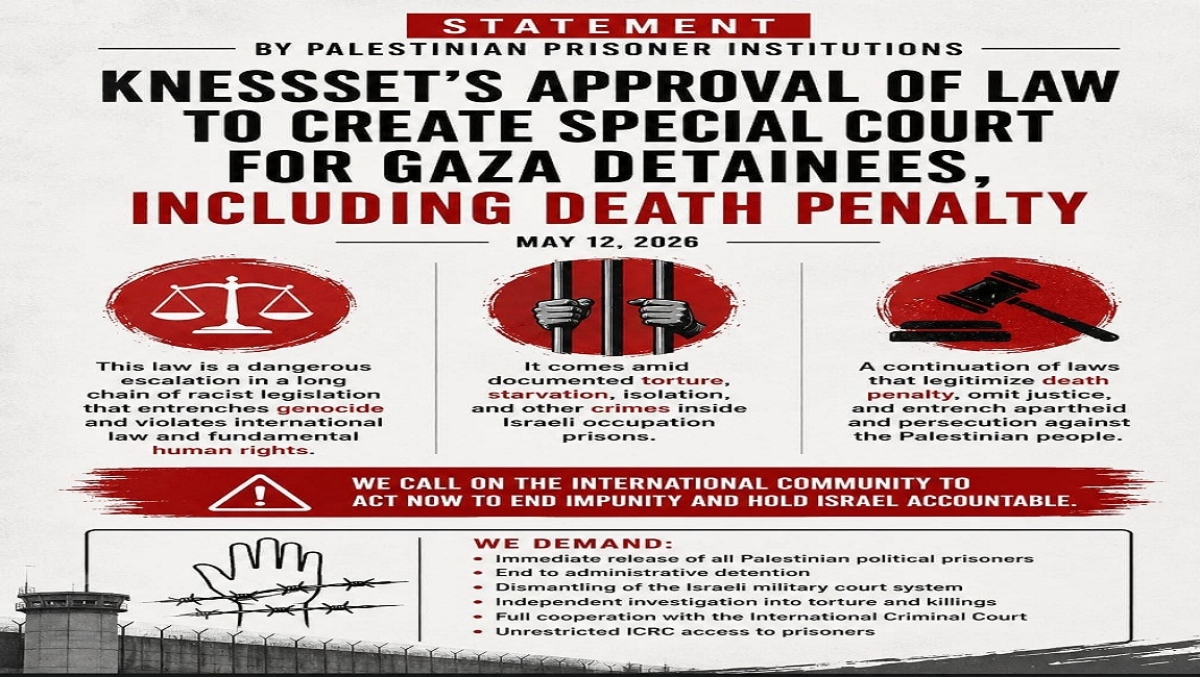
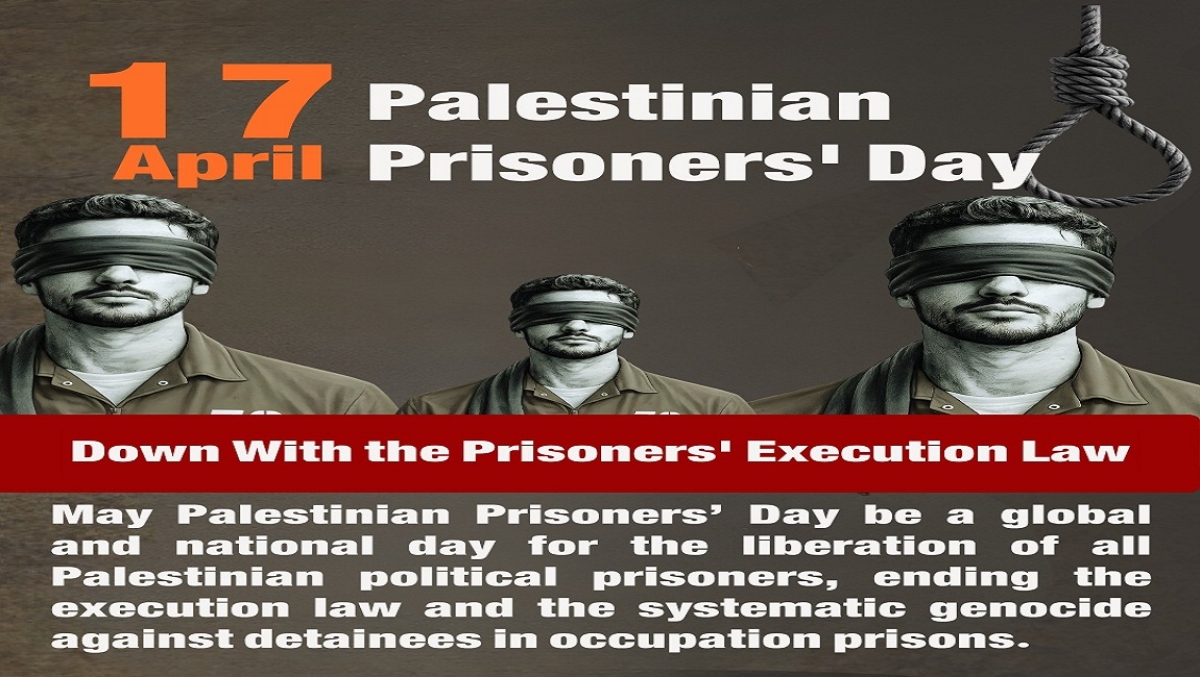
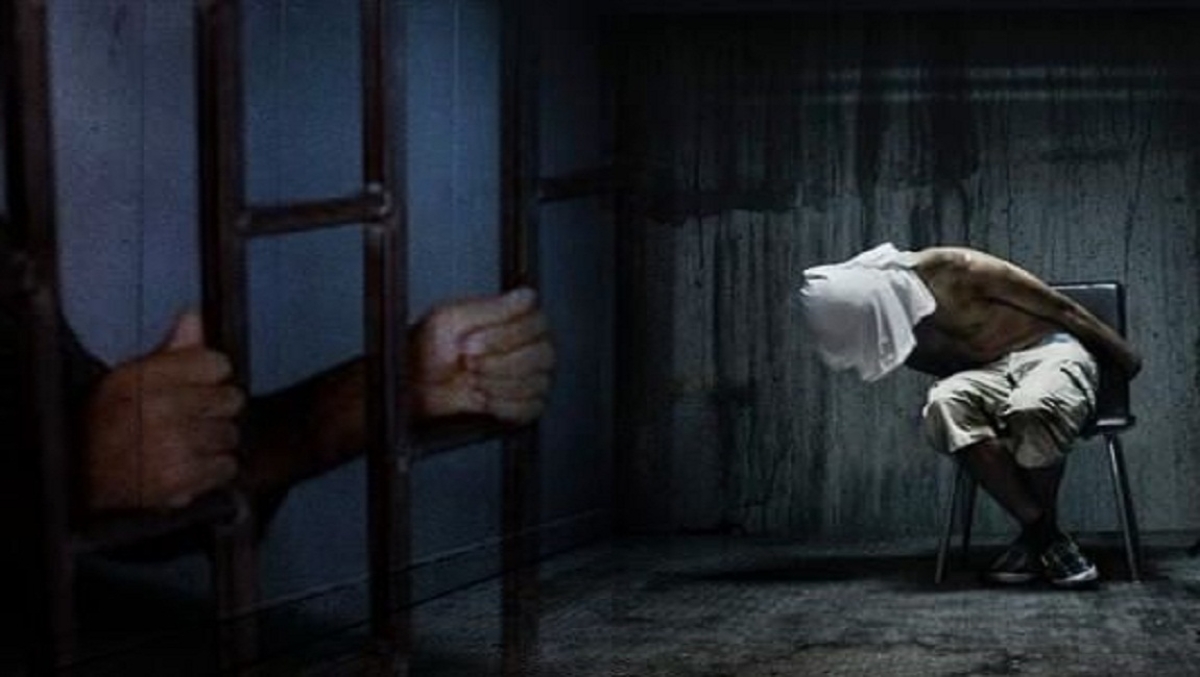
The Commission of Detainees and Ex-Detainees' Affairs stated in its report some of the daily situations lived by female detainees at Damoun prison, which show the extent of violations they are exposed to on a daily basis, violate all international treaties, conventions and human rights principles.
The nature of Damoun prison:
Damoun prison is located north of Palestine on the Mount of Carmel in Haifa city. It was established since the British Mandate as a store of cigarettes. The land was owned by the Qurman's family from Haifa, and after 1948 it was seized by Israel and turned into a prison. The infrastructure of it was very bad and there was an order to close it because it lacks the minimum standards of living. However, with the outbreak of Al-Aqsa Intiafda and the increase of Palestinian detainees, it was reopened. It currently holds 500 detainees, most of who are detained on the grounds of illegal entry to the occupied territories, and it contains a section where 53 female detainees are held.
Conditions of female detainees after being transferred to Damoun prison
On November 2018, all political female detainees were gathered at Damoun prison.
- Before transferring female detainees from Al-Sharon prison to Damoun prison, females of Damoun prison got transferred from their sections. They were held at section 6 and then transferred to section 3. They got transferred with 6 phases dating from 31/10/2018 to 7/11/2018.
- The administration of Damoun prison tried to distribute the female detainees on section, but the females refused and asked to choose their sections. As means of protest, they gathered and sit in the yard of the prison and refused to get inside their cells. After negotiations with the prison's administration they were allowed to supervise their own distribution and arrangement of sections.
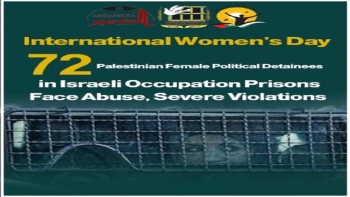
- There are 53 female detainees at Damoun prison including: one minor female, a deputy in the legislative council, 8 injured females, 22 mothers and wives, 19 female arrested under interrogation, 2 females under the administrative detention and 3 females from Gaza Strip who are prevented from family visits.
- It is worth mentioning that the sentences issued against the female prisoners reached a maximum of 16 years.
- Females are held in sections that contain 13 rooms, and there are 4-8 females in each room. There is a solitary confinement with surveillance cameras, and also there is a room used to educate minors which is opened only once a week.
- Counting is done 4 times a day, and inspection is done twice a day.
- There is no safety for female detainees inside rooms, where beds are so high which resulted in many cases of falling down.
- Regarding water in the section: females buy mineral water from the canteen on their expense.
- Each family is allowed to enter two books in a month after getting a permit.
The yard of the prison
- There are two surveillance cameras in the yard, where female detainees are monitored by jailers. This prevents females from doing exercises and seeing the seeing the sun rays, especially that most of them put on hijabs.
- Female detainees are not allowed to gather in the yard.
- They spend 4 hours in the yard, in which time is distributed to bath tine, director visit and lawyers visits.
- The yard has no ceiling, so the females do not go outside during the rain.
Restrooms
- It is worth to mention that restrooms are located outside the prison's cells, which prevents females to use it in any time. Females are also not allowed to bathe unless at the time of the going to the yard. Females are forced to walk from their rooms through the yard which make them feel embarrassed.
Education
- Female detainees are prevented from obtaining educational material, and lately the prison's administration found some materials and confiscated them.
- There is no library for female detainees, and they did not receive the books brought by female detainees who were jailed at Al-Sharon prison.
- The classroom that was opened for minors' education is very small and does not have a window, and it is only opened once a week.
Medical treatment
- There is a bureaucracy to ask for the entry of specialized doctors from abroad, since it takes a long time to get permission to enter the prison. There is procrastination in transferring sick detainees to hospitals and making operations. A case in point is the case of the detainee Israa Ja'abees, who needs a special suit for the burns in her body and a plastic surgery due to the deformation in her face.
Products and stuff distributed by the prison's administration
- There is no specific list of products that are distributed at sections every month. The list lacks the special needs of females. According to instructions, female detainees must be provided with their own special stuff.
Materials for handcrafts
- Families of detainees are prevented from giving their daughters material for making handcrafts, and only materials from the Committee of the Red Cross are allowed.
Females under arrest
- Any girl under arrest, who is not held in interrogation centers, is transferred between borders of Mascoubya, Ramlah and Al-Sharon in harsh conditions. She is transferred to Damoun prison after one month of arrest. In many cases, girls are held in solitary confinement. A case in point is the detainee Iftikar Zakarneh, who was transferred to Ramlah prison after one month of interrogation.
Conditions of transferring female detainees to courts
- When female detainees are transferred to courts they got tightly handcuffed and treated in bad way.
- Detainees who are prosecuted in military Salem court and Lod court face many troubles due to holding them at Jalamah, Sharon and Ramlah borders in harsh conditions, and the way to court takes 3 hours which is considered a journey of suffering.
- A new achievement is accomplished regarding the transfer process of female detainees. This is due to complaints on transferring detainees who are prosecuted at Jerusalem court and Beersheba court, where previously they were transferred before one day of court date and the detainee remain 3 days in harsh isolation conditions. The new achievement is that the transferring process for female detainees takes only one day.
Family visits
- There are visit request every week, where the representative of the detainees get very busy in applying requests for 53 detainees to enter clothes, books and photographs.
- Regarding the female detainees from Gaza Strip, they are prohibited from family visits due to the siege. After making many requests by the Commission of Detainees Affairs, they got allowed to phone call their families for 45 minutes.
Lawyers' visits
- There is only one room for the lawyers' visits and it is very small, and the lawyer is allowed to visit only 3 detainees.
Administrative detention
The Israeli occupation inherited the administrative detention form the British mandate, where it was the emergency law of the British mandate in 1945 and then was adopted by Israel.
Israel announced the state of emergency in 1948, where the administrative detention is used to arrest Palestinian politicians.
The concept:
It is an arbitrary detention used by the Israeli authorities to arrest persons without any charge. According to the Israeli intelligence, it is a preventive measure to prevent any person from making any breach in the future, and there is no specific period for detention.
The administrative detention is conducted without a prosecution and it is based on an order issued by the military commander of area depending on confidential files.
- Palestinians are detained under administrative detention for long periods under the pretext of "confidential information", which are not known by the detainees or lawyers.
- Although the maximum period of administrative detention is 6 months, it could be prolonged and renewed until further notice. This unjust detention deprives the prisoners of the right to know the information they have been detained for and keeps them in darkness for long periods, since they do not know when they will be released, and sometimes it takes years.
- Female detainees under administrative detention:
1. The detainee Khalida Jarrar: member in the legislative council, she's 55 years old from the city of Ramallah. She was arrested in July 2, 2017. The military commander issued the order of administrative detention against her and it was renewed and extended.
The first extension of the order was in 27/12/2018 to 6 months.
The second extension in 26/6/2018 to 4 months
The third extension in 25/10/2018 to 4 months
The order of administrative detention ends by 28/2/2019.
2. The detainee Fidaa Du'mos (24 years old), is form Bait Ummar near Hebron. She was arrested On May 29, 2018 and was sentenced to 95 days of actual imprisonment. At the day of release, an order of administrative detention to 6 months was issued, it ends by 15/2/2019.