
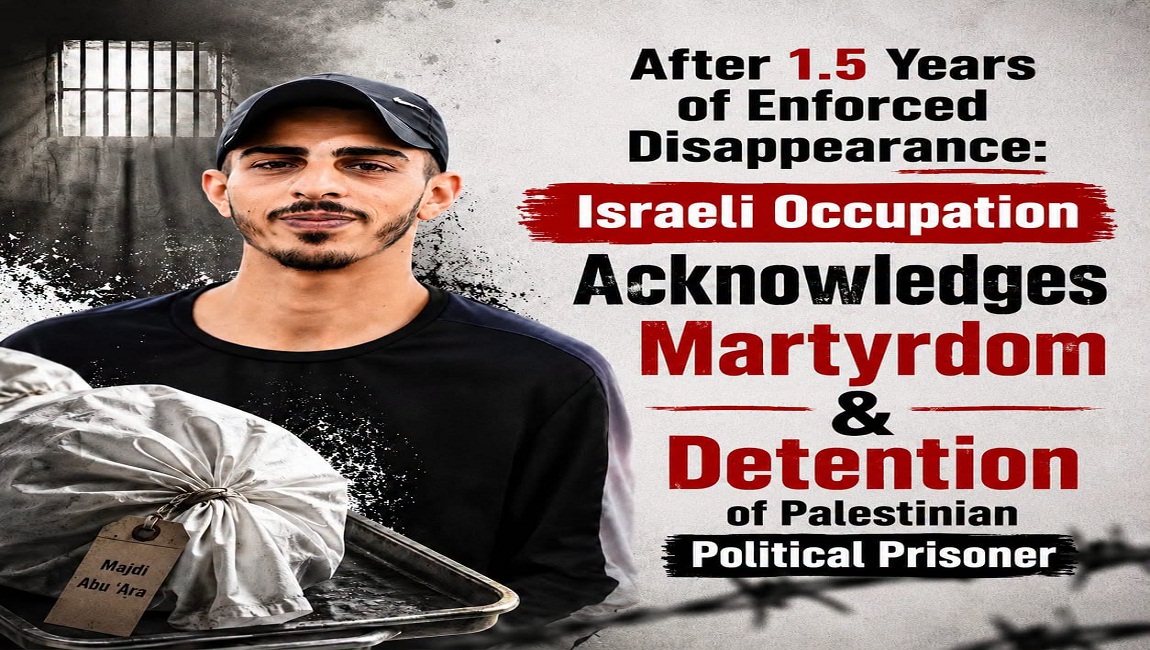
- Details
- Category: News
- Hits: 231
- Details
- Category: News
- Hits: 184
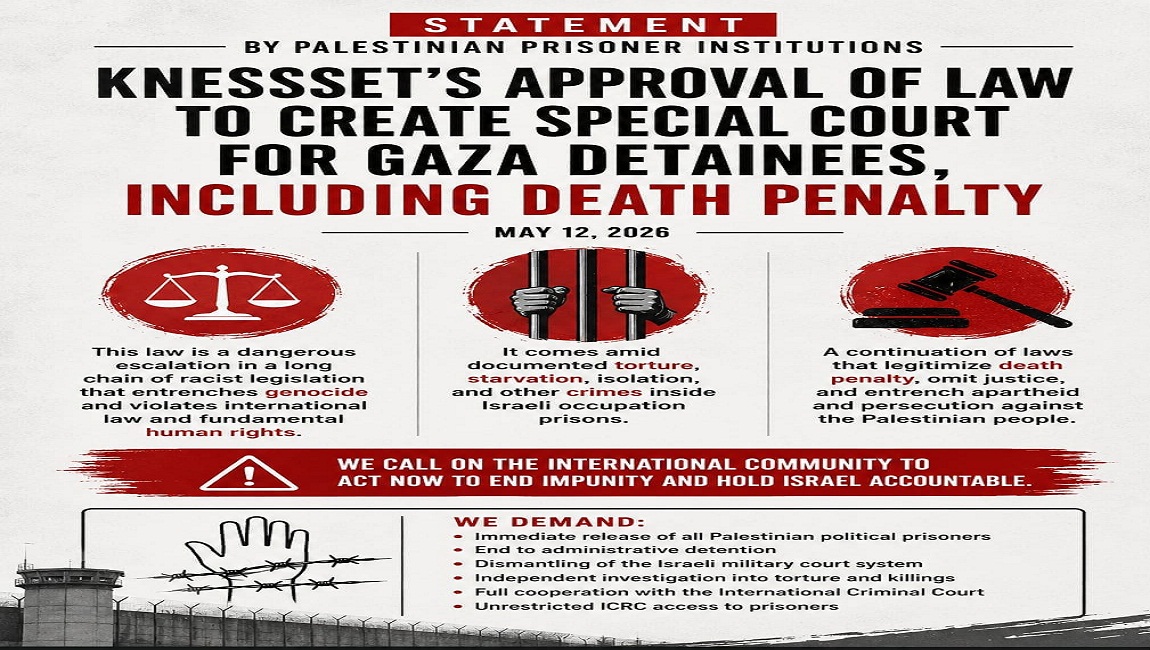
“Knesset’s” Approval of Law to Create Special Court for Gaza Detainees, Including Imposition of Death Penalty - Statement by Palestinian Prisoner Institutions
May 12, 2026
The Israeli “Knesset’s” approval of a special law establishing an exceptional court for Gaza detainees whom the occupation authorities claim participated in the events of October 7, 2023 — including the imposition of the death penalty against them — constitutes a new and dangerous link in the chain of colonial legislation that entrenches the ongoing crime of genocide against the Palestinian people, including political prisoners, Palestinian prisoner institutions stated on Tuesday.
Full statement in English below
“Knesset’s” Approval of Law to Create Special Court for Gaza Detainees, Including Imposition of Death Penalty - Statement by Palestinian Prisoner Institutions
May 12, 2026
The Israeli “Knesset’s” approval of a special law establishing an exceptional court for Gaza detainees whom the occupation authorities claim participated in the events of October 7, 2023 — including the imposition of the death penalty against them — constitutes a new and dangerous link in the chain of colonial legislation that entrenches the ongoing crime of genocide against the Palestinian people, including political prisoners, Palestinian prisoner institutions stated on Tuesday.
This law represents a flagrant violation of the rules of international humanitarian law, international human rights law, and a range of fundamental inalienable rights, foremost among them the right to life, the right to a fair trial, and due process guarantees, in addition to the absolute prohibition of torture and other forms of cruel, inhuman, or degrading treatment or punishment.
The institutions added that the provisions contained in this law cannot be separated from the racist legislative path through which the “Knesset” had previously approved in what is known as the law permitting the execution of Palestinian prisoners. Rather, it constitutes a continuation of a systematic legislative approach aimed at providing internal legal cover for the international crimes committed against the Palestinian people. This trend further entrenches the role of the “Knesset” as one of the central instruments within the Israeli colonial-terror system, which has directly contributed to the perpetuation of genocide, the continuation of comprehensive aggression, and the targeting of Palestinian existence and national and human rights.
The institutions stressed that this law comes at a time when horrific testimonies and accounts from Palestinian political prisoners and detainees continue to emerge, documenting systematic torture, starvation crimes, medical crimes, harsh isolation, sexual assaults, and policies of slow killing carried out in an organized manner inside Israeli occupation prisons and camps. The testimonies of Gaza detainees in particular constitute direct and living evidence of the ongoing crimes committed against Palestinian prisoners and detainees over more than two and a half years, within the framework of a systematic policy amounting to war crimes and crimes against humanity, and representing another face of the genocide taking place inside prisons. In this regard, it should be noted that many detainees from Gaza confirmed that they “confessed” to acts they did not commit under torture.
The institutions further affirmed that the Israeli occupation system’s insistence on inventing legislative tools that legitimize the death penalty within exceptional procedures lacking even the minimum standards of justice could not have continued without the state of international paralysis and the existing political and legal complicity regarding ongoing Israeli crimes, including the crime of genocide.
In light of this dangerous development, Palestinian human rights organizations emphasize that they had previously addressed dozens of appeals and communications to the relevant international bodies, warning of the danger of these laws and their legal and humanitarian consequences. Nevertheless, the occupation authorities continue to enact and approve more racist laws that undermine the international justice system and blatantly disregard all obligations imposed on the occupying power under international law.
Despite this, we reaffirm our continued calls upon free nations and international parliamentary and human rights bodies to adopt a clear and firm position toward the so-called Israeli “Knesset,” and to work immediately toward suspending or terminating its membership in international parliaments and unions, and boycotting it as a legislative institution that legitimizes genocide, incitement to violence, and systematic racial discrimination against the Palestinian people.
We also reaffirm our continued appeals to the free people of the world, based on the Palestinian people’s established and inalienable right to self-determination, national liberation, and the freedom of prisoners and detainees. We warn that the continued impunity and treatment of “Israel” as an entity above the law and accountability will not affect the Palestinian people alone, but will undermine the entire international justice system and threaten the human values for which peoples around the world have long struggled to establish and protect.
In this context, Palestinian prisoner institutions renew their demands for the following:
• Activating the principle of universal jurisdiction to prosecute Israeli officials involved in torture, war crimes, and crimes against humanity committed against Palestinian prisoners and detainees.
• Treating the “Knesset” and Israeli occupation courts as institutions that legitimize apartheid and persecution policies, and working to isolate them internationally, including by ending their membership in international parliamentary bodies and unions.
• Ensuring the immediate and unconditional release of all Palestinian political prisoners.
• Ending the policy of arbitrary administrative detention as a grave violation of fair trial principles and personal liberty.
• Dismantling the Israeli occupation’s military court system, which is used as a tool of oppression and colonial control.
• Opening independent and transparent international investigations into all acts of torture and killings inside Israeli occupation prisons and detention centers.
• Ensuring full cooperation with the International Criminal Court, supporting its investigations, and implementing arrest warrants issued against those responsible for international crimes.
• Enabling the International Committee of the Red Cross to visit Palestinian prisoners and detainees and review their detention conditions without any restrictions or obstacles.
**ENDS**
- Details
- Category: News
- Hits: 249
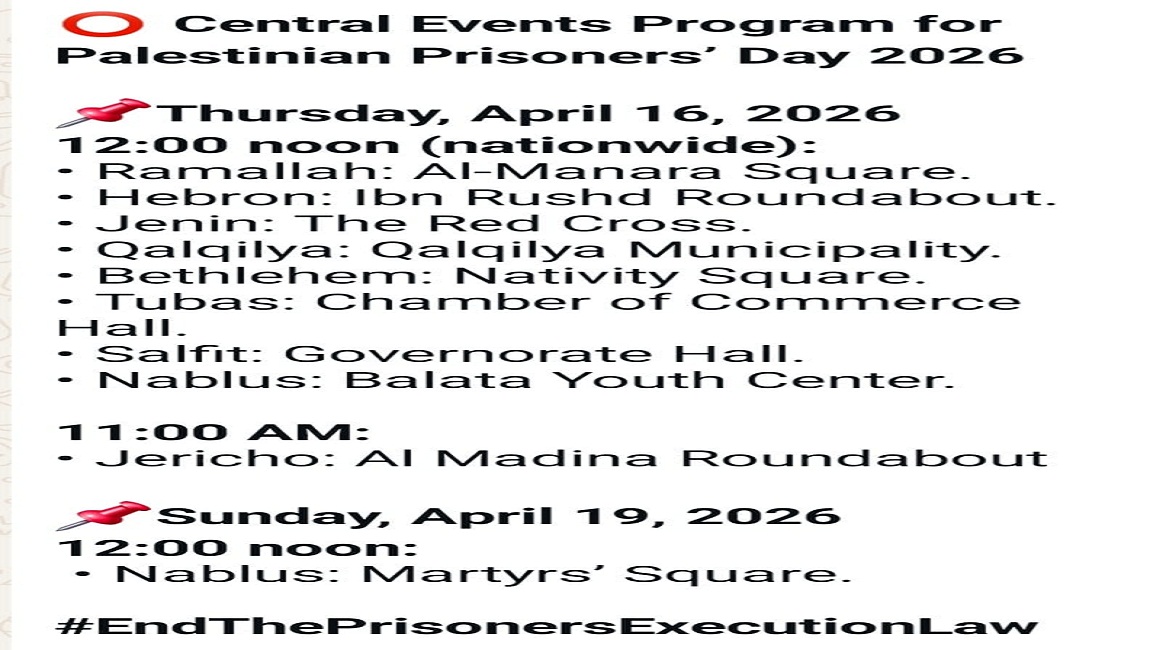
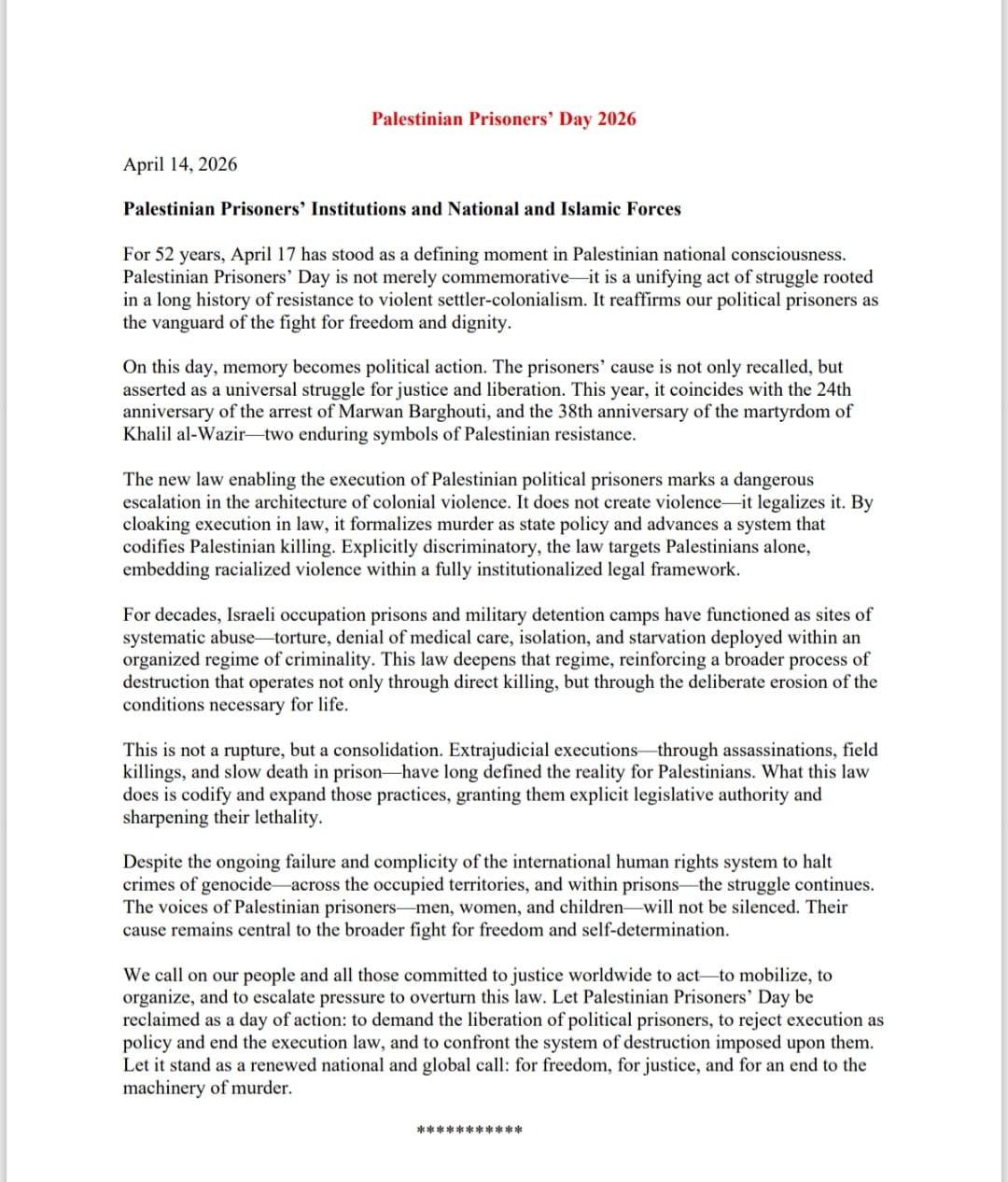
Central Events Program for Palestinian Prisoners’ Day 2026
?Thursday, April 16, 2026
12:00 noon (nationwide):
* Ramallah: Al-Manara Square.
* Hebron: Ibn Rushd Roundabout.
* Jenin: The Red Cross.
* Qalqilya: Qalqilya Municipality.
* Bethlehem: Nativity Square.
* Tubas: Chamber of Commerce Hall.
* Salfit: Governorate Hall.
* Nablus: Balata Youth Center.
11:00 AM:
* Jericho: Al Madina Roundabout
?Sunday, April 19, 2026
12:00 noon:
• Nablus: Martyrs’ Square.
#EndThePrisonersExecutionLaw
- Details
- Category: News
- Hits: 231
Invitation to Journalists and Media Outlets in Palestine
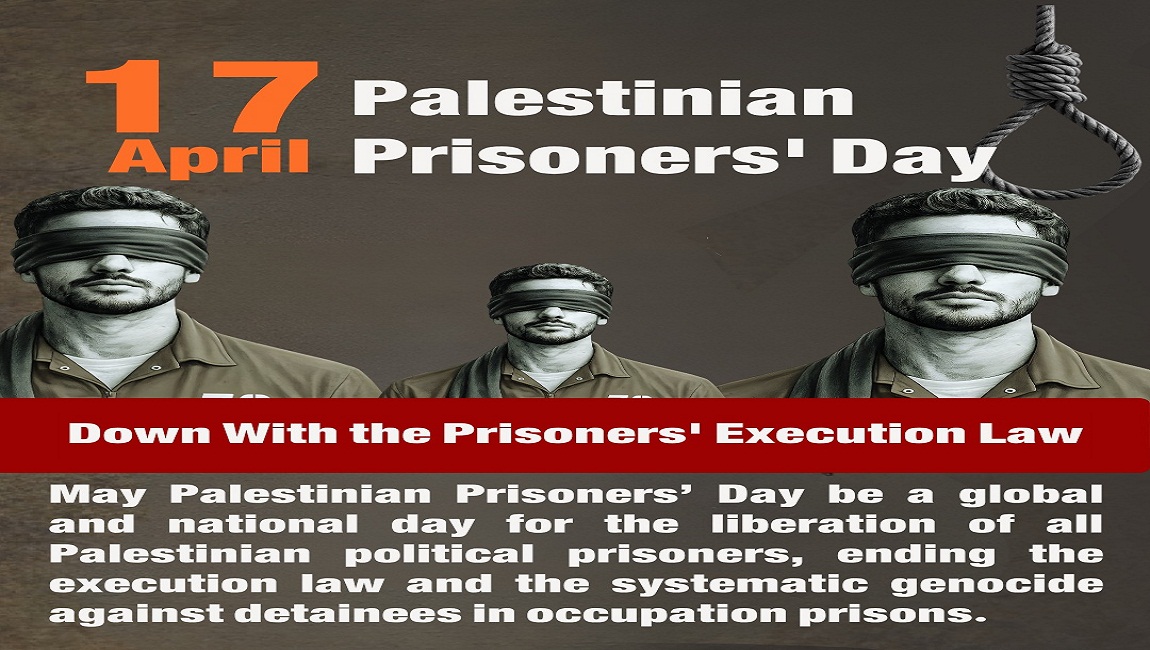
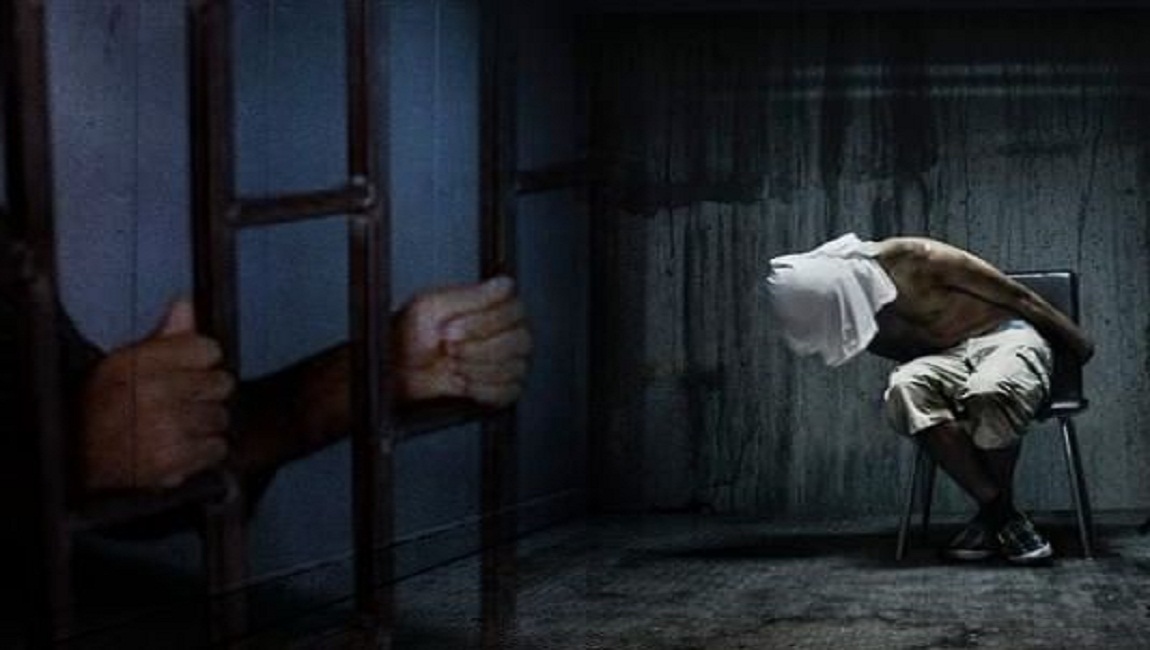
Palestinian Prisoners' Institutions and National and Islamic Forces invite you to cover a press conference in Ramallah and Al-Bireh to announce the national events planned around this year's Palestinian Prisoners' Day, held annually on April 17.
Details:
* Day: Tuesday, April 14, 2026
* Time: 11:00 AM
* Location: In front of the International Committee of the Red Cross HQ, Al-Bireh
⭕ Stop the Palestinian Prisoners’ Execution Law
- Details
- Category: News
- Hits: 402
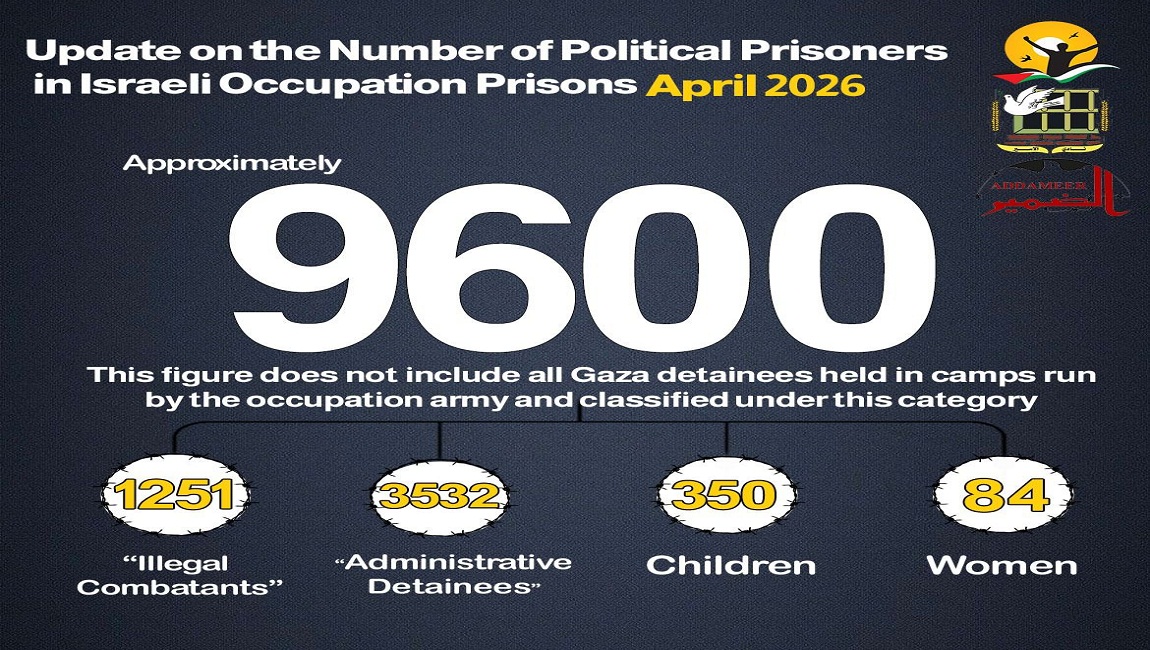
April 2026 Update on Numbers of Palestinian Political Detainees in Israeli Occupation’s Prisons
▪️These figures are based on data gathered by Palestinian prisoners’ institutions including from the Israeli occupation’s prison services databases as of early April 2026.
* There are more than 9,600 Palestinian political prisoners held by the occupying state.
* Among them are 84 female prisoners.
* Some 350 children are among them, held in Megiddo and Ofer prisons.
* The number of Palestinians abducted from the occupied West Bank and are held without trial or charge, also known as “administrative detainees” is 3,532, representing the highest proportion in the prisons compared to sentenced prisoners, those awaiting trial, and those classified as “unlawful combatants.”
* The number of Palestinians abducted from occupied Gaza and are held without trial or charge under the “unlawful combatants” law is 1,251. This figure does not include all detainees from Gaza held in military camps affiliated with the occupation army. This classification also includes Arab detainees from Lebanon and Syria.
Palestinian Prisoners’ institutions
- Details
- Category: News
- Hits: 138
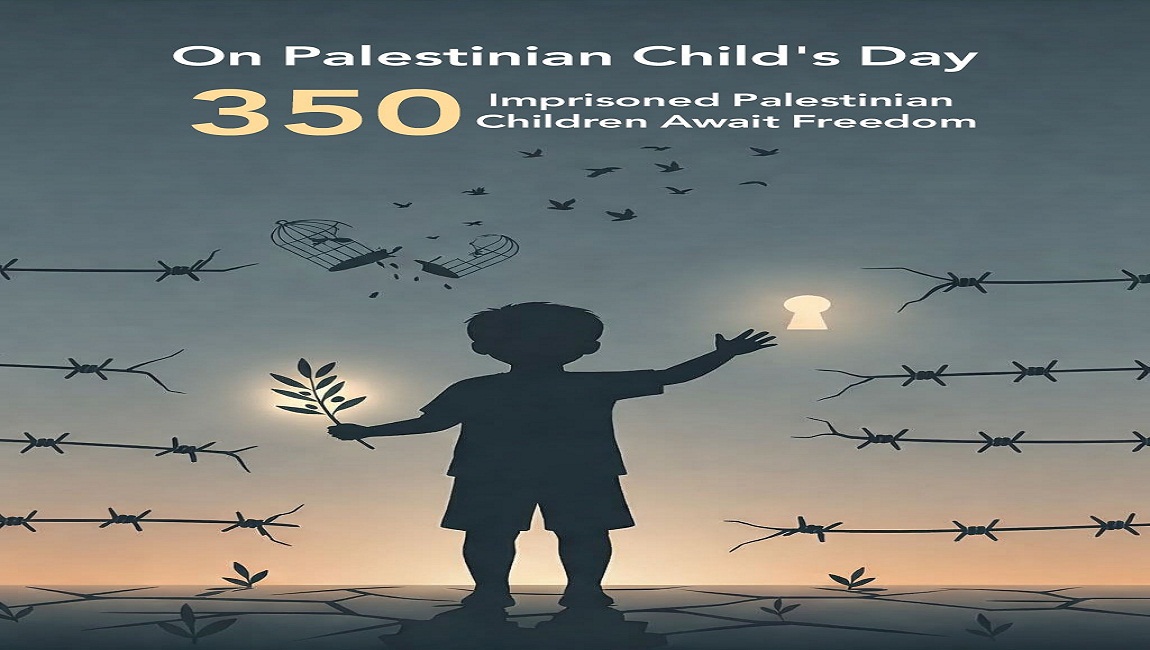
On Palestinian Child’s Day, marked annually on April 5, Palestinian prisoners’ institutions- Commission of Detainees’ Affairs, Palestinian Prisoner’s Society and the Addameer Prisoner Support and Human Rights Association- publish a special report about Palestinian child detainees in the Israeli occupation’s prisons.
Report in Arabic and English Below
#FreeThemAll
#StopTheExecutionLaw
Palestinian Child’s Day Highlights Escalating, Systematic Targeting of
Palestinian Children
Report by the Commission of Detainees’ Affairs, Addameer Prisoner Support and Human
Rights Association, and the Palestinian Prisoner’s Society
April 5, 2026
Ramallah, occupied Palestine - Palestinian childhood has never been outside the scope of Israeli occupation policies; it has been at their core. The detention of children is not exceptional or incidental, but a longstanding, systematic policy—deeply embedded over decades—reflecting a clear intent to subjugate and control an entire generation through organized repression and domination. As of April 2026, there are 350 Palestinian children detained in the occupation’s prisons.
Tens of thousands of Palestinian children have experienced detention—staggering figures that expose the scale and continuity of this practice. Their testimonies point to a comprehensive system of violations, carried out under legal cover and enforced with excessive violence, in disregard of age and of international child rights conventions.
Since the outbreak of the genocide in Gaza in October 2023, occupation authorities have intensified widespread arrest campaigns across the occupied Palestinian territories. These campaigns continue to escalate, targeting all segments of Palestinian society—across cities, villages, and refugee camps—in the West Bank, including Jerusalem, as well as in the Gaza Strip. They unfold within a broader pattern of daily, terrorizing military raids and incursions into homes, streets, and military checkpoints, without distinction by age or social group, reflecting a comprehensive policy of control and sustained repression.
Within this context, the targeting of children stands out as one of the clearest manifestations. Palestinian childhood has entered a more acute phase of direct targeting, where detention remains a systematic, deliberate tool of pressure and control—not an exception, but an enduring policy.
Field data issued by Palestinian prisoners’ organizations and human rights institutions have revealed an unprecedented escalation in the arrest of children. More than 1700 cases of child detention have been documented in the West Bank, including Jerusalem, over a short period of time—an indication of the expanding scope and accelerating pace of this targeting.
In addition, dozens of children from the occupied Gaza Strip have been detained during the genocide, under extremely dangerous conditions that included grave violations and organized crimes, such as enforced disappearance, denial of family and lawyers’ visits, and the complete cut
off of any means of communication with the outside world—making it extremely difficult to determine the actual numbers or the fate of many of them.
These practices constitute a clear and direct violation of the Convention on the Rights of the Child, which prohibits the arbitrary detention of children and requires that detention be used only as a measure of last resort and for the shortest possible period, while ensuring humane treatment and respect for dignity. They also clearly violate Article 37, which prohibits torture and cruel or inhuman treatment, and guarantees the child’s right to maintain contact with their family and to access legal assistance. Moreover, these practices breach the principles of international humanitarian law, particularly the Geneva Conventions, which mandate special protection for children as civilians and prohibit any form of abuse or neglect against them.
The First Moments of Arrest
The first moment of arrest often begins with a violent and sudden attack, usually in the early pre- dawn hours, when occupation forces break into homes without any prior warning. Families wake to the sounds of explosions and doors blown open, accompanied by heavily-armed, often masked, soldiers, shouting and raiding every corner of the house, creating an atmosphere of fear and chaos—especially for children facing such a harsh experience. Children are forced awake from their sleep amid direct threats and a heavy military presence.
During the raid, the child and their family are informed of the arrest decision. In many cases, children—particularly those who are ill or injured—are denied access to their medication or necessary medical care, further exacerbating their health conditions.
Following this, children are taken out of their homes into military vehicles, where they are handcuffed and subjected to strict restraints on their movement. During transport—often involving passage through multiple checkpoints and military facilities—some are subjected to beatings or harsh treatment, in addition to being held for long hours without food or water.
In many cases, children are transferred while blindfolded, deepening their sense of fear and confusion and leaving severe psychological effects from the very first moments of detention. Cases of enforced disappearance of children from the occupied Gaza Strip have also been documented, amid a lack of any information regarding their whereabouts or conditions of detention.
Interrogation Rooms Under Genocide: A Systematic Policy of Retaliation Against Childhood
The interrogation phase is one of the harshest stages in the experience of child detention within occupation prisons, as it is conducted in an environment designed to break their will and extract confessions from them as part of a systematic and consistent policy. Children are held in conditions that lack even the most basic necessities of life and are subjected to prolonged hours of continuous interrogation without the presence of their parents or a lawyer. Testimonies indicate that this stage is often exploited to psychologically intimidate the child and pressure them into confessing under the weight of isolation and fear.
The severity of these violations has escalated dangerously in the context of the genocide, as children have been subjected to even more tragic conditions inside closed and harsh interrogation rooms, where deprivation of sleep and rest is intensified.
These practices reinforce a reality that completely disregards the specific needs of the child and their right to humane treatment, turning interrogation into a repressive tool that extends beyond pre-genocide practices, but under far more brutal and unrestrained conditions.
Thus, the interrogation period—supposed to be a legal procedure—turns into a space of systematic violations aimed at undermining the rights of the child. This policy, which has intensified under the genocide, leaves deep and lasting impacts on children’s lives and futures as a result of continuous pressure and a detention environment that lacks the most basic human rights.
Palestinian Children in Occupation Prisons Face Systematic Violations
Inside Israeli central prisons and military camps, Palestinian children face harsh detention conditions that constitute a systematic violation of their fundamental rights. These conditions include severe overcrowding in poorly ventilated rooms, shortages of clothing and blankets, as well as near-total restrictions on their movement and the confiscation of their personal belongings.
For over two and a half years, children have been completely denied contact with their families, further deepening their isolation and intensifying the psychological impact of detention, amid ongoing raids and repression within the prison sections.
Violations linked to denial of medical care are also escalating amid a severe lack of health services and the denial of appropriate treatment for children. Overcrowding and the lack of hygiene supplies have led to the spread of skin diseases, most notably scabies, while medical responses are often limited to providing inadequate painkillers or delaying treatment, along with the refusal to transfer serious cases to hospitals.
Children also suffer from food deprivation as part of a policy of starvation, which has negatively affected their health and led to the worsening or emergence of new illnesses, within detention conditions that threaten both their physical and psychological well-being.
Detention Without Charge: Enforced Disappearance of Children Behind the Cells of Administrative Detention
Administrative detention of Palestinian children is considered one of the most egregious manifestations of the repressive system, whereby a child – like adults - is held without charge or trial, based on what is referred to as a “secret file.” This policy, long adopted by the occupation as a tool of collective punishment, repression, and control, has undergone a profound shift and historic escalation in the context of the genocide, as prison doors have been opened to thousands of Palestinians under this designation—children among them bearing a significant share of this systematic abuse.
Within this expansion, the number of children held under administrative detention has reached unprecedented levels. Palestinian human rights organizations have never previously recorded such figures, with approximately 180 children currently held under administrative detention—reflecting a clear intent to disappear an entire generation behind bars without any legal justification or defined timeline for release.
A child held under administrative detention lives in a state of continuous psychological torment, facing uncertainty every minute of every day. Detention orders are often renewed at the very last moment before the expected release, depriving both the child and their family of any sense of stability or hope. In the context of the genocide, the number of administrative detainees has surged dramatically, accompanied by total isolation and denial of visits or communication with the outside world—leaving children especially vulnerable to policies of starvation, abuse, and intimidation within the cells.
The targeting of children through administrative detention at this scale confirms that the occupation is in clear violation of all international conventions prohibiting the detention of minors without trial. With the total number of administrative detainees in prisons reaching 3442 it becomes evident that this policy has become a central pillar within the genocide—aimed at dismantling the Palestinian social fabric and targeting childhood itself.
Walid Ahmad: The Palestinian Child Who Starved to Death
Walid Khaled Ahmad, from the town of Silwad near Ramallah in the central occupied West Bank, was a detained Palestinian child who starved to death in Megiddo Prison in March 2025.
His case constitutes a stark example of inhumane and dangerous policies of starvation, deprivation, and ill-treatment against minor detainees, within a broader context of violations affecting prisoners. According to documented medical autopsy reports, the findings revealed severe physical deterioration, including extreme emaciation, and the absence of muscle mass and subcutaneous fat, along with indicators of malnutrition, dehydration, intestinal infections, and infection with scabies—reflecting a gradual health collapse inside detention.
The occupation recently announced the closure of the investigation into the circumstances of his murder under the pretext of “exhausting all legal procedures,” despite the serious findings outlined in the medical reports of starvation and health deterioration. This reflects a continued pattern of disregarding medical evidence and obscuring accountability for crimes committed against child detainees within prisons, in the complete absence of oversight and accountability for such violations.
Testimonies of Children from Inside Occupation Prisons
Child (Q.N.), who was arrested from his home on January 7, 2026, recounts that he was severely beaten before being handcuffed, blindfolded, and transferred to a military camp, then to Megiddo Prison. He reports repeated assaults both during transport and inside the prison.
He confirms that the minors’ section in prison is subjected to frequent raids and beatings, amid severe cold, overcrowding, and a shortage of clothing and insufficient food. They also face restrictions on outdoor time (“fora”) and access to showers, along with a lack of basic supplies and constant disturbing lighting. He further points to the absence of adequate care and the existence of designated rooms for scabies patients under harsh detention conditions.
In the same context, child (M.S.), who was arrested from his home in Bethlehem on February 19, 2025, at the age of just 15, was later placed under arbitrary administrative detention without trial or charge. He recounts that his arrest began at dawn with a home raid, after which he was transferred to Etzion detention center, then to Al-Moskobiya detention center in occupied Jerusalem, where he underwent a 21-day period of detention and interrogation before being transferred to Megiddo Prison.
Since then, he has been held in an overcrowded minors’ section (Section 8), with six to 10 prisoners per room, forcing some to sleep on the floor. There is a clear shortage of blankets, towels, and basic necessities, in addition to a very short daily outdoor period that does not exceed half an hour, with limited facilities including a small number of bathrooms shared among several rooms.
He also suffers from dental pain without receiving treatment, pain relief, or referral to a clinic, amid repeated raids and acts of repression within the section—making the conditions of detention in Megiddo harsh and ongoing, particularly as he is a child held under administrative detention.
Similarly, the detained child (A.K.), aged 17, describes a harsh detention trajectory from the moment of arrest, extending from checkpoints to detention centers and then to closed facilities.
He states: “I was completely stripped of my clothes, handcuffed, blindfolded, and thrown onto the ground,” adding, “I remained sitting on my knees for hours and was subjected to continuous severe beatings.”
He describes this phase as filled with humiliation and both physical and psychological violence, with repeated transfers between unknown detention locations and extremely harsh conditions from the very first hours.
Later, he recounts the brutal detention system inside the prisons, describing his first days: “I was handcuffed to the front and blindfolded 24 hours a day, even while eating and showering,” along with “very poor food in extremely small quantities” and repeated deprivation of hygiene and rest. He also describes weekly repressive raids involving “firing bombs inside the rooms, random beatings, and forcing prisoners to lie on the ground,” in addition to harsh interrogations that included “beatings, threats, electric shocks, and loud music as psychological torture,” within an environment he describes as based on continuous humiliation and systematic violence throughout detention.
Children from the occupied Gaza Strip have not been spared from widespread arrest campaigns during the genocide. Several were detained and transferred to military detention facilities. Among these testimonies is that of child (F.Sh.), born in 2010, who was a school student prior to his arrest.
He recounts being arrested in Khan Younis alongside four others, stating: “They arrested me with four people, and I was the only child among them. Then they handed us over to the army, which transferred us to Sde Teiman camp.” He adds that he was placed in barracks with adult detainees and another child, describing life there as “pure humiliation,” noting that he remained for approximately 40 days “handcuffed in front with iron restraints, without blindfolds.”
He describes daily life inside the camp, stating that “food is scarce and water is scarce,” with meals consisting of “sliced toast bread with a small amount of jam or tuna that does not satisfy hunger.” Sleeping conditions were extremely harsh: “You sleep on a very thin mattress, as if you are lying on stones,” while blankets were only provided at night despite severe daytime cold. Showering was permitted “twice a day for only a few minutes.”
He further recounts that raids and repression occurred “about once a week,” during which detainees were forced to the ground, restrained tightly, and beaten. He states that he was interrogated twice, each session lasting about an hour, noting: “There was no special treatment for me—they treated me like the adults.” He remained in Sde Teiman until his eventual release.
With the continuation of grave violations against Palestinian children in places of detention, coinciding with Palestinian Child’s Day, our organizations affirm that the arbitrary detention of children, the harsh conditions of confinement, and degrading treatment constitute a flagrant violation of international law—particularly the Convention on the Rights of the Child—and amount to war crimes and crimes against humanity.
We stress that our primary demand is the immediate and unconditional release of all detained Palestinian children, as their detention in itself constitutes an unlawful violation. We further call on third states to take urgent action to compel the occupying power to halt all violations against children, ensure their protection, and respect and implement the advisory opinion issued by the International Court of Justice regarding the illegality of the occupation, in addition to enforcing accountability for all crimes committed against Palestinian children.
*********
- Details
- Category: News
- Hits: 175
Today, Addameer for Prisoner Support and Human Rights Association, The Commission of Detainees Affairs, and Palestinian Prisoners Club sent an urgent letter to European Union countries regarding Israel’s recently passed death penalty law targeting Palestinian prisoners.
The letter highlights that the law is explicitly discriminatory, applies only to Palestinians, and is enforced through military courts that lack basic fair trial guarantees. It calls on the EU to take immediate, concrete measures, including suspending the EU–Israel Association Agreement, imposing targeted sanctions, and halting diplomatic and economic cooperation, to uphold international law and protect fundamental human rights.
The organizations stress that expressions of concern alone are no longer sufficient; urgent and decisive action is urgently needed to prevent further violence against Palestinians.
The full letter is attached?
Date: 31 March 2026
Subject: After Passing the Death Penalty Law, the EU Must Suspend the EU–Israel Association Agreement and Take Immediate Action
Your Excellencies,
We acknowledge and welcome the recent statement issued by several European countries expressing concern over the proposed expansion of the death penalty in Israel, and your reaffirmation that capital punishment is an inhumane and degrading practice that must be opposed under all circumstances.
However, we write to stress that the situation has now moved beyond the stage of a proposed bill. The law has been passed.
This development marks a grave escalation. For decades, Palestinians have been subjected to extrajudicial killings, yet this moment represents a shift toward the formalization and legalization of execution as a tool of political repression. The law enables the execution of Palestinian political prisoners, transforming prisons and detention facilities into sanctioned sites of death.
Critically, this law is inherently discriminatory and is designed to be applied exclusively against Palestinians. It entrenches a system of unequal treatment before the law and reinforces a broader regime of racialized control and punishment. Furthermore, Israeli court systems, particularly military courts used to prosecute Palestinians, lack fundamental fair trial guarantees, including independence, impartiality, and due process. In this context, the introduction of the death penalty amounts to the institutionalization of irreversible injustice.
It is imperative to stress that the Israeli Knesset has no authority to legislate over Palestinians as protected persons under international humanitarian law. Any attempt to do so constitutes a war crime and represents a flagrant, undeniable violation of international law.
While your statement highlights the “risk” of undermining democratic principles and raises concern over the discriminatory nature of the bill, the reality is that this law constitutes a direct and profound violation of fundamental human rights. It is not merely a risk; it is an enacted policy that codifies state-sanctioned killing.
We are further compelled to note that expressions of concern, while important, are no longer sufficient in the face of such escalation. The passage of this law, despite repeated warnings and appeals, reflects a pattern of international inaction that risks enabling further irreversible harm.
In light of this, we urge the European Union to move beyond statements and take concrete, principled action:
- Immediately suspend the EU–Israel Association Agreement as a necessary measure to uphold international legal obligations and human rights commitments.
- Impose targeted sanctions on the Israeli occupying state in response to ongoing violations of international law and the codification of execution policies.
- Suspend all forms of diplomatic, military, and economic cooperation until full compliance with international law is ensured.
- Work to isolate the Knesset and Israeli military court system in international parliamentary bodies and unions, given their role in codifying systemic discrimination and violence.
We emphasize that continued reliance on language of concern, without corresponding measures of accountability, undermines the very principles the European Union has affirmed. Upholding the universal rejection of the death penalty requires consistent and decisive action, particularly in contexts where it is deployed in a discriminatory and political manner.
Sincerely,
Addameer for Prisoner Support and Human Rights Association The Commission of Detainees Affairs
Palestinian Prisoners Club
- Details
- Category: News
- Hits: 234
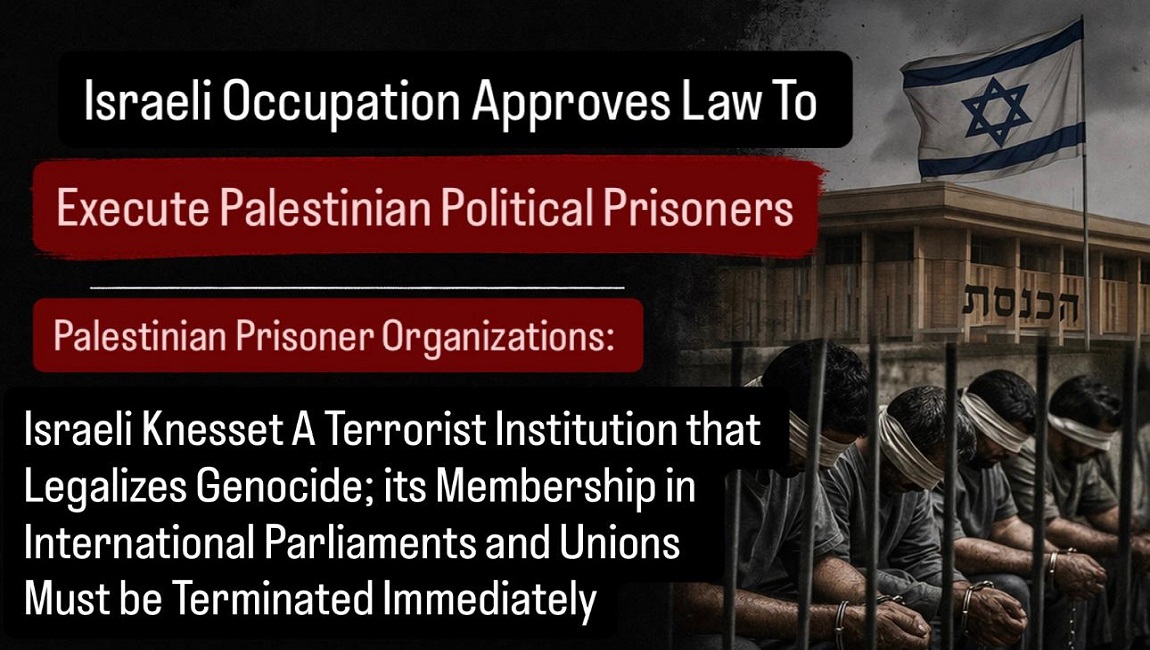
Israeli Occupation Approves Law To Execute Palestinian Political Prisoners
Palestinian Prisoner Organizations: Israeli Knesset A Terrorist Institution; its Membership in International Parliaments and Unions Must be Terminated Immediately
Palestinian Prisoners' Institutions
March 30, 2026
Ramallah, occupied Palestine — After years of relentless efforts by the Israeli settler-colonial regime to legalize the execution of Palestinian political prisoners—and amid a global order defined by paralysis and complicity, laid bare by the atrocities in occupied Gaza—the Israeli occupation has passed a law that will allow for the execution of Palestinian political prisoners.
While the Israeli occupation has for decades extrajudicially executed Palestinians, this moment marks a dangerous escalation. As ethnic cleansing intensifies, forced displacement expands, and apartheid policies deepens, Palestinian existence itself is under sustained threat, from the streets to the prisons and military camps.
The law constitutes a profound violation of fundamental human rights and exposes decades of international complicity, lack of will, failure, and refusal to hold the settler-colony of “Israel” accountable.
While global attention remains fixed on the US-Israeli war on Iran, the Israeli occupation is ushering in a new phase of openly sanctioned, politically motivated executions of Palestinian prisoners. It codifies state-sanctioned political murder and turns prisons into legalized killing grounds and central arenas of torture. Make no mistake: this law is an extension of a multi-pronged system of genocide that has targeted Palestinian existence for decades—rendering the occupation’s prisons and detention camps a direct extension of genocidal policies and a central theater for their execution.
At this critical and dangerous stage, in which our people face severe and systematic persecution, we, as Palestinian human rights groups, affirm that the occupation system has reached a level of brutality that exceeds the descriptive capacity of international human rights frameworks—frameworks that have proven entirely incapable of exerting meaningful pressure to halt the ongoing destruction and ethnic cleansing against Palestinians everywhere.
In light of this dangerous development, we, as Palestinian human rights institutions, affirm that despite the repeated appeals we have made over the past period, and the messages sent to various relevant bodies, the law has passed. Nevertheless, we will continue to call on free countries to take a clear stance toward the so-called “Knesset,” and to work immediately to terminate its membership in international parliaments and unions, and to boycott it as an institution that codifies systematic genocide and destruction of the Palestinian people, especially since the documented crime of genocide in Gaza.
We will continue to address the free people of the world with all our strength, based on the inalienable Palestinian right to self-determination, freedom, and the liberation of all political prisoners. We warn that these crimes and ongoing destruction will not be limited to the Palestinian people alone, but will extend to peoples worldwide, as long as the international community persists in complicity and in treating “Israel” as a colonial system exempt from accountability and punishment, and as an exception to the laws and humanitarian norms that peoples have long struggled to establish.
We therefore renew our demands:
* Activation of the principle of universal jurisdiction to prosecute those involved in torture, war crimes, and crimes against humanity committed against prisoners.
* Suspension of all forms of diplomatic, military, and economic cooperation with the occupation until it fully complies with international law.
* Treating the Knesset and Israeli occupation courts as racist and terrorist institutions and working to isolate them internationally, including rejecting their membership in international parliamentary bodies and unions.
* Ensuring the immediate and unconditional release of all Palestinian political prisoners, including: Ending the policy of administrative detention, dismantling the military court system and opening independent and transparent investigations into all cases of torture and deaths in custody.
* Full cooperation with the International Criminal Court, supporting its investigations, and implementation of arrest warrants against those responsible for international crimes.
* Enabling the International Committee of the Red Cross to visit prisoners and monitor their detention conditions without restriction.
?Attached is a paper in English with key facts about the execution law published by Palestinian prisoner institutions one day before its passing.
https://www.ppsmo.ps/home/studies/18165?culture=ar-SA
- Details
- Category: News
- Hits: 193
ONGOING URGENT APPEAL: STOP THE EXECUTION OF PALESTINIAN PRISONERS’ LAW
Palestinian Prisoner’s Society, Commission of Detainees’ Affairs & Addameer Prisoner Support and Human Rights Association
March 29, 2026
Ramallah, occupied Palestine – On Monday, March 30, the Israeli occupation’s proposed “Prisoners’ Execution Law” is expected to be brought forward for its second and third readings in the Knesset, with a high likelihood of passage—despite sustained global appeals and unequivocal warnings from international human rights institutions condemning its adoption.
If enacted, this bill will mark a historic escalation—a new phase of openly sanctioned, politically motivated executions of Palestinian prisoners. It codifies state-sanctioned political murder and turns prisons into legalized killing grounds and central arenas of torture. Make no mistake: its passage would make it an extension of a multi-pronged system of genocide that has targeted Palestinian existence for decades—rendering the occupation’s prisons and detention camps a direct extension of genocidal policies and a central theater for their execution.
The law constitutes a profound violation of fundamental human rights and exposes decades of international complicity, lack of will, failure, and refusal to hold the settler-colony of “Israel” accountable. After years of calculated advancement by the regime—now reaching its brutal apex amid the genocide—this bill has become inseparable from the government’s political survival. The gallows are no longer symbolic; they are being institutionalized as a central tool of oppression and settler-colonial violence.
Under the most “extreme” and openly ideological government in the settler-colony’s history, the drive to pass this law has accelerated with alarming force. Led by minister Itamar Ben-Gvir and backed by a dominant right-wing bloc in the Knesset, the government has staked its very survival on its passage, with full backing from Benjamin Netanyahu—elevating the execution of prisoners into an explicit political doctrine and a defining pillar of the regime.
For decades, occupation authorities have practiced extrajudicial killing as a sustained policy—now risen to unprecedented levels. This includes targeted assassinations, a “shoot-to-kill” policy and sniper fire. Alongside these overt acts, a quieter but equally lethal system of both slow and direct killings operates within prisons, camps, and interrogation centers, where neglect, abuse, and torture systematically claim lives. Since the start of the genocide alone, more than 100 prisoners have been killed behind bars—marking the deadliest period in the history of the Palestinian prisoners’ movement.
Based on information gathered by our organizations and others, here is an initial set of facts surrounding the execution of Palestinian prisoners bill:
• The law will not be applied retroactively; it will only take effect after its implementation.
• It will include two separate court systems: Military courts in the 1967-occupied Palestinian territories and civilian courts in the 1948-occupied Palestinian territories (“Israel”).
• In “Israeli” military courts, Palestinian prisoners “convicted” of carrying out armed operations resulting in the death of an “Israeli” would face a mandatory death sentence, unless the court identifies exceptional circumstances warranting commutation to life imprisonment.
o Prisoners would retain the right to appeal; however, rulings would be decided by a simple majority rather than unanimity, and judges would not be required to hold senior military rank.
• In “Israeli” civil courts, however, a prisoner "convicted" carrying out armed operations resulting in the death of an “Israeli” faces a sentence of either life imprisonment or death; this legal hierarchy effectively transforms the death penalty into a primary and fundamental punishment against Palestinians.
• Although this law will not apply to prisoners detained in connection with October 7, 2023 whom the occupation classifies as “elite,” a Knesset committee has approved a separate bill titled the "Law on the Trial of Participants in the October 7 Events." This bill establishes a special military tribunal that is likewise empowered to impose the death penalty, alongside other measures.
This push to formalize the execution of Palestinian prisoners is not incidental—it is the logical continuation and legal codification of ongoing, unchecked genocidal mass violence and erasure. The law is one among a wide arsenal of measures designed to entrench domination, crush Palestian society, and normalize the systematic murder of Palestinians. The occupation’s prisons and detention camps are not merely sites of imprisonment—they are central infrastructures of state murder and violence. Stop the execution of Palestinian political prisoners’s law before it is too late.
#STOPTHEEXECUTIONOFPALESTINIANPRISONERS #FREETHEMALL
- Details
- Category: News
- Hits: 202
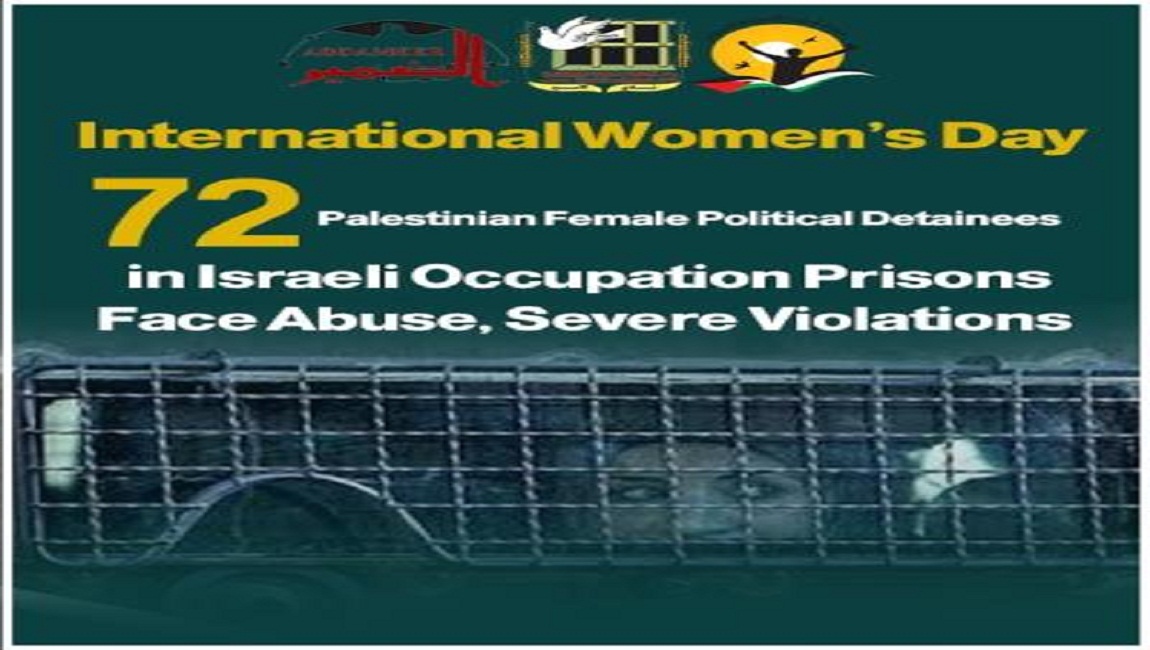
International Women’s Day: 72 Palestinian Female Political Detainees in Israeli Occupation Prisons Face Abuse, Severe Violations
Report by Commission of Detainees’ Affairs, the Palestinian Prisoner’s Society, and the Addameer Prisoner Support and Human Rights Association.
March 8, 2026
“The raids happen like this: they storm the rooms one by one, force us to lie face down, walk over us, tie our hands behind our backs, then drag us one by one to the yard while pulling our shoulders backward as they lift us from the ground, causing severe pain. Some prisoners su>ered fractures. In one raid I was tied and lying on the ground; they told me to stand but I couldn’t, so they violently pulled me up by my shoulder from behind. The pain lasted for a long time […]
“One prisoner had her shoulder dislocated while being dragged violently while lying on the ground. Another was dragged in a brutal way that exposed her back and hair in front of the guards, and her knee was displaced; she suffered from pain for months and they refused to take her to the clinic. Another prisoner was beaten on her back and stomach.” – (D.B.), a female Palestinian political prisoner currently held by the Israeli occupation.
Ramallah, occupied Palestine – International Women’s Day, observed annually on March 8, is an occasion to celebrate the achievements of women and their struggles for justice and equality. In occupied Palestine however, this occasion arrives burdened with a different reality; Palestinian women live under a severely oppressive system of Israeli occupation, where the symbolism of this day is intertwined with loss, oppression, deprivation, and suffering.
In this new report, the Commission of Detainees’ Affairs, the Palestinian Prisoner’s Society (PPS), and the Addameer Prisoner Support and Human Rights Association—present key data related to the reality of incarcerated Palestinian women and the accompanying crimes and violations. The report includes several testimonies from Palestinian female prisoners gathered through lawyers of our organizations, and presents the worsening detention conditions for detained women following the start of the genocide in occupied Gaza.
Among the main ways the Israeli occupation targets Palestinian society is through its women. For decades, Palestinian women of all ages have been subjected to arrest, ill- treatment, torture, and the denial of their most basic rights. What Palestinian women experience today—including women prisoners in Israeli occupation prisons—represents a continuation of long-standing policies of suppression and erasure. However, since the occupation’s genocide in the occupied Gaza Strip, matters have become unprecedentedly difficult for all Palestinians, including women, one of the most vulnerable segments of society.
The scale and severity of violations and crimes against Palestinian women have surpassed all past violence. This has coincided with a significant escalation in mass arrests across occupied Palestine, alongside a noticeable rise in the number of women imprisoned, and worsening conditions of their detention. These conditions fall within a system of systematic torture that begins from the moment of arrest and continues through interrogation and imprisonment. The occupation’s prisons have turned into arenas for torture and the systematic destruction of male and female prisoners, and one of the fields in which the crime of genocide is being carried out.
More than 700 Palestinian women have been arrested since the start of the genocide. Women and girls arrested include university students, activists, housewives, and women with no direct political involvement. These arrests cannot be viewed in isolation from a wider policy that targets the Palestinian family and social structure, within an approach based on collective punishment and abuse.
The arrests of women from occupied Gaza following the genocide have also become one of the most prominent issues, due to the serious violations they faced and the humiliation of their human dignity, in addition to the crime of enforced disappearance that affected dozens of them at the beginning of the genocide. Prisoner institutions later managed to determine the fate of many of these women and secure their release, while to this day there is no available data indicating that women from occupied Gaza remain in detention.
The majority of female prisoners who were arrested were subjected to physical and psychological abuse accompanying the moment of arrest, whether they were arrested from their homes after raids or while passing through military checkpoints.
Countless testimonies over the past two years show that sexual violence has been among the prominent violations experienced by Palestinian women during detention, including harassment, strip searches, and threats of rape. The United Nations has also stated in an official announcement that there are credible reports indicating that detainees from Gaza were subjected to sexual violence, including rape. Prisoner groups have documented testimonies from women who were released and others still in prison who reported humiliating practices, foremost among them the widespread use of strip searches.
Latest Statistics on Palestinian Female Political Prisoners
As of March 2026, Israeli occupation authorities are currently imprisoning 72 Palestinian women, most of them held in Damon Prison in the country’s north. Among them are three minors and 32 mothers, who collectively have 130 children.
Additionally, 17 women are held under administrative detention without trial or charge, while five female prisoners are serving varying sentences - the longest being 16 years.
There are also 50 women awaiting trial, including 16 who are detained on charges related to what the occupation refers to as “incitement,” with estimates that the actual number may be higher.
There is one female prisoner previously wounded by Israeli occupation forces, and 18 sick female prisoners, including three women suffering from cancer, in addition to 12 female university students and three female school students.
Geographically, the majority were arrested from the occupied West Bank and occupied Jerusalem (69 female prisoners), alongside three female prisoners from the 1948-occupied territories.
Anonymized Testimonies of Palestinian Female Political Prisoners
1. Prisoner (D.B.):
“The suppression forces would raid the rooms accompanied by the ‘Yamaz’ unit and dogs. In one raid, a dog was brought into my room with a soldier holding it. It was only about a meter away from me, which was terrifying—especially for the younger prisoners who began trembling.
“The raids happen like this: they storm the rooms one by one, force us to lie face down, walk over us, tie our hands behind our backs, then drag us one by one to the yard while pulling our shoulders backward as they lift us from the ground, causing severe pain. Some prisoners su>ered fractures. In one raid I was tied and lying on the ground; they told me to stand but I couldn’t, so they violently pulled me up by my shoulder from behind. The pain lasted for a long time.”
She continued:
“One prisoner had her shoulder dislocated while being dragged violently while lying on the ground. Another was dragged in a brutal way that exposed her back and hair in front of the guards, and her knee was displaced; she suffered from pain for months and they refused to take her to the clinic. Another prisoner was beaten on her back and stomach.”
“After dragging the prisoners, some of us were taken for strip searches in the bathroom, while others were taken directly to the yard. We were forced to remain kneeling or lying on our stomachs for between half an hour and an hour until the searches were finished.
Sometimes they would walk over us. Any prisoner who tried to change her position was beaten. I personally was beaten with kicks and hands. Once the prison director beat me when I tried to relieve the pressure on my body and said: ‘You are not in your home.’ In one raid we remained on our stomachs for nearly an hour while guards and special units walked over us and filmed videos. The pretext was ‘searching the rooms.’”
2. Prisoner (R.R.):
“They took me from the outdoor yard to a small room. A female soldier carried out a strip search. She lifted my arms and grabbed and examined my chest. She ordered me to stand and sit twice while I was naked. Then she gave me underwear and a prison pajama uniform to wear and handed me a head covering, while throwing my clothes in the trash. After that they handcuffed my hands behind my back and shackled my legs. They did not put a blindfold on me. Then a very tall soldier came, grabbed my left arm from behind, and walked me while repeatedly hitting my left shoulder with his elbow along the way. My arm became swollen and the blows were strong. I don’t know how many times he hit me, but the next day my arm was swollen. When they saw it during interrogation they were alarmed and said they would take me to the clinic, but they never did.”
She also described the conditions of her interrogation cell:
“The soldier placed me in a very small cell, about one meter by one meter. I couldn’t fully stretch my legs inside it. When I slept, my head was near the toilet seat. The walls were rough and gray. The cell had only a toilet seat, a sink, and a floor—no mattress, blanket, or pillow. There was toilet paper and drinking water only from the sink. They took my hijab and left me only with the head cover beneath it. The cell was full of bugs, and I developed a fungal infection inside it. I stayed there until the next morning. Around eight in the morning, a guard took me to the interrogation room.”
She added regarding the interrogation period:
“They entered my cell frequently. Two female soldiers would come in with other guards standing outside, and suddenly they would conduct a strip search. They would order me to remove all my clothes. The searches were humiliating.”
3. Prisoner (M.M.):
Here we refer to the case of the prisoner (M.M.), who was abducted as a hostage to pressure her father, who is detained in Israeli occupation prisons. During her arrest and interrogation, she was subjected to abuse, assaults, and humiliation.
“When I was arrested, the soldiers started asking me in the military jeep, ‘Where do you want to go? Which prison?’ I told them, ‘Asqalan.’ They started laughing at me and said: ‘So you want to go where your father is.’”
“From the first day I entered the Asqalan (Ashkelon) interrogation center, they began interrogating me. I was interrogated continuously for 18 days, every day in several sessions, each session lasting three or four hours. They would take me into interrogation about three times a day. Each time there was one interrogator and one female soldier. The interrogation consisted of continuous questioning. They would leave to rest for two or three hours. I was unable to sleep throughout the interrogation, which lasted 27 days.”
She added:
“After 27 days they transferred me to Damon Prison. I was transferred by the Nahshon unit, and they pushed me a lot during the transfer. They moved me in prison transport vehicles (‘bosta’). I was taken through more than one prison whose names I don’t know before arriving at Damon, but I arrived there on the same day.”
She continued in her testimony:
“On the 18th day of interrogation, when I was about to finish interrogation, an interrogator came and said: ‘We’ll let you see your father.’ Then they took me to an interrogation room where my father was sitting on an interrogation chair like school chairs, with his hands tied behind him. When I entered, it seemed he knew I was coming and was prepared for it; he was looking toward the door. When I entered, they removed the cover from my eyes, and my hands were tied in front of me. My father started crying a lot when he saw me. I ran toward him and hugged him while I was still tied up. He kept kissing me and saying reassuring words to comfort me. Then they seated me on a regular chair while my hands were still tied in front. He looked extremely exhausted. There were about twelve interrogators in the room, including only one female interrogator.”
This testimony is one of dozens from women who were arrested as hostages to pressure members of their families.
4. Prisoner (H.B.):
“I was transferred to Hasharon Prison. When I arrived, a female soldier received me, and as I climbed a long staircase she kept insulting and pushing me. She took me to a small, filthy solitary cell that had nothing but a mattress on the floor without a blanket or pillow and a very small bathroom. I stayed there alone for four days without anyone speaking to me.
They brought me cold, bad food, and during those four days I didn’t eat and threw the food away. The weather was extremely cold, and when I asked for a blanket they refused and told me it was forbidden. The mattress cover was made of cold plastic.”
This testimony is one of dozens describing similar experiences of women detained in Hasharon Prison.
5. Prisoner (L.Y.):
“When I arrived at Damon, they stripped me of all my clothes and threw them in the trash, including my jilbab and jacket. They gave me a prison uniform and only two pieces of underwear. I was subjected to a strip search and then taken down to the prison section wearing the prison uniform (shirt and trousers). It was psychologically very painful for me.”
Prominent Policies of Abuse, Humiliation and Violence Against Palestinian Women During Arrest and Detention
Palestinian women face systematic abuse, humiliation, and violence throughout the process of arrest and detention. Arrests often begin with violent night or dawn raids on homes, during which Israeli occupation forces break or blow up doors, spread throughout the house, destroy and cause deliberate vandalism of belongings and furniture, and shout threats while holding residents at gunpoint. Women are frequently taken from their homes in front of their families. In other cases, arrests occur at military checkpoints, where women may be detained for hours under the sun or in the cold before being subjected to detailed and humiliating searches.
Testimonies indicate that women were pushed, beaten, and violently removed from vehicles. Detainees have also reported being blindfolded and having their hands tied behind their backs for extended periods, while being insulted and threatened. Abuse can continue during transportation in military vehicles, where women are forced to remain in painful positions and denied access to toilets for long periods.
A long-standing practice has been the arrest of women as hostages to pressure male relatives, a policy that has become particularly visible in the period since the start of the Gaza genocide. In these cases, women are detained not because they are the primary targets but to force a family member to surrender, or as a form of revenge. Dozens of women—including wives of prisoners, wives of those killed, mothers, and even elderly women—have been arrested for this purpose. These arrests are often accompanied by psychological pressure and threats, including threats to kill or harm the targeted relative. Raids frequently involve the destruction of homes, theft of large amounts of money and jewelry, and the terrorizing of children, reflecting a broader pattern of collective punishment against entire families. Many of the women arrested come from families that have already endured years of repeated raids, arrests, imprisonment, and killings.
Another major phenomenon has been the sharp rise in arrests of women on charges of “incitement,” under Israeli occupation military laws, particularly related to social media activity. Since the genocide, Israeli occupation authorities have expanded the
interpretation of “incitement” to include posts, reposts, personal expressions, or even interactions with online content. As a result, the digital sphere has effectively become a space for surveillance and prosecution, where any online activity can be grounds for arrest regardless of context. Many women detained since the Gaza genocide—including journalists, activists, university students, human rights defenders, and relatives of prisoners or those killed—have faced such charges. This expansion has significantly restricted freedom of expression and placed Palestinian women under constant monitoring.
Inside Israeli occupation prisons, particularly Damon Prison, women detainees report an unprecedented level of repression and abuse during the ongoing war. Their ordeal typically begins with interrogation and temporary detention in Hasharon Prison before being transferred to Damon, the main facility holding Palestinian female political prisoners.
Testimonies describe Damon Prison as a site where torture, starvation, humiliation, and degrading treatment are widespread. Prisoners have reported confiscation of personal belongings, severe overcrowding due to mass arrest campaigns, and practices such as arbitrary and excessive strip searches, harassment, and other forms of sexual abuse.
During certain periods since the genocide began, the number of female prisoners has exceeded 100 women and girls, further worsening already harsh conditions.
Female prisoners have also faced systematic denial of adequate amounts of food, like all Palestinian political prisoners. Meals provided by the prison administration are minimal, often cold and of poor quality, and insufficient to meet basic daily needs, directly affecting prisoners’ health and immunity. Basic necessities have also been used as tools of humiliation, including limiting access to sanitary pads and hygiene supplies. Prisoners have been deprived of enough clothing and adequate blankets, and many have been denied medical care. Current data indicates that three women prisoners suffering from cancer remain detained, including one charged with “incitement,” one held under administrative detention without trial or charge, and another awaiting trial.
Isolation has intensified since the start of the genocide. Women prisoners, like all detainees, have been denied family visits for two and a half years, as well as visits from the International Committee of the Red Cross (ICRC), leaving lawyers’ visits as the only remaining channel of communication with the outside world, with even those severely restricted. This isolation has significantly increased the psychological pressure on female detainees, particularly as many are mothers and have been denied any contact with their children.
Hasharon Prison, which serves as a temporary detention station before transfer to Damon, has also been described as a place of humiliation and intimidation. Testimonies collected show prisoners are held in filthy cells unfit for human habitation, provided with extremely small amounts of inedible food, and forced to sleep on thin, dirty mattresses. Degrading strip searches are frequently conducted, and several women reported being beaten after refusing to comply with these procedures.
In addition to daily hardship, women prisoners have been subjected to frequent physical assault and raids by occupation prison forces. These raids, sometimes carried out with police dogs often involve beatings, strip searches, stun grenades, and tear gas. Female prisoners’ remaining personal belongings are confiscated during these operations. Some women have been placed in solitary confinement as punishment after such raids, while others have been prevented from leaving their cells for the prison yard. In many cases, female prisoners were forced to sit in humiliating positions for long periods while being threatened and filmed.
Together, these practices illustrate severe policies of systematic abuse, maltreatment rising to the level of torture at times, and collective punishment directed at Palestinian women throughout the stages of arrest, interrogation, detention, and imprisonment.
In light of the above, there is an urgent need for serious international action that translates legal obligations into practical measures. This includes working to implement the advisory opinion issued by the International Court of Justice, which considered the occupation illegal, along with the obligations that arise from it to end it and not recognize its consequences.
It also requires working toward the unconditional release of all Palestinian political prisoners – including women - in a context where prisons have effectively become systems of torture and collective destruction, turning them into one of the arenas of the ongoing crime of genocide.
**********
- Details
- Category: News
- Hits: 238
Commission of Detainees uncovers details of abuses against detainee Mohammad Wajeeh Mahamid from Jenin
February 22, 2026
⭕️ On 15/11/2023, he was brutally beaten on his right knee with prison guards’ batons, resulting in a grave injury that left him unable to walk without the aid of crutches. The prison administration intermittently confiscates these crutches, further aggravating his condition.
⭕️ On 29/3/2025, he was assaulted once again on the same knee, leading to extreme swelling. It was later confirmed that the knee had been fractured. Despite the severity of his health condition, the prison administration limited its response to providing pain relief medication only, without providing proper medical intervention or transferring him to an outside hospital, reflecting the continued implementation of a systematic policy of medical neglect against ill detainees.
⭕️ These abuses lay bare the harsh conditions endured by detainees inside detention facilities, where they are denied their most fundamental human rights to adequate medical care and treatment, amid deliberate neglect by prison authorities to their escalating suffering.

- Details
- Category: News
- Hits: 376
Medical neglect endangers the lives of detainees held in the clinic of Ramla prison
February 22, 2026
⭕️ The Commission of Detainees’ Affairs stated in a recent report that the conditions of ill and injured detainees held in the so-called “Ramla Prison Clinic” are rapidly worsening.
⭕️ These detainees are considered among the most severe medical cases within Israeli prisons. Yet the prison administration persistently procrastinates in transferring them to civilian hospitals for diagnostic tests or to continue their treatment, instead sending them back to the clinic before completing the required stages of medical care.
⭕️ The detainees further report the poor quality of meals provided, the extremely confined yard space allocated for outdoor time, and the lack of essential supplies, factors that intensify their daily suffering.

- Details
- Category: News
- Hits: 388
? New Measures Against Administrative Detainees Entrench Ongoing Violations and Undermine International Law
? Palestinian Prisoner’s Society & Commission of Detainees’ Affairs
February 18, 2026
Ramallah, occupied Palestine– The Commission of Detainees’ Affairs and the Palestinian Prisoner’s Society (PPS) stated that the Israeli occupation system’s move to introduce legal amendments that would further tighten detention conditions for administrative detainees—who are held without trial or charge and constitute the largest category among prisoners.
The two institutions affirmed that these amendments constitute a new attempt, under legal cover, to evade the fundamental rights guaranteed by international law to administrative detainees. International law has established clear and strict limitations on the use of administrative detention, preventing it from becoming a tool of collective punishment or open-ended imprisonment without trial.
The Commission and the PPS explained that the issue of administrative detainees has become one of the most significant transformations affecting the composition of the prisoners’ movement in occupation prisons, amid an unprecedented escalation in arbitrary arrest campaigns under what the occupation calls a “secret file.” These campaigns have targeted thousands of citizens since the beginning of the genocide in Gaza. Specialized institutions have recorded the highest historical rate of administrative detainees, currently numbering approximately 3,360 people, including women and children—about 36% of the total number of prisoners in occupation prisons.
The joint statement noted that the crimes and violations endured by administrative detainees, like other prisoners, have led to the killing of 12 administrative detainees since the beginning of the genocide. They are among 88 prisoners who have been martyred during the same period, whose identities have been officially announced. This figure reflects the bloodiest phase in the history of the Palestinian prisoners’ national movement.
The two institutions stressed that since occupying Palestine, the occupation authorities have systematically used arbitrary administrative detention without charges, indictments, or fair trial, based on what is known as the “secret file,” which neither the detainee nor their lawyer is allowed to access. Under Israeli military orders, an administrative detention order can be renewed an unlimited number of times. The order is typically issued for a maximum period of six months but is often repeatedly extended, effectively turning detention into open-ended imprisonment.
Administrative detention targets various segments of Palestinian society across different geographic areas, including university students, journalists, women, former members of the Legislative Council, human rights activists, workers, lawyers, mothers, and former prisoners. Notably, administrative detention has also escalated in the 1948 occupied-territories and in occupied Jerusalem, where detention orders are issued by decision of the occupation’s Minister of Security.
The statement further emphasized that the occupation’s judicial system, including military courts, has long served—and continues to serve—as a central tool in entrenching a system of repression, surveillance, and control, suppressing the Palestinian people and attempting to uproot active members of society while undermining any role that could contribute to self-determination. Following the genocide, these courts have continued functioning as the judicial arm that reinforces the crime of administrative detention and provides legal cover for intelligence agencies to carry out further arrest campaigns.
The two institutions added that over the years, human rights organizations have called for a comprehensive national decision to gradually boycott occupation courts, particularly regarding the handling of administrative detainees’ cases, given the serious national and strategic implications for the future of the prisoners’ cause. They reaffirmed that they still look with hope toward national-level support for this direction in order to take this pivotal step.
In conclusion, the institutions noted that the United Nations had previously called for the dissolution of the occupation’s military courts, with UN experts explaining how the military system has enabled control over the daily details of Palestinians’ lives and entrenched a discriminatory legal structure serving the occupation system.
The two institutions renewed their call to the international human rights system to take effective and urgent measures to hold occupation leaders accountable for war crimes committed against prisoners and the Palestinian people, and to end the state of impunity provided by the United States and international powers to the Israeli occupation system over decades—impunity that has reached its peak with the crime of genocide, despite compelling evidence of its commission against our people in Gaza, in addition to war crimes and crimes against humanity committed against Palestinian political prisoners.

- Details
- Category: News
- Hits: 394
Palestinian Medic Abducted From Gaza During Kamal Adwan Hospital Siege, Killed in Israeli Occupation Prison
Commission of Detainees’ Affairs and the Palestinian Prisoner’s Society
February 12, 2026
Ramallah, occupied Palestine – 59-year-old Palestinian paramedic Hatem Ismail Rayyan, who was abducted by Israeli occupation forces from the Gaza Strip on December 27, 2024, during the siege on the Kamal Adwan Hospital, has been martyred in the Naqab (Negev) prison, the Commission of Detainees’ Affairs and the Palestinian Prisoner’s Society said on Thursday evening through information obtained from the PA’s General Authority for Civil Affairs.
Rayyan was arrested from the hospital along with his son Muath, who was injured by occupation forces, and remains behind bars. Rayyan had suffered a stroke before his arrest, according to his family. Nevertheless, he insisted on continuing to perform his humanitarian duty as a paramedic until Israeli occupation forces arrested him during the siege imposed on Kamal Adwan Hospital.
That period witnessed a wide-scale arrest campaign targeting many medical personnel, including Dr. Hossam Abu Safiya, who was arrested on the same day as Rayyan. The targeting of medical staff, along with the siege and destruction of hospitals, has been among the most prominent aspects of the occupation’s crime of genocide in Gaza. Since October 2023, there have been three killings of doctors.
The rise in killings and deaths of Palestinian political prisoners at the hands of the occupation’s prison system and personnel over the past three years comes amid accelerated efforts by to legislate a horrific law to execute of Palestinian prisoners, effectively transforming an extrajudicial execution policy into an officially codified and legalized one.
Rayyan is one of more than 100 Palestinian political prisoners killed in Israeli prisons and army camps since the beginning of the genocide, with the identities of 88 of them announced so far. These killings are the result of widespread torture, systematic starvation policies, medical neglect and abuse, sexual assaults, and a series of deprivation, abuse, humiliation, and detention under inhumane conditions—turning prisons into another arena of genocide and marking the most violent phase in the history of the Palestinian prisoners’ movement.
With the martyrdom of detainee Rayyan, the number of identified Palestinian prisoners who have been killed since the start of the genocide has risen to 88 people, including 52 detainees from Gaza. This brings the total number of identified Palestinian prisoner deaths since 1967 to 325, according to records of the relevant institutions.
Many detainees from Gaza who have died remain victims of enforced disappearance, in addition to dozens who were summarily executed in the field. Images of prisoners’ bodies and remains handed over after the ceasefire have provided clear evidence of systematic extrajudicial executions carried out by Israeli forces against prisoners.
The Commission and the PPS added that, according to available data as of the beginning of February 2026, approximately half of the total number of political prisoners in Israeli prisons are currently held without charge or trial, either under arbitrary administrative detention orders or under the classification of so-called “unlawful combatants.” The total number of Palestinians in Israeli occupation prisons exceeds 9,300, including 3,358 “administrative detainees” and 1,249 classified as “unlawful combatants.”
In conclusion, the Commission of Detainees’ Affairs and the Palestinian Prisoner’s Society hold hold the occupation authorities fully responsible for the martyrdom of detainee Hatem Rayyan. They renewed their call on the international human rights system to take effective and urgent measures to hold Israeli leaders accountable for war crimes committed against prisoners and the Palestinian people, and to end the state of impunity provided by the United States and international powers to the Israeli occupation system over decades—an impunity that has reached its peak during the genocide, despite overwhelming evidence of its commission against the Palestinian people in Gaza, in addition to war crimes and crimes against humanity committed against prisoners and detainees.

- Details
- Category: News
- Hits: 380
Deportation of Two Jerusalemite Prisoners Signals Broader Targeting and Forced Displacement Amounting to War Crimes & Crimes Against Humanity
Commission of Detainees Affairs & Palestinian Prisoner’s Society
February 11, 2026
Ramallah, occupied Palestine - The Commission of Detainees’ Affairs and the Palestinian Prisoner’s Society stated that the occupation authorities’ decision to deport two Jerusalemite prisoners, one of whom is a released prisoner, constitutes a dangerous prelude to targeting thousands of prisoners and former prisoners in occupied Jerusalem and the 1948-occupied territories, whether holders of Israeli citizenship or Jerusalem ID cards.
The decision is based on a racist law — the Citizenship and Residency Revocation Law approved by the occupation in 2023 — which is considered one of the most prominent discriminatory legislations aimed at undermining the Palestinian presence in the territories occupied in 1948 and in occupied Jerusalem. Occupation leaders, foremost among them “Netanyahu,” who signed this decision, do not hide their intention to displace and deport Palestinians. Rather, they openly declare their commission of crimes before the eyes and ears of the world, and even compete in doing so.
The two institutions explained that deportations under this discriminatory law are carried out either to the occupied West Bank or to the Gaza Strip. According to the families of the two prisoners, they did not receive any official notification; instead, they learned through media reports about the revocation of citizenship and residency and the issuance of the deportation order.
The Commission and the PPS indicated that this dangerous precedent marks the foundation of a new phase in targeting prisoners and released prisoners in Jerusalem and the 1948-occupied territories, within the framework of a systematic policy that has targeted them and their families through various tools — foremost among them discriminatory legislation affecting different aspects of their lives — with the aim of forcible transfer by tightening restrictions on them using all the tools and policies available to the occupation system.
The two institutions affirmed that Jerusalemites have, even prior to the crime of genocide, faced an escalating series of Israeli policies that constitute a continuation of the Nakba against them. The pace of arrests, demolitions, seizures and confiscations has increased, in addition to deportation orders affecting thousands, particularly from Al-Aqsa Mosque and its surroundings. They added that heavy taxes, fines, and financial penalties estimated at millions of shekels annually, along with organized terror, all constitute tools of systematic forced displacement.
The Commission of Detainees Affairs and the PPS considered that the initiation of implementing this law, along with the occupation’s intention to expand its scope of application, represents a new tool of forced displacement under legal cover.
The two institutions renewed their call on UN bodies to end the state of systematic paralysis regarding the escalating Israeli crimes, which they said represent an extension of the crime of genocide through the collective targeting of Palestinian civilians, the destruction of the foundations of their lives, and pushing them toward forced displacement.
They also stressed that deportation is among the most dangerous of these tools, as it constitutes a crime amounting to a war crime and a crime against humanity under the Geneva Conventions and the Rome Statute of the International Criminal Court.
- Details
- Category: News
- Hits: 406
Three detainees in Megiddo Prison facing severe health conditions
February 8, 2026
Three detainees in Megiddo Prison are experiencing grave health conditions as a result of deliberate medical negligence by the Israel Prison Service administration, in addition to starvation, deprivation of water, verbal abuse, daily inspections, and the absence of basic personal care supplies.
In this regard, a lawyer from the Commission visited Megiddo Prison and monitored several critical medical cases, including:
Detainee Abdullah Mahmoud Mazhar, 25, from Balata Refugee Camp – Nablus, arrested on 25/09/2025 and held in administrative detention. He has been suffering for nearly two years from an injury to his left eye caused by shrapnel. Prior to his arrest, he relied on a cleansing eye drop on a daily basis; however, this medication is no longer provided, leaving him with a constant burning sensation in his left eye. He also suffers from an old injury to his right hand, where a metal plate was implanted, causing him intense pain. The prison administration refuses to provide him with painkillers on the grounds that he requires surgical intervention. His condition is further aggravated by the continuous use of iron shackles on his hand and his repeated exposure to repression.
Detainee Mohammad Sobhi Hamadneh, 42, from Nablus, detained since 1/8/2024, contracted in February of last year a virus similar to amoebiasis. As a result, he endured severe diarrhea and became unable to breathe normally or stand. His weight dropped to 37 kilograms, and his hemoglobin level reached 5. He later lost consciousness and was transferred to “Emek” Hospital, where he remained for 29 days. He was discharged at his own responsibility after being physically assaulted by a nurse.
Meanwhile, detainee Yaqoub Mahmoud Qadri, 53, from Bir al-Basha – Jenin, has been suffering from thyroid disorders for three years and is in need of surgery. He also complains of herniated discs in his lower back at the fourth and fifth vertebrae, as well as three herniated discs in his neck for more than twenty years, in addition to severe dental pain that requires referral to a dental clinic.
It is noteworthy that Qadri is one of the heroes of the Freedom Tunnel, and he has been detained since 18/10/2003.

- Details
- Category: News
- Hits: 459
? Update on the Number of Political Prisoners in Israeli Occupation Prisons – February 2026
* These figures are based on information provided by prisoners’ institutions and on what was announced by the Israeli occupation’s Prison Service up to February 2026.
* The number of Palestinian political prisoners and detainees held in Israeli occupation prisons exceeded 9,300 people, as of the start of February 2026.
* Among them are 56 female prisoners, including two girls.
* The number of imprisoned children stands at 350 children, held by the occupation in Megiddo and Ofer prisons.
* The number of administrative detainees held without trial or charge has reached 3,358 people, the highest proportion among prisoners who are sentenced, detained, or classified as “unlawful combatants.”
* The number of detainees classified by the occupation as “unlawful combatants” held without trial or charge is 1,249 people. This figure does not include all Gaza detainees held in camps run by the occupation army and classified under this category. It is also noted that this classification includes Arab detainees from Lebanon and Syria.
Palestinian Prisoners’ Institutions
- Details
- Category: News
- Hits: 369
Critical health conditions and violent crackdowns against detainees in “Negev” Prison
February 3, 2026
The Commission of Detainees’ and Ex-Detainees’ Affairs stated in a report released today, Tuesday, following a visit by its attorney, that a number of detainees held in “Negev” Prison are suffering from serious medical conditions.
Among them is detainee Izz al-Din Abu Hamdi (25) from the city of Jenin, who has an injury to his left eye dating back to 2012, which led to loss of vision. After undergoing several surgeries, his eyesight was restored. However, since his arrest, the detainee has been subjected to violent assaults, during which he was beaten on the head and eye, causing him to lose vision once again in his left eye and suffer severe visual impairment in his right eye.
As a consequence, the detainee has fallen repeatedly, injuring his head, back, and knees while heading to the bathroom.
The detainee also complains of intense head pain during the night, forcing him to cry out and moan due to the severity of the pain.
Despite the detainee’s blindness and his urgent need for medical treatment, the prison administration deliberately neglects his condition and fails to provide him with the necessary care.
Meanwhile, detainee Rami Abu Khalil (37) from Nablus suffers from a curvature of the spine. In addition, his medical eyeglasses were broken, and the prison administration refuses to provide him with a replacement. He also suffers from a torn meniscus in his left knee prior to his arrest and was supposed to undergo surgery, but his detention prevented that.
As for detainee Mohammad Waked (47) from the village of Arqa/Jenin, he suffers from inflammation and pain in the chest area as a result of being assaulted by the “Keter” units, who shot him with two rubber bullets at point-blank range.
The detainee said: “Last Tuesday, on 21/1/2026, prisoners in Section 3 of ‘Negev’ Prison were subjected to a brutal crackdown by the ‘Keter’ unit, during which they were beaten and their ribs were broken.”
He added: “The detention conditions are extremely harsh. Since the war began and until now, there has been no improvement in living conditions. They are virtually non-existent, and the life the detainees are forced to endure is unfit (even for dogs).”
It is worth noting that the detainee is serving a 28-year prison sentence, of which he has already completed 25 years.
- Details
- Category: News
- Hits: 379
Severe Detention Conditions in Negev Prison
February 3, 2025
The Commission of Detainees’ and Ex-Detainees’ Affairs stated in a report issued today that detainees in Negev Prison are enduring extremely harsh conditions.
During a visit by the Commission’s lawyer, detainees described the situation as “something the human mind cannot comprehend.”
In outlining their daily suffering, detainees reported being subjected to beatings, insults, and almost daily searches. They also indicated that most detainees are transferred to cells on a daily basis. Regarding food, they said that the portions provided are very limited.
The Israel Prison Service has imposed further restrictions by allowing detainees to have only one plate and one cup, in addition to enforcing heavy financial fines on detainees.
In the same context, detainee Mo’men Hossam al-Din Touqan, 36, from Jenin, who has been detained since July 8, 2025, is suffering from scabies and fungal infections across various parts of his body. The Negev Prison administration continues to refuse to provide him with the necessary medical treatment or even painkillers. The detainee is also experiencing malnutrition, having lost 15 kilograms of his weight.
- Details
- Category: News
- Hits: 363
? Israeli Occupation Fully Responsible For Martyrdom of Elderly Palestinian Political Prisoner One Week After His Release
Palestinian Prisoner’s Society & Commission of Detainees’ Affairs
February 2, 2026
Ramallah, occupied Palestine - The Commission of Detainees’ Affairs and the Palestinian Prisoner’s Society (PPS) announced the martyrdom of freed Palestinian political prisoner and educator Khaled al-Saifi from Dheisheh Refugee Camp in Bethlehem, who was killed just one week after his release from Israeli occupation prisons.
Al-Saifi was released in an extremely critical medical condition, the direct result of systematic crimes committed against him during his most recent detention, which lasted four months under arbitrary administrative detention without trial or charge.
In a joint statement, the Commission and the PPS revealed that al-Saifi testified after his release that before his health sharply deteriorated and prior to his transfer from Ofer Prison to the so-called “Ramla Prison Clinic,” prison authorities injected him with a substance they claimed was an influenza vaccine. The injection caused severe inflammation and serious complications, after which he was given a second injection that further worsened his condition and necessitated his transfer to Ramla.
These facts provide clear evidence that the occupation deliberately targeted Al-Saifi for physical liquidation through a policy of “slow execution.” When prison authorities became certain that his health had irreversibly collapsed and that he was approaching death, they released him in an attempt to evade direct responsibility for his killing.
The two institutions affirmed that the martyr Khaled Al-Saifi—founder and director of the Ibda’a Cultural Foundation, and one of the most prominent cultural, social, and political figures in Dheisheh Camp—was a constant and deliberate target of the occupation. He was subjected to administrative detention twice since the start of the genocidal war, despite his advanced age, rapidly deteriorating health, and urgent need for medical care. This pattern confirms that his persecution was intentional and that the occupation was determined to eliminate him.
The Commission and the PPS further emphasized that al-Saifi had been repeatedly arrested since the 1980s and is one of thousands of former prisoners whose lives were consumed by arbitrary detention under Israel’s systematic administrative detention policy. This policy has reached unprecedented levels since the start of the genocide, with the number of administrative detainees now at its highest point in history. The occupation continues to imprison more than 3,380 administrative detainees, including women and children, without charge or trial, through the direct complicity of military courts that institutionalize this crime as one of the most dangerous tools of repression against Palestinians.
The two institutions stressed that the crimes committed against prisoners do not end at the prison gates. Their effects persist long after release, as the majority of freed prisoners—particularly in the current period—suffer from severe and often life-threatening physical and psychological conditions. Many require immediate and complex surgical interventions upon release, while others endure chronic illnesses and deep psychological trauma resulting from systematic torture, physical and sexual assaults, medical neglect, starvation, and policies that deliberately spread disease inside prisons.
Prisoners’ institutions held the occupation fully and unequivocally responsible for the martyrdom of Khaled Al-Saifi, affirming that he was deliberately killed. Since the start of the genocide, the occupation has killed more than 100 Palestinian political prisoners, with the identities of 87 of them officially announced by authorities. Dozens of martyrs from Gaza remain victims of enforced disappearance, as the occupation continues to conceal their fate. These crimes coincide with the actions of the extremist occupation government, which has openly adopted the execution of prisoners as a political program, advancing unprecedented legislation aimed at legalizing their execution.
In a final humanitarian gesture that embodied his steadfastness and moral clarity, the Commission and the PPS noted that the last request made by the martyr Khaled al-Saifi upon his release was to contact the families of Gaza prisoners, to reassure them about their ill sons detained in the Ramla Prison Clinic. He provided the phone numbers of their families—numbers he had memorized despite his suffering.
Glory to the martyrsFreedom for the prisoners
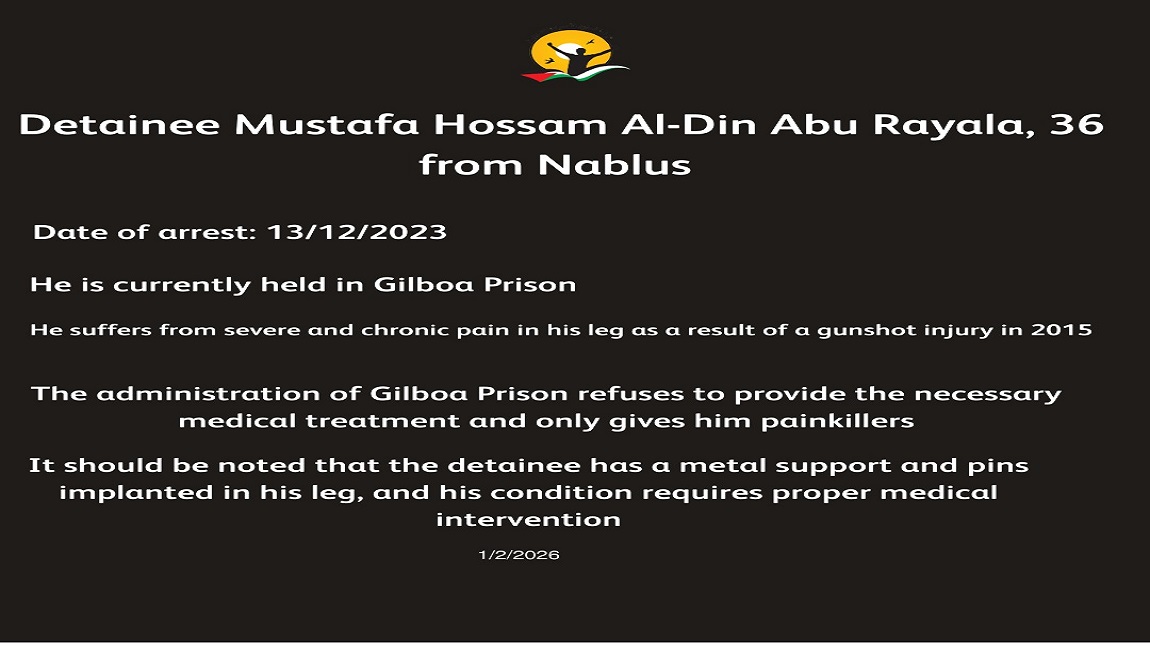
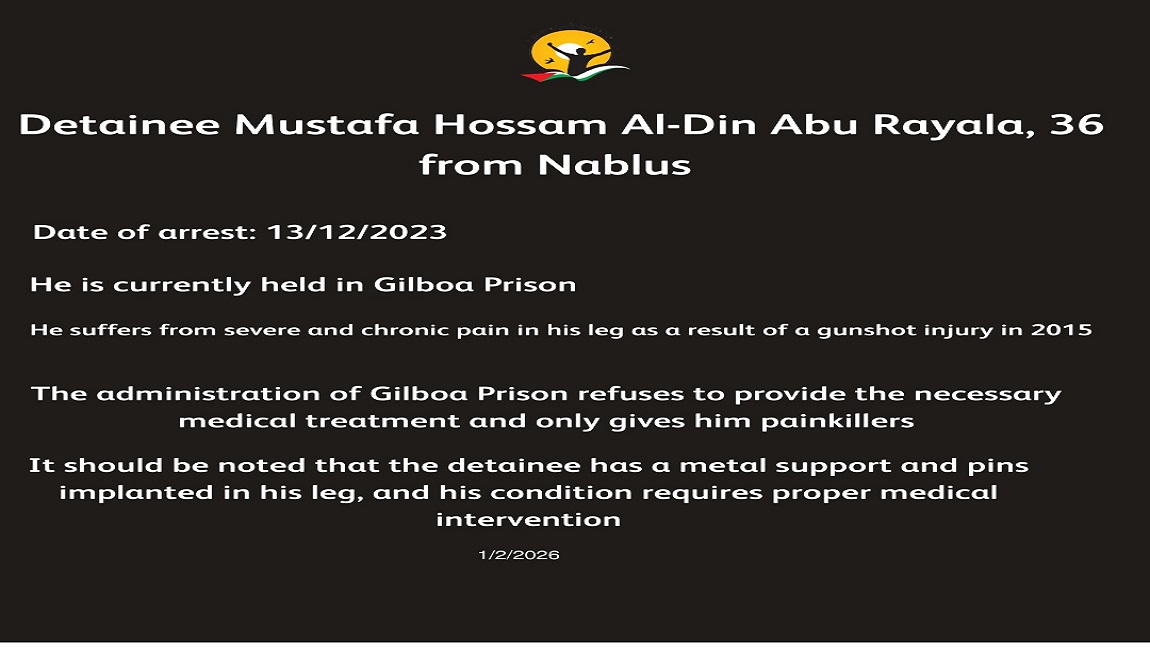
- Details
- Category: News
- Hits: 402
Elderly Palestinian Political Prisoner Martyred in Israeli Occupation’s Prisons
Officials Disclose His Killing Three Months Late
Palestinian Prisoner's Society & the Commission of Detainees' Affairs
January 11, 2026
Ramallah, occupied Palestine – Israeli occupation authorities have disclosed to Palestinian prisoner groups the martyrdom of the 67-year-old Palestinian political detainee Hamza Abdullah Abdulhadi Adwan who was abducted from the Gaza Strip in November 2024.
According to the response received by the Palestinian Prisoner’s Society (PPS) and the Commission of Detainees’ Affairs, Adwan lost his life on September 9, 2025. The manner in which he was martyred remains unknown due to the information blackout that occupation authorities continue to impose on Palestinian detainees since the genocide in Gaza.
Adwan was a husband, and a father to nine children, two of whom were martyred prior to the genocide. According to his family, occupation forces arrested him despite his suffering from health problems, including heart disease, and despite his need for continuous medical care.
The PPS and the Commission noted that Adwan is one of over a hundred prisoners who have been killed in Israeli occupation prisons through torture including rape, starvation, medical crimes, since the beginning of the genocide, as well as other crimes involving deprivation, looting, humiliation, and detention in conditions that undermine human dignity.
This brings the total number of identified martyred Palestinian prisoners since the occupation of 1967 to 324 people.
Many of Gaza’s killed detainees remain forcibly disappeared, along with dozens who were executed in the field. Images of prisoners’ corpses delivered after the ceasefire provided conclusive evidence of the systematic executions carried out by the occupation army against detainees.
The PPS and the Commission hold occupation authorities fully responsible for the martyrdom of detainee Hamza Adwan and renewed their call to the international human rights system to take effective measures to hold the leaders of the occupation accountable for war crimes committed against prisoners and the Palestinian people. They urged an end to the impunity granted by the United States and other international powers to the Israeli occupation system over many decades, which reached its peak with the genocide, despite irrefutable evidence of the occupation’s commission of genocide against the people of Gaza, in addition to war crimes and crimes against humanity committed against prisoners.
In this context, the PPS and the Commission emphasized that the crimes that the Israeli prison system continues to commit against prisoners form an inseparable part of the genocide in Gaza. Through these crimes, the occupation system seeks to carry out slow executions, making this period the deadliest in the history of the Palestinian prisoners’ movement. This comes as the occupation seeks to legislate a law to execute Palestinian prisoners, turning extrajudicial executions into a codified and “legalized” policy.
It should be noted that the vast majority of Palestinian political prisoners are people who are held without trial or charge, either under arbitrary administrative detention or classified by the occupation authorities as “illegal combatants.” According to available data, as of January 2026, the number of prisoners in Israeli occupation prisons exceeds 9,300, including 3,385 people under administrative detention and 1,237 people classified as “illegal combatants,” meaning that the overwhelming majority of detainees are held without charges or trials.
- Details
- Category: News
- Hits: 393
Palestinian Prisoners’ Institutions Condemn the Crime of Storming Birzeit University Campus
January 6, 2025
Ramallah, occupied Palestine — Palestinian prisoners’ institutions strongly condemn the occupation forces’ storming of Birzeit University campus and their assault on the vigil called for by the student movement in solidarity with Palestinian political detainees held in occupation prisons, who are enduring harsh conditions of detention and systematic, escalating violations.
The incursion into the university campus—accompanied by the confiscation of student movement equipment, the firing of live ammunition and tear gas canisters, and the detention of the university’s Vice President for Academic Affairs—constitutes a blatant violation of the sanctity of educational institutions. It represents a direct and compounded attack on a range of fundamental rights, foremost among them freedom of opinion and expression and the freedom of trade-union and student activity, rights guaranteed under the rules of international law, particularly international human rights law.
Prisoners’ institutions affirm that these practices are not isolated incidents, but rather fall within the framework of a systematic colonial policy aimed at silencing the Palestinian voice, criminalizing acts of solidarity, and targeting educational spaces as central arenas of national and intellectual action. This occurs within the context of the comprehensive assault against the Palestinian people, including prisoners who have been facing extremely grave humanitarian conditions inside occupation prisons since the onset of the crime of genocide in Gaza.
Accordingly, prisoners’ institutions call upon the international community, as well as human rights and academic institutions around the world, to assume their legal and moral responsibilities and to take urgent action to condemn these serious violations, exert effective pressure on occupation authorities to halt their ongoing attacks on Palestinian universities, ensure protection for students and staff, and safeguard the right to expression and organization as an inseparable part of the right to freedom and human dignity.