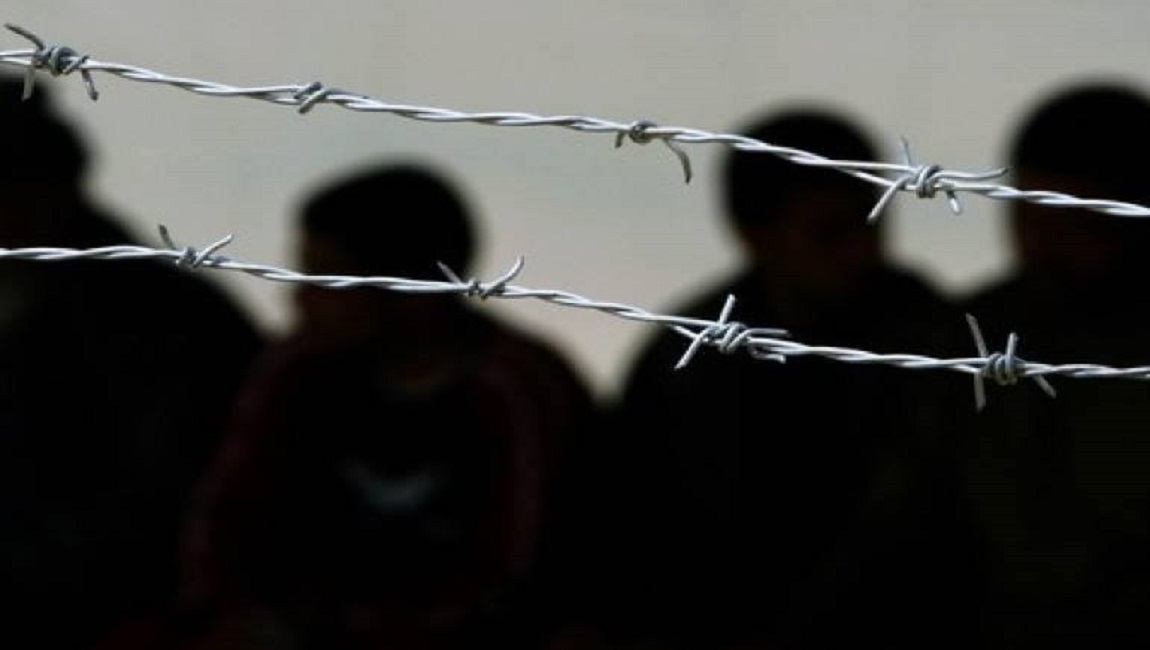
Israeli violation against Palestinian political prisoners
Facts & Figures
October 2019
Israel opened its jails since the beginning of its occupation to the Palestinian territories and arrested nearly one million Palestinians of all categories and ages; males, females, youths and adults. However, the Israeli security devices and military forces continue detaining Palestinians, where these arrests have become a daily phenomenon and an Israeli tool of repression. Detention is not for security reasons as Israel claims, but it is collective punishment and revenge against Palestinians.
We can say that these arrests became the most suppressive and devastating measure against the Palestinian society and its components.
Facts and figures
Detainees. Figures and statistics (March 30, 2019)
- 1.000.000 Palestinians experience detention since 1967
- 5700 men and women detainees are currently held in Israeli jails, including:
- 220 minors
- 36 minors from Jerusalem under house custody
- 38 women detainees
- 500 administrative detainees
- 700 sick detainees including 30 who have cancer
- 56 detainees are jailed for more than 20 years
- 27 are jailed before the Oslo Accord, such as the detainee Maher Younes and Kareem Younis who is jailed for 37 years
- 570 detainees are sentenced to life term
- 221 detainees from the captive movement have been martyred since 1967
This report will present some of the Israeli violations against Palestinians that breach International law and International Humanitarian Law, as well as the EU's human rights system.
First: detainees' allowances
The occupying state-issued legislation allows deducting part of the Palestinian tax returns which equal the amount paid to detainees and their families from the Palestinian Authority. This law was issued with its final read on July 2, 2018.
Taking care of the Palestinian detainees and their families and fulfilling obligations of the financial allowances are the most important duties of the Palestinian authority. Article 22 of the Palestinian basic law, states that "caring of the families of detainees, martyrs, wounded and disabled people is a duty organized by law. The national authority should guarantee the services of education and social and health insurance." Also, the Commission of Detainees' Affairs depends on resolution (19) of 2004, which was amended by legislation 1 of 2013, in providing the allowances of detainees and ex-detainees.
The Palestinian Authority provides financial aids to Palestinian detainees and ex-detainees. This policy is based on the international laws concerning the welfare of the state toward the citizens. Based on human rights approach family of detainees have the rights to receive financial support from their state., the occupying state neglects all these rights and wants to criminalize the Palestinian national struggle through pressures and financial siege.
Second: health conditions of detainees in Israeli jails
Palestinian detainees live in adverse health conditions inside Israeli prisons. In prison, they get tortured by systematic physical and psychological means such as; deprivation of real medical care, procrastinating in providing medication for sick detainees and practicing suppression and humiliation against them.
By monitoring the health condition of detainees, it was clear that the level of medical care for detainees is terrible. This information is supported by the testimonies of detainees, the martyrdom of many of them, and the increase in sick case numbers.
The reports of international and local institutions indicate that treating sick detainees is the topic of bargain and extortion by the administration of Israeli prisons.
These acts violate the articles (91, 92) of the Fourth Geneva Convention, and articles (31, 30, and 29) of the Third Geneva Convention, which stipulated the right of treatment and medical care and the provision of appropriate medication for sick detainees.
According to statistics by the Commission of Detainees' Affairs, there are 700 detainees suffer from severe health conditions, Including 30 who have cancer, and 17 who are permanently held in the so-called Al-Ramla prison clinic. Also, hundreds of them have illnesses due to shot injury, and some of them have serious mental diseases.
The most severe cases in Israeli jails are (Sami Abu Dyak, Mu'tasem Rddad, Mansour Mukadeh, and Israa Ja'abees).
Third: Administrative detention: detention without a trial
Israel is the only state in the world that uses Administrative detention in a way that exceeds the limits. This type of arrest holds detainees as political hostages, which violates all international humanitarian laws and legislations.
This detention included minors, females, youths, adults, students, political figures, deputies in the Palestinian Legislative Council, ministers, human rights activists, lawyers, academics and mothers.
According to the Commission of Detainees' Affairs, the Israeli authorities issued more than 50.000 administrative detention orders against Palestinians since 1967. These orders increased since Al-Aqsa Intifada, where they issued 27.000 administrative detention orders from September 2000 until now.
Administrative detainees committed several hunger strikes in both individually and collectively in a protest against their detention. This protest was taken as the final option, and as an attempt to practice pressure against the occupation authorities to end their administrative detention.
Forth: Minors' detention
Two hundred thirty minors under the age of 18 are currently held in Israeli jails. They are distributed to many prisons such as Ofer, Megiddo, Damon and Itztion and Huwara interrogation centers.
The number of minors' detention cases increased since the beginning of 2015, where the annual range increased to 300 occurrences, and 1000 cases per year.
However, Israel changed the laws in a way that allows the detention of 13-years-old children and prosecuting them. Also, Israel has increased the sentences against them to reach 3 years of imprisonment for those who participate in throwing stones on Israeli forces. The Israeli courts started to impose high fines against children and their families to practice pressure against them.
A case in point is the detainee Ahmad Manasra, who was prosecuted in November 2016 when he was 14 years old. He was sentenced to 12 years of imprisonment in addition to a fine of NIS 180.000.
As for Jerusalem, Israel resorts to the policy of house custody and referring some of them to Israeli rehabilitation centers with Israeli civil criminals.
Fifth: Laws and legislations against detainees' rights
2017, 2016 and 2015 witnessed an escalation in legislating racist and arbitrary laws by the Israeli government in support of the occupation and settlements, which contradict detainees'' rights and principles of Human Rights. Since 2015, about 185 laws and draft bills were drafted by the Israeli Knesset, which targeted the rights of Palestinian people and their right of self-determination, including;
The law of detainees' execution
The Israeli Knesset passed its first reading on January 3, 2018, to the so-called (bill of execution for those who perform operations), which was submitted by 3 extremist deputies in 30/10/2017.
The drafts law stipulates that the Defense Minister orders the commander of the army to sentence the execution without requiring the consensus of the Commission, but only by the regular majority. And that no court is entitled to mitigate the sentence issued by the military court, and that the law applies only to Palestinians. This law violates the international and legal obligations of Israel, which require fair trials and respect the dignity of detainees.
A draft bill to deduct allocations of martyrs and detainees from the dues of the Palestinian Authority
On June 11, the Israeli Knesset approved the first reading of the draft bill to deduct the allowances of detainees and the returns of martyrs and wounded people from the tax revenues transferred by the Israeli authorities to the Palestinian Authority.
A draft bill to prevent the visits of those detainees who belong to factions that hold Israelis
On June 18, 1977, the Knesset member Oron Hazan submitted a bill includes: deny the visit of Palestinian detainees especially those who are members of Palestinian parties that hold Israelis. Also, the bill consists of preventing visits by lawyers and Red Cross representatives.
A draft bill to allow retaining martyrs' bodies
On Januaury 3,2018, the Israeli Minister of the Internal Security, Gilad Erdan, and Minister Justice, Shakid, announced that they would submit a bill to the Israeli Knesset to retaining the bodies of the Palestinian martyrs, to use them for bargaining and negotiations and reducing the powers of the Israeli Supreme Court and subjugating them to the will of the government.
Arbitrary field execution instead of detention
Extrajudicial execution against Palestinians continued in 2017, and the deliberate killing due to a systematic policy of the occupation authorities. The soldiers can act as judges and executioners at the same time. The persons who were executed instant people cause no harm or threat to the soldiers, and they could have been arrested instead. Which encouraged by the Israeli prime minister, where the killers are not punished, but only subjected to unreal prosecution. A case in point is what happened with the Israeli soldier Azaria, who executed the martyr, Abdul Fattah al-Sharif, on 24/3/2016 in the city of Hebron after the martyr was wounded. The soldier was sentenced to 18 months, and his sentence was reduced to 14 months.
Another case in point is executing the disabled Ibrahim Abu Thuraya, 29 years old, from Al Shate' refugee camp in the Gaza Strip.
Commission of Detainees & Ex- Detainees Affairs
International Relations Unit