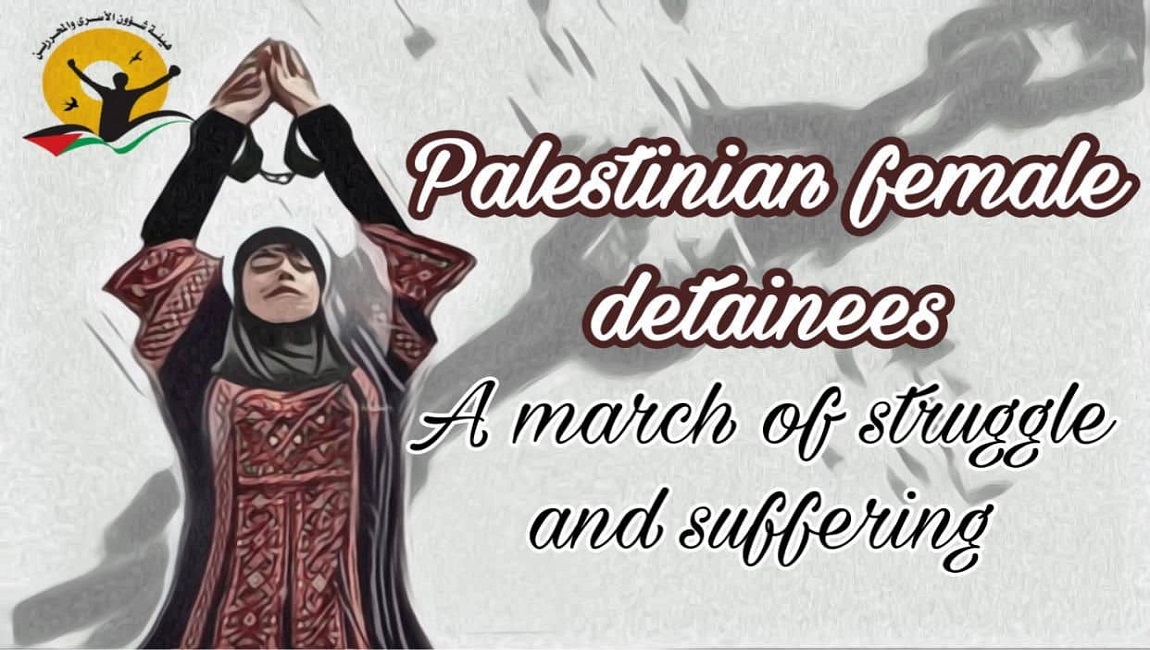
The Commission of Detainees' Affairs publishes a fact sheet on Palestinian women detainees in Israeli prisons
With the approach of the National day of the Palestinian woman
The Commission of Detainees' Affairs publishes a fact sheet on Palestinian women detainees in Israeli prisons
24/10/2022
The Commission of Detainees' Affairs published a fact sheet highlighting the suffering of women detainees in Israeli prisons, with the approach of the National Day of Palestinian women, which marks 26th of October each year.
This day had been adopted by the Palestinian Council of Ministers in 2019. The Commission pointed out that the Palestinian organisations decided to organise events starting today, where many protests and marshes in solidarity with Palestinian detainees will be held in all cities.
* facts about Palestinian women detainees:
_the total number of detainees in Israeli prisons is 4700
_ 30 women detainees _ 2 women under the administrative detention
_ the first female detainee is Fatma Bernawi, who was detained in 1967 and sentenced to life imprisonment.
_ 2550 women had been arrested since the Oslo Accord
_ 17.000 women had been arrested since 1967
_ the highest rate of women arrests was in Jerusalem with 45% of the total arrests _ 17 women had high sentences, the highest of which goes for ( Shurouq Dwayat and Shatella Abu Ayyad) who were sentenced to 16 years and the detainee ( Aysha Afghani) with 15 years.
_ there is a minor in the Israeli prisons called Nufouth Hammad from Shiekh Jarrah/ Jerusalem
_ There are 6 injured women in Israeli prisons, the worst case is the detainee Israa Jaabees _ there are two women who died in Israeli prisons (Saadeya Faragallah and Fatma Taqatqa.
The Commission confirmed that the Palestinian women participated in struggle over the past decades, and has been subjected to detention and torture such as men, without taking into consideration their privacy.
Women detainees face difficult life conditions in Damoun prison, where cameras still installed in the yard.
In addition, they are detained in rooms with high humidity, and they are subjected to medical ignorance and prevented from family visits under feeble excuses.